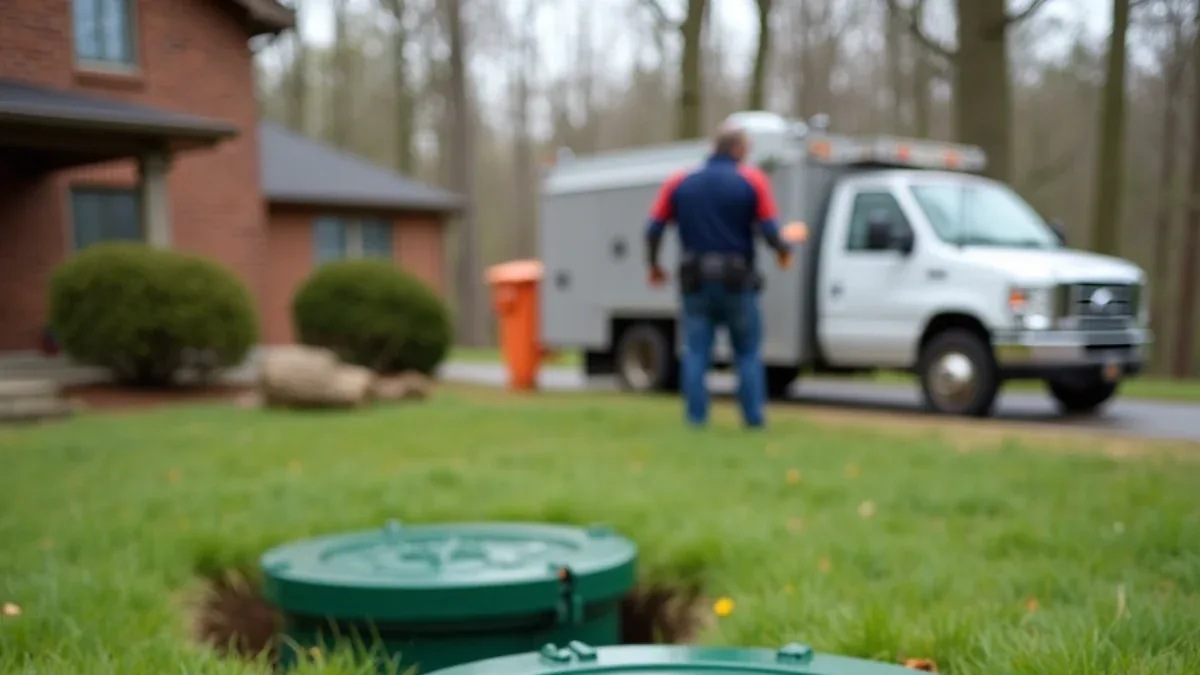
People talk about a septic system as one thing, and that is where most of the confusion starts. It is really two components with very different life expectancies, and knowing which one is aging out changes the entire conversation about what to spend.
The tank
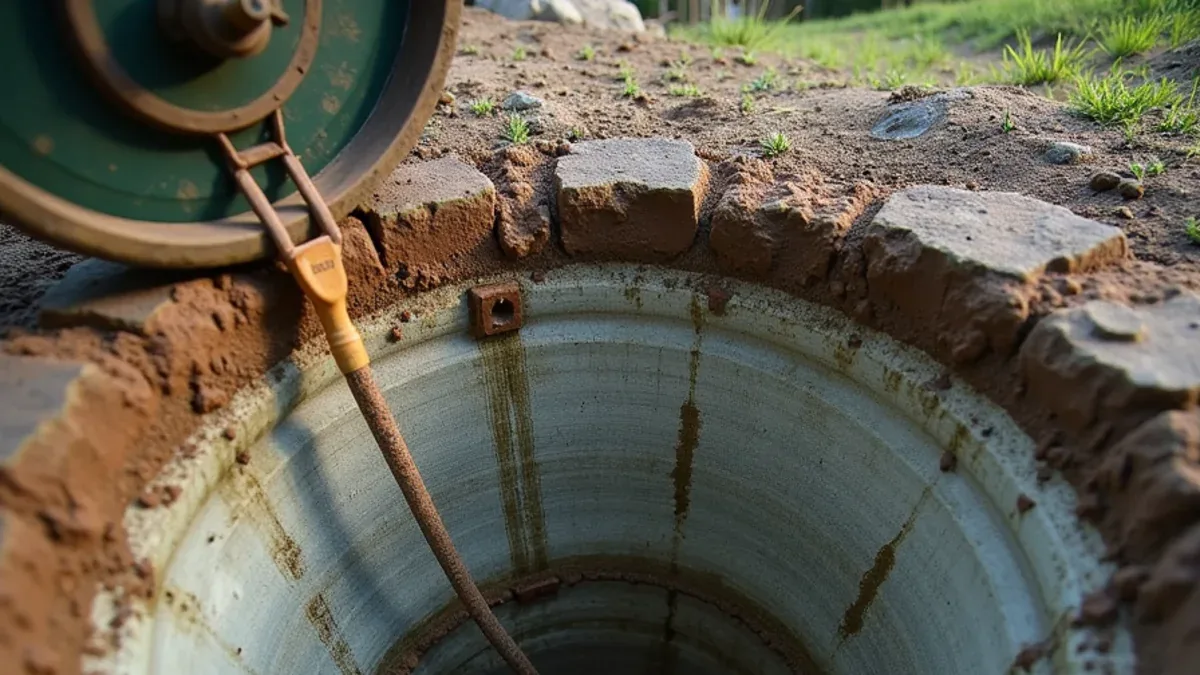
A properly installed concrete tank routinely lasts thirty to forty years, and we regularly service tanks well past that which are structurally sound. Concrete does not corrode the way metal does, and a tank sitting in stable soil with nothing driving over it has very little working against it.
What kills concrete tanks is water chemistry over decades, ground movement, vehicle traffic over the lid, and the baffles crumbling. The baffles are usually the first thing to go, and they are a repair rather than a replacement.
Steel tanks are a different story. Older steel tanks rust from the top down and typically fail somewhere in the twenty-to-thirty-year range, often at the lid. A rusted steel lid is a genuine safety hazard — people and livestock have fallen through them. If you have a steel tank of any age, that lid is worth checking.
The drain field
Twenty to thirty years is the realistic expectation in this area. Some well-maintained fields in good soil reach forty. Fields that are never pumped, driven over, or hydraulically overloaded can fail in under ten.
The field is the shorter-lived component and by far the more expensive to replace, which is why almost everything in septic maintenance is ultimately about protecting it.
What determines where you land in the range
Pumping history
The single biggest factor. Solids escaping an unpumped tank are the leading cause of premature field failure, full stop. A system pumped on a measured interval and one never pumped at all are not really the same product.
Soil type
The Tennessee Valley is clay-heavy, and clay accepts effluent more slowly than sandy soil. That means fields here have less margin, and a system that would have coped elsewhere can struggle through a wet Hamilton County spring.
Household water use
Volume matters as much as solids. Two people in a house sized for four will get years more out of a field than five people in the same house. And a running toilet nobody noticed can quietly do more damage than a whole family.
What goes down the drains
Grease coats field soil and reduces infiltration. Wipes fill the tank with material that never breaks down. Chemicals suppress the bacteria. Our list of things never to flush on a septic system covers the full set.
Installation quality
This one is out of your hands if you bought the house, but it matters enormously. A field with trenches at the wrong depth, inadequate stone, or a distribution box that was never level starts life at a disadvantage that no amount of maintenance corrects.
The habits that add years
- 1Pump on a measured interval, not a guessed one — we record your sludge and scum depths every visit and set the date from data
- 2Clean the effluent filter annually if your tank has one
- 3Fix running toilets and dripping fixtures the week you notice them
- 4Spread laundry across the week rather than doing six loads on Saturday morning
- 5Keep grease out of the sink and wipes out of the toilet, without exception
- 6Divert downspouts and driveway runoff away from the drain field
- 7Never park, drive, or build on the field — compacted soil does not recover
- 8Plant grass over the field and nothing with roots
None of that is difficult. All of it is the difference between a field that fails at fifteen years and one that is still working at thirty-five.
Signs your system is nearing the end
The distinction between "needs maintenance" and "nearing the end" is worth understanding, because they look similar from the outside.
Maintenance territory: slow drains that resolve after pumping, an odor that appears occasionally, a filter that needs cleaning. End-of-life territory: backups that return within days of pumping, effluent surfacing over the field in ordinary weather, and a tank that will not hold its liquid level.
Our article on drain field failure signs goes deeper on how to tell them apart before anyone quotes you a replacement.
Planning ahead instead of reacting
If your system is over twenty-five years old, the useful move is to establish a baseline rather than waiting for a failure. A full inspection tells you the condition of the tank, the state of the components, and how the field is currently performing.
From there you can plan. Replacing a system on your own schedule — during dry weather, with time to get quotes and permits — costs considerably less and is far less unpleasant than replacing one in February after a backup.
We do baseline inspections across Ooltewah, Harrison, Cleveland and the surrounding counties, and the estimate is free.
Frequently asked
A concrete tank in stable soil that has never had vehicles over it can, and we service tanks in that range that are structurally sound. The baffles almost certainly will not have lasted that long, but those are a repair. Steel tanks are a different matter and rarely reach forty.
Solids escaping a tank that was not pumped on schedule, reaching the drain field and sealing the trench bottoms. It is the leading cause by a wide margin, and it is entirely preventable with a maintenance interval based on actual measurement.
If it is over twenty-five years old, get a baseline inspection rather than guessing. Replacing on your own schedule — dry weather, time for quotes and permits — costs less and is far less disruptive than an emergency replacement. But plenty of older systems have real life left, and we would rather tell you that than sell you one you do not need.
Need someone to actually look at it?
We are a licensed plumber and septic technician based in Ooltewah, serving Hamilton, Bradley and the surrounding counties. Free estimates on every job, and an honest answer about whether you need the work at all.