
Septic service
Drain Field Repair & Replacement in Ooltewah, TN
The most expensive part of your septic system deserves a real diagnosis before anyone starts digging.
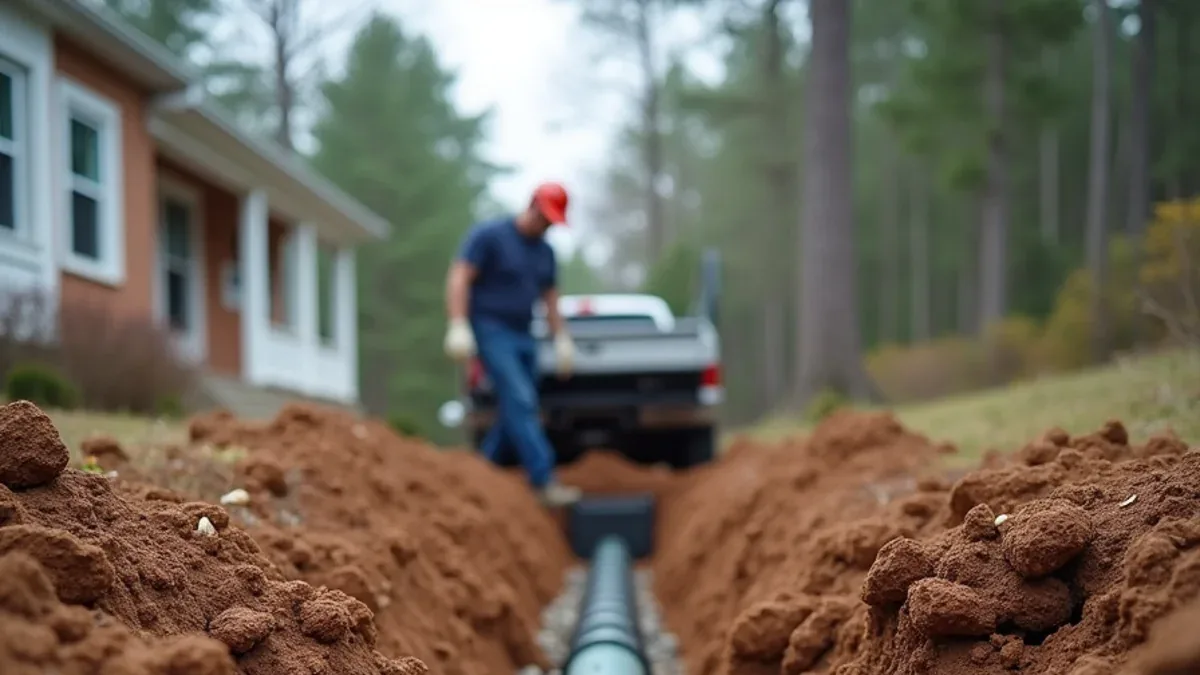
The drain field is where the actual treatment happens. Effluent leaves the tank, spreads through trenches, and the soil finishes the job. It is also the component that costs the most to replace, which is exactly why it deserves a careful diagnosis instead of a bulldozer.
Fields fail for a handful of reasons, and they are not all terminal. Sometimes the problem is a clogged distribution box that has been sending everything to one trench for a decade. Sometimes it is roots. Sometimes it is groundwater entering the tank and hydraulically drowning a field that would otherwise be fine. And sometimes the biomat really has sealed the trench bottoms and there is no substitute for new field lines.
We work through those possibilities in order, cheapest and least invasive first. When replacement is genuinely the answer, we handle the soil evaluation, the permit, and the construction.
Signs your drain field is in trouble
Soggy ground or standing effluent over the field
Water surfacing above the trenches means the soil is no longer accepting it. This is a health hazard as well as a system failure.
Backups that return within days of pumping
If pumping buys you a week and then the house backs up again, the tank was never the problem. The field is not taking the effluent away.
A stripe of unnaturally green grass
Effluent is fertilizer. A bright green band over one trench while the rest of the yard is ordinary points at uneven distribution or a surfacing failure.
Sewage odor outdoors after rain
A saturated field cannot take on more water, so effluent finds the surface. If the smell appears every wet week, the field is at its limit.
Slow drains that pumping does not fix
The tank is at its normal level, the line is clear, and the house still drains slowly. That is the field backing pressure into the system.
Only one part of the field is wet
Good news, usually. A single wet trench with dry trenches beside it often means a failed distribution box rather than a dead field.
How we work
How we diagnose and repair a drain field
- 1
Rule out the tank first
We open the tank and check the liquid level and outlet. A tank flooded above the outlet, or one taking on groundwater, will produce every field symptom without the field being at fault.
- 2
Locate and open the distribution box
The D-box is a small concrete box that splits flow between trenches. When it settles, clogs, or its outlets corrode, one trench takes everything. This is a common and inexpensive fix.
- 3
Probe and map the field
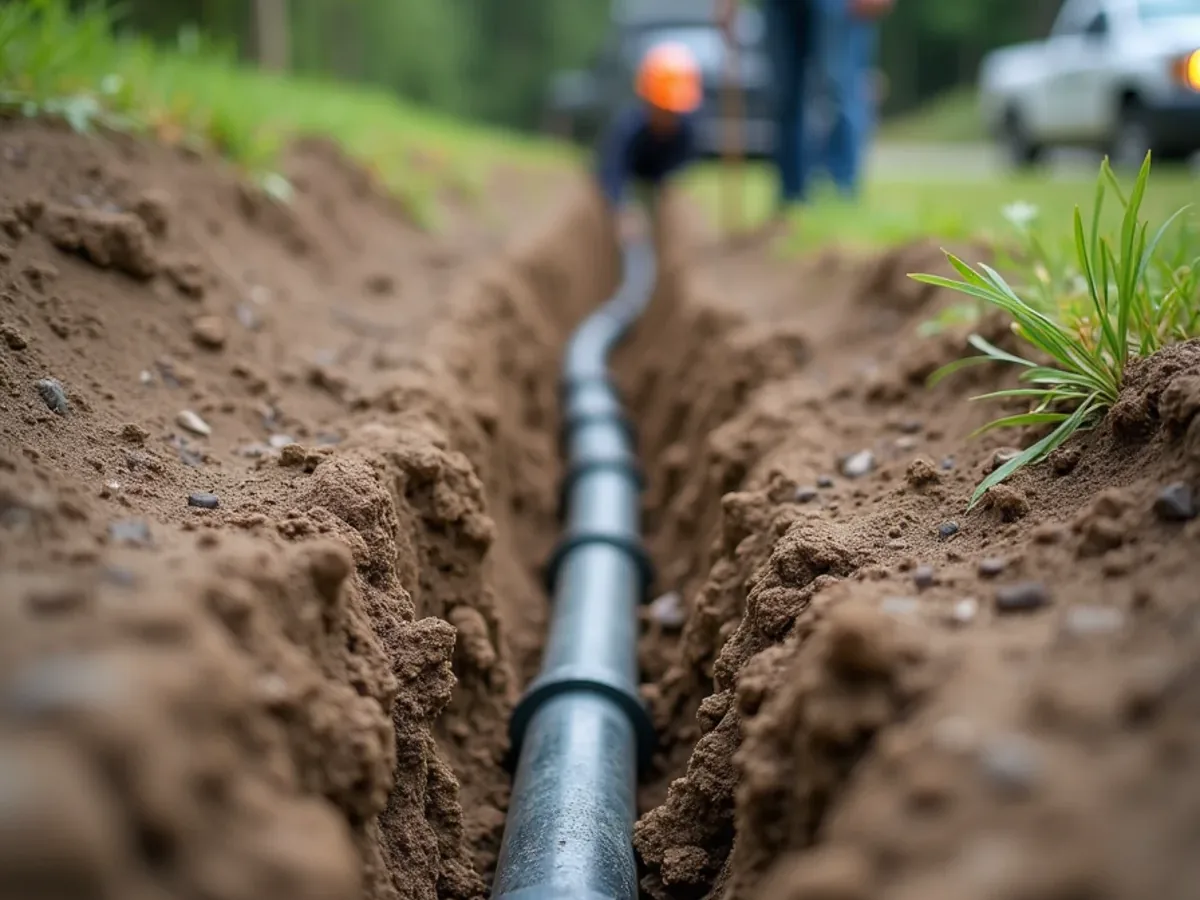
We probe the trench lines to map the field footprint and find where the soil is saturated versus dry. That tells us how much of the field is still working.
- 4
Camera or jet the lines where appropriate
Field lines with root intrusion or a heavy biomat can sometimes be cleared and restored, buying real years. Not every field can, and we will tell you which yours is.
- 5
Soil evaluation for replacement
If the field is finished, a licensed soil scientist evaluates the reserve area so the new field is designed for the ground it is going into, not the ground the old one was in.
- 6
Permit, construct, restore
We handle the county permit, build the new trenches to spec, get the inspection before cover, then backfill, grade, and seed.
Need drain field repair & replacement in Ooltewah or nearby?
Free estimate, written price before work starts, and an honest answer about whether you need the job at all.
- Licensed septic technician
- 22 Google reviews
- Free estimates on every job
- Locally owned & operated
What actually kills a drain field
A biomat forms naturally at the bottom of every trench — it is part of how the soil treats effluent. Failure happens when that layer thickens faster than the soil can process it, and the trench bottom seals.
The accelerants are predictable. Solids escaping a tank that has not been pumped are the leading cause, which is why regular septic pumping is the cheapest field protection available. Hydraulic overload is second — a leaking toilet, a water softener discharging to the tank, or groundwater entering through a cracked tank all push more water through the field than it was designed for. Third is compaction, from parking on the field, running heavy equipment over it, or building a shed on top of it.
Grease and chemicals do their share too. Kitchen grease coats soil particles and slows infiltration, and heavy bleach or drain chemicals kill the bacteria the system depends on.
Extending the life of a field that is still working
If we catch a field early, there are real things you can do. Cutting water use is the most effective and the least popular: spreading laundry across the week instead of doing six loads Saturday morning makes a measurable difference in how a marginal field performs.
Fixing running toilets and dripping fixtures matters more than people expect — a silently running toilet can send hundreds of gallons a day into a field that is already at capacity. Our leak detection service exists partly for this reason.
Divert roof and surface water away from the field, keep vehicles and structures off it, and plant only grass over it — no shrubs, no vegetable beds, no trees. And pump on schedule. A field that is treated well outlives its owner's expectations; a field that is abused fails in a decade.
What drives drain field cost
This is the repair people fear, so we are direct about what sets the number. Diagnosis and estimate are free — you will know which category you are in before you spend anything.
- Repair versus full replacement
- A new distribution box or a cleared line is a modest job. Rebuilding an entire field is the largest septic expense there is. The diagnosis determines which conversation you are having.
- Field size required
- Trench length is set by design flow and the soil loading rate from the evaluation. A four-bedroom house in tight clay needs considerably more trench than a two-bedroom in good soil.
- Soil evaluation results
- If the reserve area evaluates well, you get a conventional gravity field. If it does not, the design moves to low-pressure pipe, drip, or a mound, and the cost climbs accordingly.
- Site access and obstacles
- Trees, slope, rock, existing landscaping, driveways, and where the well sits all affect how much of the job is machine work versus careful hand work.
- Whether the tank comes along
- An old steel tank next to a new field is a false economy. If the tank is near the end, replacing both at once costs less than two separate mobilizations.
- Restoration
- Some customers want the yard graded and seeded, others want full sod restoration. We price it either way and let you choose.
We do not publish flat prices because two jobs on the same street can cost different amounts, and a quoted number that changes on arrival helps nobody. Every job starts with a free written estimate.
Questions
Drain Field Repair & Replacement in Ooltewah — answered
Sometimes. If the cause is a failed distribution box, root intrusion in the lines, or hydraulic overload from a leak or a cracked tank, correcting the cause can restore function. If the trench bottoms have sealed with a mature biomat and the soil no longer accepts water, no treatment reverses that reliably. We will tell you honestly which situation you are in rather than sell a restoration that buys three months.
Twenty to thirty years is a fair expectation for a conventional field in this area with regular pumping and reasonable water use. Fields that are never pumped, driven on, or overloaded fail much sooner. We have also seen well-maintained fields in good soil still working at forty.
Not without checking with the county first. Tennessee requires a reserve area to remain available, and the abandoned field footprint is often part of how the site was permitted. Before you plan a shop, pool, or addition anywhere near either field, let us review the permit drawing with you.
That usually points at the distribution box rather than the field. When a D-box settles out of level or its outlets corrode, effluent stops splitting evenly and one trench absorbs the entire household load while the others sit dry. Releveling or replacing the box is inexpensive and frequently restores the whole field.
The construction is typically two to five days depending on field size, soil, and access. The longer part of the timeline is the soil evaluation and permit, which usually adds several weeks. We start the paperwork the moment you approve the work so the two run in parallel.
You might also need
Septic Tank Pumping
Every three to five years, most Ooltewah tanks need pumping. We pump the full tank, wash down the walls, and inspect the baffles while we are in there.
Learn moreSeptic Tank Installation
From the soil evaluation and health department permit through backfill and final inspection, we install complete septic systems built for Hamilton County soils.
Learn moreSeptic System Inspection
Buying a home on septic? We open the tank, load-test the field, and give you a documented report before your inspection period runs out.
Learn more
Drain Field Repair & Replacement — free estimate, fair price
Call and describe what you are seeing. We will tell you what it usually means, what it will take to check, and what it is likely to cost.
- Licensed septic technician
- 22 Google reviews
- Free estimates on every job
- Locally owned & operated