
Plumbing service
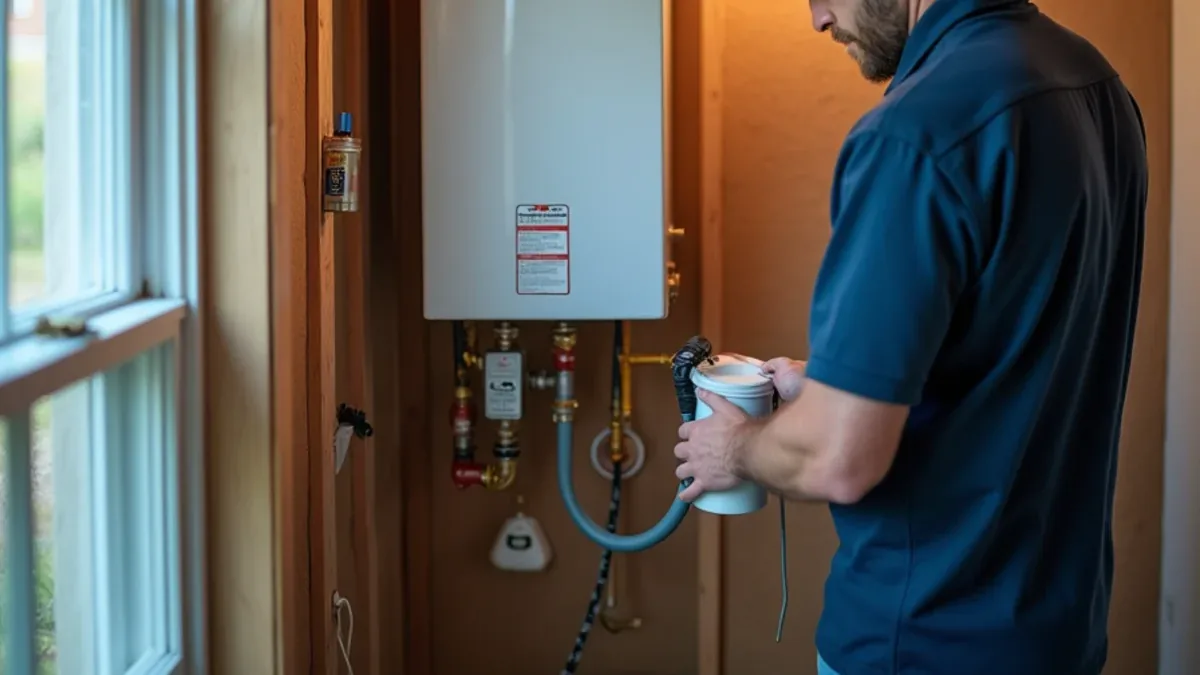
Tankless Water Heater Installation in Ooltewah, TN
Endless hot water is real — but only if the unit is sized right, vented right, and descaled on schedule in our hard water.
Tankless water heaters are excellent when they are specified correctly and disappointing when they are not. The difference is almost entirely in the sizing and the installation, and unfortunately the failure mode looks the same to the homeowner: you paid a premium and the shower still goes lukewarm when the dishwasher runs.
Sizing a tankless unit is not about how many bathrooms you have. It is about flow rate in gallons per minute and temperature rise — the gap between your incoming groundwater temperature and the temperature you want at the tap. In Tennessee winters that incoming water gets cold enough to meaningfully reduce a unit's rated output, and a unit sized on the summer number will underperform every January.
We size against your winter numbers, install the gas and venting properly, and set you up on a descaling schedule that hard water makes non-negotiable.
When tankless is the right choice
You run out of hot water regularly
A large household or back-to-back showers is the classic case. A properly sized tankless unit simply does not run out.
Space is at a premium
A wall-mounted unit frees up the footprint a 50-gallon tank occupies — worth real money in a small utility room or a garage.
You are building or remodeling
Gas, venting, and electrical are far cheaper to run during construction than to retrofit later.
You want lower standby losses
A tank keeps 50 gallons hot around the clock whether you use it or not. Tankless heats only what you draw.
You are planning to stay in the home
The higher install cost pays back over years, not months. Longevity is where tankless wins — often twenty years against a tank's ten.
You have a guest suite or a distant bathroom
A small point-of-use tankless unit at a far fixture solves the long-wait problem without repiping the house.
How we work
How we install a tankless system
- 1
Measure real demand
We add up the fixtures you would realistically run at once, in gallons per minute, and set the target temperature. That is the sizing brief.
- 2
Calculate winter temperature rise
We size for the coldest incoming water of the year, not the average. This is the step most commonly skipped and the most common cause of disappointment.
- 3
Verify gas supply and electrical
Tankless units need considerably more BTU than a tank heater. The existing gas line is often undersized, and we check meter capacity and line diameter before quoting.
- 4
Plan venting and condensate
Condensing units need stainless or PVC venting depending on the model, plus a condensate drain routed correctly. This is not optional and it is not improvised.
- 5
Install with service valves
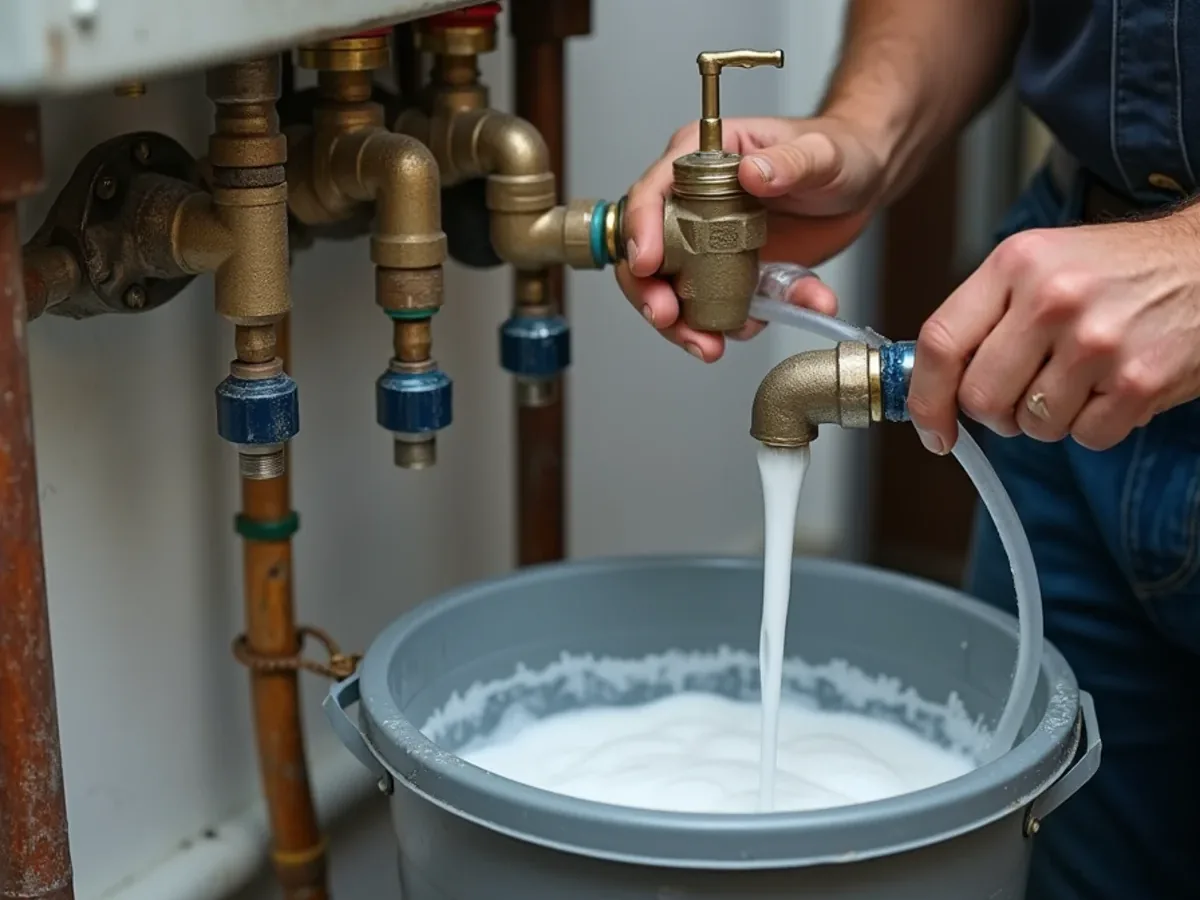
We fit isolation valves at install so annual descaling takes an hour rather than a half day. Skipping them is a false economy you pay for every year.
- 6
Commission and schedule maintenance
We set the temperature, test flow across fixtures, walk you through the controls, and put you on a descaling reminder.
Need tankless water heater installation in Ooltewah or nearby?
Free estimate, written price before work starts, and an honest answer about whether you need the job at all.
- Licensed septic technician
- 22 Google reviews
- Free estimates on every job
- Locally owned & operated
Descaling: the maintenance step that decides everything
A tankless heater pushes water through a narrow heat exchanger at high temperature. On hard water, mineral scale builds inside that exchanger, and unlike a tank there is no big reservoir where sediment can harmlessly settle. Scale directly restricts flow and reduces heat transfer.
The symptoms arrive in order: slightly reduced flow, then temperature swings during a shower, then error codes, then a failed exchanger. Replacing a heat exchanger costs a substantial fraction of a new unit, and many manufacturers will decline a warranty claim without evidence of maintenance.
Annual descaling circulates a mild acid solution through the exchanger for about an hour and dissolves the scale. With isolation valves fitted at installation it is straightforward. Without them, it means cutting into the pipe, which is why we fit them on every install regardless of whether the customer asks.
On hard water, some households benefit from every-nine-month intervals. We set yours based on what we actually find at the first service, and pairing tankless with a water softener reduces the burden considerably.
The honest case against tankless
It is not the right answer for everyone, and we would rather say so than sell one. For a one- or two-person household with modest hot water use, the higher installed cost takes a very long time to pay back in energy savings, and a good conventional tank is genuinely the better value.
There is also the cold-water sandwich — a brief cool slug when you turn the tap off and back on quickly — which some people never notice and others find irritating. Recirculation features address it at additional cost.
Minimum flow rate is another real limitation. Tankless units need a certain flow to fire, so a trickling bathroom faucet may not trigger the burner. And in a power outage, a gas tankless unit will not run without electricity for its controls and fan, while a standing-pilot tank heater will.
Weigh all of it against your actual usage. Our comparison of tankless versus traditional water heaters lays out the numbers for Tennessee homes.
What tankless installation costs depends on
A tankless install is more involved than a tank swap, and honest pricing means showing you where the money goes. Free estimate before anything is ordered.
- Unit capacity
- A unit sized for two bathrooms and one sized for a five-bathroom home with a soaking tub are very different pieces of equipment.
- Gas line upgrade
- This is the biggest variable in a retrofit. Many homes need a larger gas line run from the meter, and sometimes a meter upgrade from the utility.
- Venting requirements
- Vent material, length, and termination location all matter. A unit near an exterior wall is far cheaper to vent than one in the middle of the house.
- Condensate handling
- Condensing units produce acidic condensate that needs a proper drain and often a neutralizer. Where there is no nearby drain, a pump is required.
- Electric versus gas
- Whole-house electric tankless draws very heavy amperage and frequently requires a panel upgrade, which can exceed the cost of the unit.
- Retrofit versus new construction
- Running gas, vent, and drain through finished walls costs several times what the same work costs during framing.
We do not publish flat prices because two jobs on the same street can cost different amounts, and a quoted number that changes on arrival helps nobody. Every job starts with a free written estimate.
Questions
Tankless Water Heater Installation in Ooltewah — answered
Annually in this area, and some households on particularly hard water do better at nine-month intervals. Skipping it is the single most common reason tankless units fail early, and most manufacturers require documented maintenance for warranty coverage. With isolation valves fitted at install, the service takes about an hour.
Endless in duration, yes — it heats water as it flows rather than emptying a reservoir. But not unlimited in volume at a given moment. Every unit has a maximum flow rate at a given temperature rise, so if you exceed that by running several fixtures simultaneously, the output temperature drops. That is exactly why correct sizing matters more than anything else in the install.
Very often, yes. A tank heater might use 40,000 BTU while a whole-house tankless unit can call for 180,000 or more. Existing half-inch branch lines are frequently undersized for that. We check line size, run length, and meter capacity as part of the estimate so the gas upgrade is priced in from the start, not discovered mid-install.
For a single fixture or a small point-of-use application, they work well. For whole-house use they draw enormous amperage — commonly requiring 120 amps or more of dedicated capacity — which means a service upgrade in most existing homes. That upgrade often costs more than the heater. Where natural gas or propane is available, gas is usually the better path.
Twenty years is a reasonable expectation with annual descaling, roughly double a conventional tank. Most components including the heat exchanger are serviceable rather than sealed, so a well-maintained unit can be repaired rather than replaced. The caveat is real: without descaling on hard water, that twenty years can become eight.
You might also need
Water Heater Repair
No hot water, not enough hot water, or rumbling. We diagnose the actual fault — thermocouple, element, thermostat, gas valve — instead of quoting a new unit by reflex.
Learn moreWater Softeners & Filtration
Hard water scales your water heater, shortens fixture life, and leaves spots on everything. We test, size, and install the right treatment.
Learn moreGas Line Installation & Repair
New gas runs, repairs, and leak testing. Sized correctly, installed to code, and pressure-tested before it is ever put into service.
Learn more
Tankless Water Heater Installation — free estimate, fair price
Call and describe what you are seeing. We will tell you what it usually means, what it will take to check, and what it is likely to cost.
- Licensed septic technician
- 22 Google reviews
- Free estimates on every job
- Locally owned & operated