
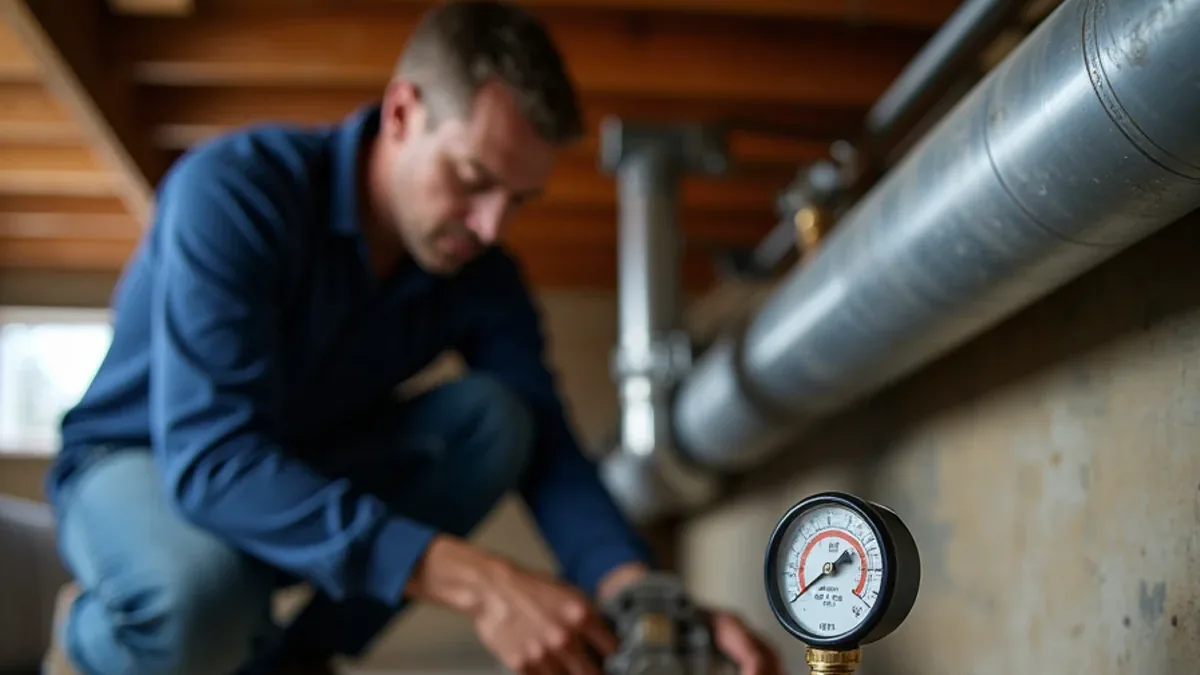
Plumbing service
Water Pressure Repair in Ooltewah, TN
Low pressure has about six possible causes and only one of them is the utility. We test rather than guess.
Water pressure complaints are among the most misdiagnosed calls in plumbing, because "low pressure" describes a symptom that has half a dozen unrelated causes. It might be a scaled aerator in one fixture. It might be galvanized pipe that has corroded closed over forty years. It might be a failed pressure-reducing valve, a partially closed main, a leak bleeding pressure off, or a well pressure switch set too low.
Those are wildly different repairs at wildly different prices, and the only way to tell them apart is to measure. Static pressure with nothing running, flowing pressure with fixtures open, and pressure at different points in the system.
The opposite problem is more common than people realize and considerably more damaging. High pressure — anything much above 80 psi — puts continuous stress on every joint, fixture, appliance and water heater in the house. It is the quiet cause of a lot of failures blamed on bad luck.
What your pressure is telling you
One fixture is weak, the rest are fine
A scaled aerator, a clogged showerhead, or a partially closed shutoff at that fixture. The cheapest problem on this list by a wide margin.
Every fixture is weak, and it got worse gradually
Classic galvanized pipe corroding closed from the inside. It happens so slowly nobody notices until a guest mentions the shower.
Pressure dropped suddenly across the house
A failed pressure-reducing valve, a partially closed main, a leak, or a utility-side issue. Sudden change points at a component, not corrosion.
Pressure falls off when a second tap opens
A supply-side restriction or an undersized service line. The system cannot deliver enough volume, which is different from low pressure.
Banging pipes, or fixtures that fail repeatedly
Usually high pressure. Above 80 psi stresses everything continuously, and it shortens the life of water heaters, washing machines and toilet fill valves.
Pressure swings on a well system
A waterlogged pressure tank or a switch out of adjustment. This is well pump territory rather than a house plumbing issue.
How we work
How we diagnose a pressure problem
- 1
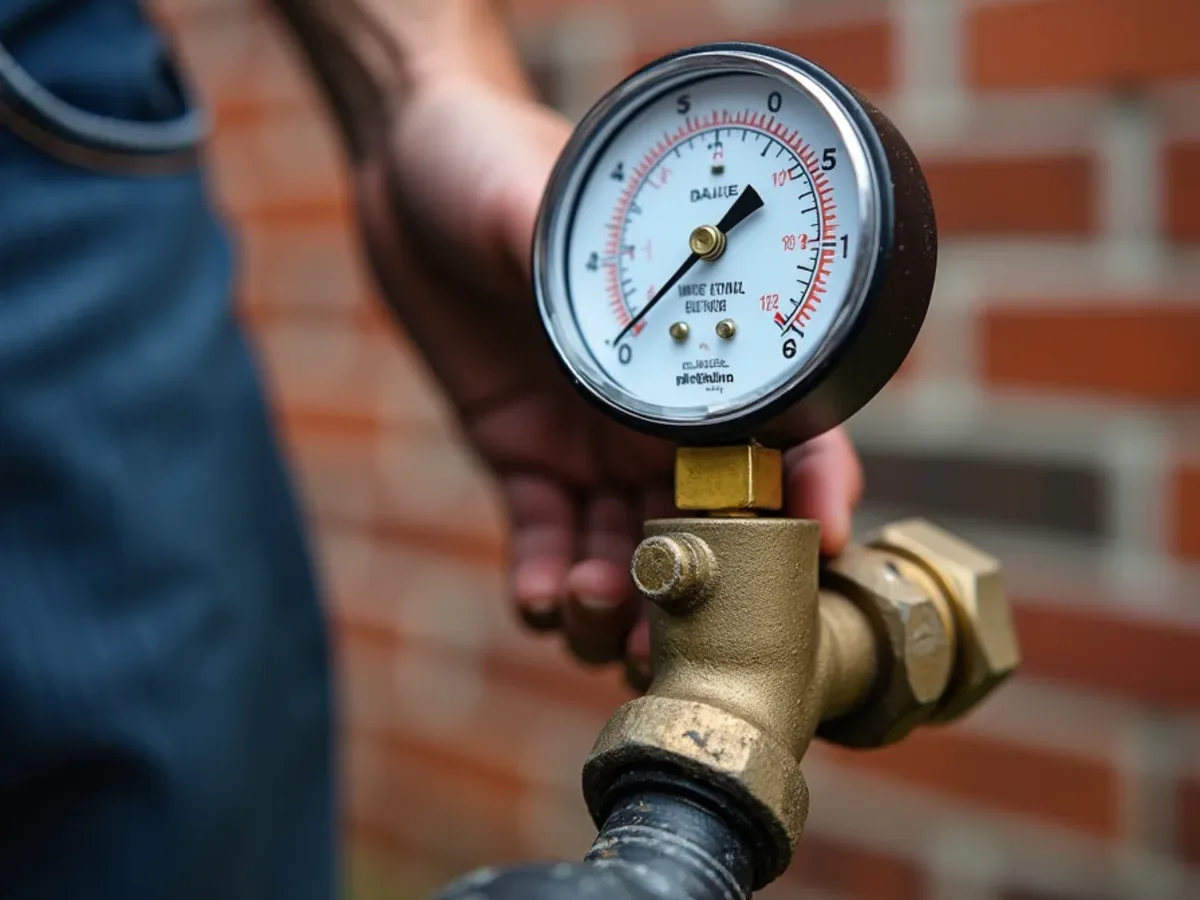
Measure static pressure at a hose bib
A gauge on an outside tap with nothing running. This single reading immediately separates low-pressure problems from high-pressure ones.
- 2
Measure flowing pressure
Same gauge with fixtures open. A big drop between static and flowing means a restriction or a volume problem rather than a pressure problem.
- 3
Rule out the cheap causes first
Aerators, showerheads, fixture stops, and the main valve position. It is remarkable how often a main was left three-quarters closed after previous work.
- 4
Check for a pressure-reducing valve
Many homes have one where the service line enters. They fail with age, usually by drifting low, and replacing one is a modest job.
- 5
Test for a leak
A leak bleeds pressure continuously. We watch the meter with everything shut off, which also settles whether a hidden leak is involved.
- 6
Assess the piping itself
If the house is on galvanized and the pressure decline has been gradual over years, no valve will fix it. We show you what is actually in the walls before recommending anything.
Need water pressure repair in Ooltewah or nearby?
Free estimate, written price before work starts, and an honest answer about whether you need the job at all.
- Licensed septic technician
- 22 Google reviews
- Free estimates on every job
- Locally owned & operated
High pressure is the problem nobody looks for
Most homeowners want more pressure. A meaningful number of them already have too much.
Municipal supply pressure varies with elevation and distance from the pumping station, and in some areas it arrives well above what a house should run at. Anything much over 80 psi puts continuous stress on every joint, supply line, fixture cartridge and appliance valve in the building. It shortens water heater life, it is the usual cause of banging pipes, and it makes toilet fill valves and washing machine hoses fail early.
The test costs almost nothing: a pressure gauge that screws onto a hose bib. Take a reading with nothing running, and take another late at night when demand across the network is lowest and pressure typically peaks. If either reading is high, a pressure-reducing valve is inexpensive relative to what it prevents.
One important detail: fitting a PRV creates a closed system, which means water heated in the tank has nowhere to expand. That needs a thermal expansion tank fitted at the same time, or the pressure spikes every heating cycle and the T&P valve starts weeping. Any quote that includes a PRV without one is missing something.
Pressure versus volume — they are not the same
This distinction resolves a lot of confusing complaints. Pressure is force; volume is how much water can actually move through the pipe. You can have perfectly adequate pressure and still get a disappointing shower if the pipe feeding it is too narrow.
The tell is what happens when a second fixture opens. If pressure holds steady with one tap running and collapses when a second opens, the problem is volume — an undersized service line, a partially closed valve, or interior pipe that has narrowed with scale or corrosion.
That is why we measure both static and flowing pressure. A house with 65 psi static that drops to 20 psi flowing has a restriction somewhere, and no amount of adjusting a valve will change it. On older homes the restriction is usually the pipe itself, and our page on repiping explains when replacement stops being avoidable.
What pressure work costs depends on
Diagnosis is quick and the fix ranges from trivial to significant. We tell you which before you commit to anything. Free estimate.
- What the cause turns out to be
- A scaled aerator is minutes. A pressure-reducing valve is a modest job. A whole-house repipe is the top of the range.
- Whether a PRV needs replacing or adjusting
- Some valves are simply out of adjustment. Most that are failing have aged internally and need replacing rather than tuning.
- Where the valve sits
- A PRV in an accessible basement or crawlspace is straightforward. One buried in a meter box or behind finished wall takes more work to reach.
- Whether an expansion tank is needed
- Fitting a PRV creates a closed system, which needs thermal expansion control to protect the water heater. It is required, not an upsell.
- Well systems
- Pressure switches and tanks are their own diagnosis and are usually far cheaper to fix than people fear.
- Whether pipe replacement is involved
- If the underlying cause is corroded galvanized supply pipe, the honest answer is repiping, and we will say so rather than selling a valve that will not help.
We do not publish flat prices because two jobs on the same street can cost different amounts, and a quoted number that changes on arrival helps nobody. Every job starts with a free written estimate.
Questions
Water Pressure Repair in Ooltewah — answered
Somewhere in the range of 45 to 70 psi suits most homes. Below about 40 psi fixtures feel weak; above about 80 psi you are actively shortening the life of everything in the system. A gauge that screws onto a hose bib costs very little and tells you where you stand in two minutes.
Almost always a scaled showerhead or a clogged cartridge screen, which is extremely common with the mineral content in area water. Soak the head in vinegar first — it costs nothing and it fixes most cases. If a clean head does not resolve it, the next candidates are the fixture shutoff or the cartridge itself.
Yes, and it is under-appreciated. Sustained pressure above roughly 80 psi stresses every joint, fitting and appliance valve continuously. It shortens water heater life, causes banging pipes, and makes toilet fill valves and washing machine hoses fail early. A pressure-reducing valve is cheap relative to what it prevents.
Sudden change points at a component rather than gradual corrosion. The usual suspects are a failed pressure-reducing valve, a main valve that has been partially closed, a leak in the service line, or a utility-side issue — worth checking whether neighbors are affected. On a well, a failing pressure switch or waterlogged tank does the same thing.
It fixes volume problems, not pressure problems, and knowing which you have matters. If pressure is adequate when one tap runs and collapses when a second opens, the issue is volume and a larger supply line genuinely helps. If pressure is low even with a single fixture running, the cause is elsewhere and a bigger line changes nothing.
You might also need
Water Line Repair & Replacement
A wet strip in the yard, a meter that keeps turning, or pressure that dropped across the whole house. We find it before we dig.
Learn morePipe Repair & Whole-House Repiping
Rusty water, chronic pinhole leaks, or failing galvanized and polybutylene pipe. We replace supply lines with modern PEX or copper.
Learn moreWell Pump Repair & Installation
Submersible and jet pumps, pressure tanks, switches, and controls — for the many homes across rural southeast Tennessee that are not on city water.
Learn more
Water Pressure Repair — free estimate, fair price
Call and describe what you are seeing. We will tell you what it usually means, what it will take to check, and what it is likely to cost.
- Licensed septic technician
- 22 Google reviews
- Free estimates on every job
- Locally owned & operated