
Plumbing service
Water Heater Repair in Ooltewah, TN
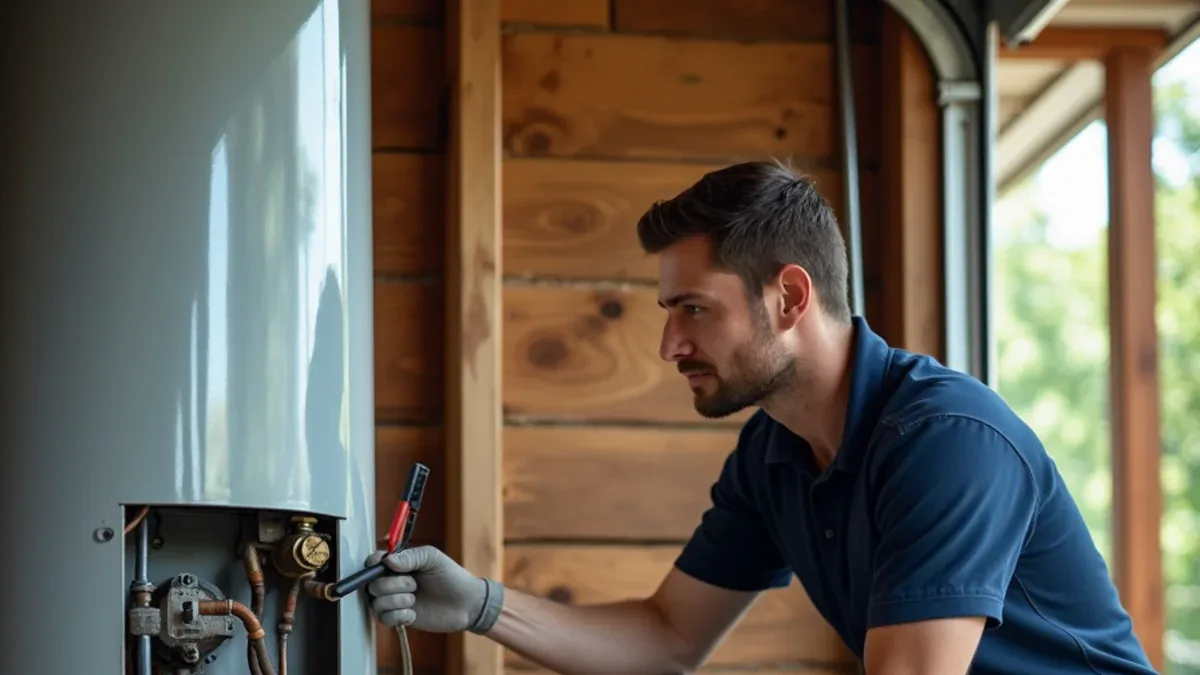
Most water heater faults are a part, not a tank. We test the components before anyone quotes you a replacement.
Water heaters fail in two ways. One is a component — a thermocouple, an element, a thermostat, a gas valve — and that is a repair, often an inexpensive one. The other is the tank itself, and once the tank goes there is nothing to fix. A big part of our job is telling you which one you have, honestly, when there is money on both sides of that answer.
Hard water is the local complication. Water across much of the Chattanooga area carries a meaningful mineral load, and every gallon that goes through a water heater leaves a little of it behind. That sediment layer insulates the burner from the water above it, makes the unit work harder, and shortens its life measurably. It is why a heater that should last twelve years sometimes goes at seven here.
We repair and install both gas and electric units, handle the venting and gas work properly, and pull permits where they are required. Free estimate, and a straight answer about what your unit has left.
What your water heater is telling you
No hot water at all
On gas, usually the pilot, thermocouple, or gas valve. On electric, usually a failed element or a tripped high-limit switch. Both are repairs.
Not enough hot water
Often a failed lower element on an electric unit, or a heavy sediment layer taking up the bottom of the tank. Both are fixable.
Rumbling or popping while heating
That is water boiling underneath a sediment layer. A flush may resolve it; if the sediment has hardened, the noise is a warning about remaining life.
Rusty or discolored hot water
If only the hot side is discolored, the tank lining or the anode rod is gone. Replacing the anode early prevents this; once the tank rusts, it is over.
Water pooling under the unit
Check the fittings and the T&P discharge first. If it is weeping from the tank body, the tank has failed and it will flood. Shut it off and call.
The unit is over ten years old
Not a failure, but the point to start planning. Replacing on your schedule is far cheaper than replacing at 6am on a Saturday.
How we work
How we handle water heater work
- 1
Diagnose before quoting
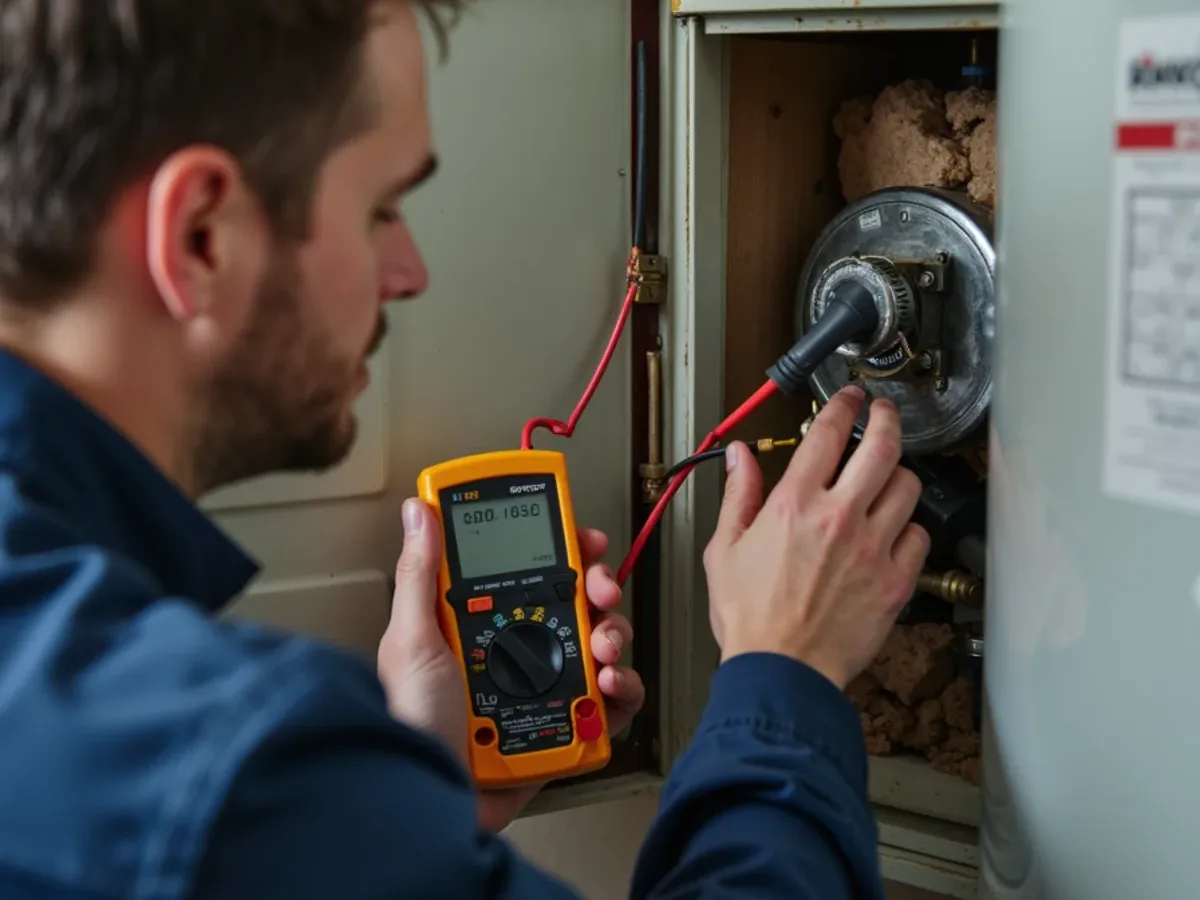
We test the actual components — elements, thermostats, thermocouple, gas valve, wiring — instead of assuming the tank based on its age.
- 2
Check the age and condition
The serial number tells us the manufacture date. Combined with tank condition and anode rod state, that tells us what the unit realistically has left.
- 3
Give you both numbers
Cost to repair versus cost to replace, plus our honest read on how long the repair buys you. You decide with real figures.
- 4
Size the replacement correctly
If you are replacing, sizing is based on your household, your fixture count, and your recovery needs — not just matching whatever was there.
- 5
Install to code
Proper venting, correct gas or electrical connections, expansion tank where required, drain pan, and a T&P discharge routed the way code requires.
- 6
Test, flush, and explain
We bring it up to temperature, check for leaks, verify the T&P, and show you how to flush it yourself and where the shutoffs are.
Need water heater repair in Ooltewah or nearby?
Free estimate, written price before work starts, and an honest answer about whether you need the job at all.
- Licensed septic technician
- 22 Google reviews
- Free estimates on every job
- Locally owned & operated
Repair or replace: how we actually decide
Three questions settle almost every case. How old is the unit? What failed? And what does the repair cost relative to a replacement?
If the heater is under eight years old and the failure is a component, repair it. Elements, thermostats, thermocouples, and gas valves are all designed to be replaceable, and a good tank with a new part will run for years.
If the heater is over twelve years old, the repair is significant, and the tank shows sediment or corrosion, replace it. Putting a three-hundred-dollar part into a tank that is going to leak next winter is money you will spend twice.
The gray zone is eight to twelve years with a moderate repair. There we look at the anode rod, the sediment level, and the condition of the tank fittings, and we tell you where we would put our own money. Our full breakdown is in water heater repair versus replacement.
What hard water does to a water heater here
Dissolved calcium and magnesium precipitate out when water is heated. That is not a defect, it is chemistry, and it happens in every water heater on hard water. The minerals settle to the bottom of the tank and build a layer.
In a gas heater the burner is underneath, so that layer sits directly between the flame and the water. The burner runs longer to reach temperature, the tank bottom gets hotter than it was designed to, and the steel fatigues. In an electric heater the lower element ends up buried in sediment, which burns elements out early.
Two things help. Flush the tank annually — genuinely annually, not when you remember — which takes twenty minutes and removes loose sediment before it hardens. And consider a water softener, which addresses the cause rather than the symptom and protects your fixtures, dishwasher, and washing machine at the same time.
Also check the anode rod every few years. It is a sacrificial metal rod that corrodes so the tank does not, and replacing a spent one for a modest cost can add years. Almost nobody does it, which is a large part of why water heaters here fail earlier than their ratings suggest.
What water heater work costs depends on
Repairs and installations sit at very different price points, and we will tell you which one you are looking at before you commit to anything. Free estimates.
- Repair or replacement
- A thermocouple or a heating element is a modest repair. A full replacement including the unit, labor, and code upgrades is a different order of magnitude.
- Gas versus electric
- Gas units cost more up front and require venting work. Electric installs are simpler but may need an electrical upgrade if the existing circuit is undersized.
- Tank size and recovery rate
- A 40-gallon standard unit and a 75-gallon high-recovery unit for a large household are very different pieces of equipment.
- Code upgrades on replacement
- Older installations often need an expansion tank, a drain pan, updated venting, or a properly routed T&P discharge. We list these separately so you can see them.
- Location and access
- A garage install is straightforward. An attic, a crawlspace, or a tight interior closet adds real time to getting the old unit out and the new one in.
- Switching to tankless
- Converting to a tankless system usually involves gas line, venting, and sometimes electrical changes. We price that as its own conversation.
We do not publish flat prices because two jobs on the same street can cost different amounts, and a quoted number that changes on arrival helps nobody. Every job starts with a free written estimate.
Questions
Water Heater Repair in Ooltewah — answered
A conventional tank unit is typically rated for eight to twelve years. In the Chattanooga area, hard water tends to pull that toward the lower end unless the tank has been flushed regularly and the anode rod maintained. Tankless units last considerably longer — often twenty years — but they need annual descaling here to get there.
Condensation appears on the outside of a cold tank during heavy use and dries up. A leak keeps producing water. Dry everything thoroughly, put down paper towel, and check in a few hours. If water is coming from the tank body itself rather than a fitting or the T&P line, the tank has failed — shut off the water supply and the gas or breaker and call.
Water heater replacement typically requires a permit and inspection, particularly for gas units where venting and combustion air are involved. We handle the permit as part of the job. Unpermitted work is a common finding at resale and it is far cheaper to do correctly the first time.
For a conventional tank the rule of thumb is roughly 30 to 40 gallons for one or two people, 40 to 50 for three or four, and 50 to 75 for five or more. But recovery rate matters as much as capacity — a household with two teenagers showering back to back needs fast recovery more than raw volume. We size against your actual fixture count and usage pattern.
It depends on your household and your gas service. Tankless makes strong sense for high hot-water demand, for households wanting endless hot water, and where floor space is at a premium. It makes less sense for a small household with modest usage, since the higher install cost takes a long time to earn back. Hard water also means annual descaling is not optional. We walk through the trade-offs on our tankless page.
You might also need
Water Heater Installation & Replacement
Replacing on your schedule costs a fraction of replacing at 6am with water across the garage floor. We size for recovery, not just gallons.
Learn moreTankless Water Heater Installation
Tankless installation, conversion, and annual descaling. We size for your actual demand and your incoming water temperature, not a brochure number.
Learn moreWater Softeners & Filtration
Hard water scales your water heater, shortens fixture life, and leaves spots on everything. We test, size, and install the right treatment.
Learn more
Water Heater Repair — free estimate, fair price
Call and describe what you are seeing. We will tell you what it usually means, what it will take to check, and what it is likely to cost.
- Licensed septic technician
- 22 Google reviews
- Free estimates on every job
- Locally owned & operated