A plumber makes more selling you a water heater than fixing one. That is worth saying out loud, because it means you should understand how this decision actually works rather than taking anyone's word for it — including ours.
Three questions settle almost every case.
Question 1: How old is it?
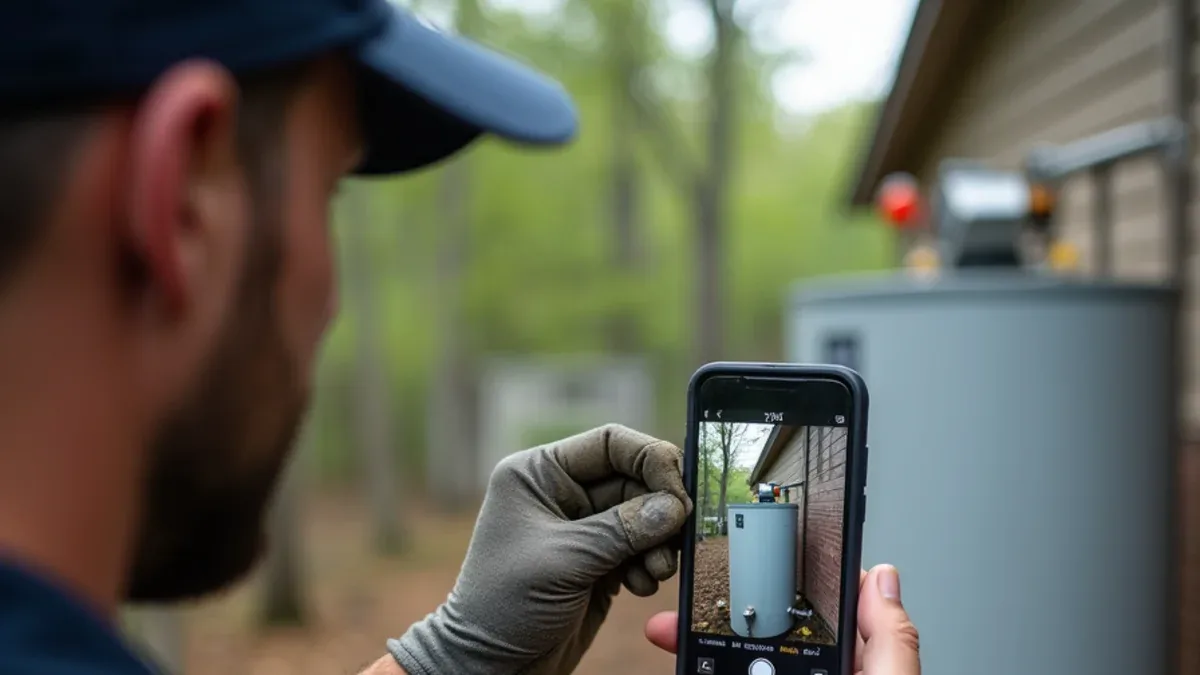
Find the serial number on the data plate. Most manufacturers encode the manufacture date in it, usually in the first four characters — a letter or digits for the year and a code for the month. A quick search on the brand plus "serial number date code" will decode it in a minute.
Conventional tank heaters are typically rated for eight to twelve years. In the Chattanooga area, hard water pulls that toward the lower end unless the tank has been flushed regularly.
Question 2: What actually failed?
This is the question that separates a repair from a replacement, and it is where a lot of homeowners get talked into the wrong thing.
Component failures — these are repairs
- No hot water on gas: usually the thermocouple, pilot assembly, or gas control valve
- No hot water on electric: usually a failed heating element or a tripped high-limit switch
- Not enough hot water on electric: commonly a failed lower element
- Water too hot or not hot enough: a thermostat
- Dripping from the T&P valve: often the valve itself, sometimes excessive pressure
Every one of those parts is designed to be replaceable. A sound tank with a new part runs for years.
Tank failures — these are replacements
- Water weeping or seeping from the tank body itself
- Rusty or discolored water on the hot side only
- Visible rust at the tank seams or around the base
- Rumbling that persists after a flush, indicating hardened sediment
Once the glass lining inside a tank fails, the steel corrodes and there is nothing to repair. A tank leaking from the body will not stop, and it will eventually flood.
Question 3: What does the repair cost relative to replacement?
Put the three answers together and it usually decides itself.
| Age | Component failure | Tank failure |
|---|---|---|
| Under 8 years | Repair — clear call | Replace, and check the warranty |
| 8–12 years | Repair if the cost is modest; weigh it if not | Replace |
| Over 12 years | Usually replace | Replace |
The genuine gray zone is eight to twelve years with a moderate repair cost. There we look at the anode rod, the sediment level, and the condition of the tank fittings, and we tell you where we would put our own money.
Why heaters fail early in this area
Hard water. Dissolved calcium and magnesium precipitate out when water is heated and settle to the bottom of the tank as sediment.
In a gas heater the burner sits underneath, so that sediment layer insulates the flame from the water. The burner runs longer, the tank bottom gets hotter than designed, and the steel fatigues. In an electric heater the lower element ends up buried in sediment, which burns elements out early.
Two things help: flush the tank annually, and consider a water softener which addresses the cause and protects your fixtures and appliances at the same time. More on the local water in our article on hard water in the Chattanooga area.
The anode rod nobody checks
Inside every tank heater is a sacrificial metal rod that corrodes so the tank does not. When it is used up, the tank starts corroding instead.
Checking it every three to five years and replacing a spent one for a modest cost can add years to a heater. Almost nobody does it, which is a large part of why heaters here fail before their rated life.
If you are replacing anyway
Size for recovery rate as well as capacity — a household with two teenagers showering back to back needs fast recovery more than raw volume. Budget for code upgrades that may be required, like an expansion tank, a drain pan, or updated venting. And ask whether tankless makes sense for your household before defaulting to a like-for-like swap.
We repair and replace gas and electric heaters across Ooltewah, Collegedale, East Brainerd and the surrounding area. We check the serial number before quoting anything, and the estimate is free.
Frequently asked
The serial number on the data plate encodes the manufacture date, usually in the first four characters. Search the brand name plus "serial number date code" and you will decode it in about a minute. Any plumber quoting a replacement without checking that number is guessing.
Condensation forms on the outside of a cold tank during heavy use and dries up. A leak keeps producing water. Dry everything thoroughly, lay down paper towel, and check in a few hours. Water coming from the tank body itself, rather than a fitting or the T&P discharge line, means the tank has failed.
Yes, meaningfully, and it is one of the most under-done pieces of home maintenance in this area. Annual flushing removes loose sediment before it hardens into a layer that insulates the burner and buries electric elements. It takes about twenty minutes and it can add years to a heater on hard water.
Need someone to actually look at it?
We are a licensed plumber and septic technician based in Ooltewah, serving Hamilton, Bradley and the surrounding counties. Free estimates on every job, and an honest answer about whether you need the work at all.