
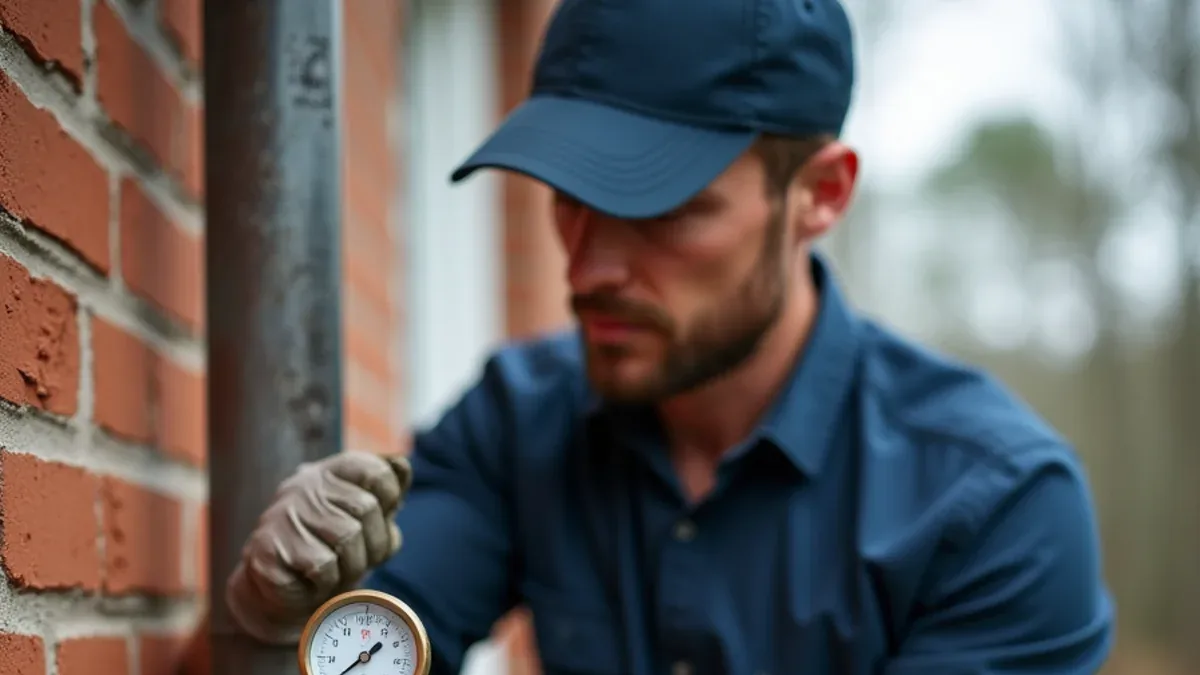
Plumbing service
Gas Line Installation & Repair in Ooltewah, TN
Permitted, pressure-tested gas work — for ranges, tankless heaters, fire pits, grills, and standby generators.
Gas work is the part of plumbing with the least room for improvisation. A joint that is merely "probably fine" on a water line is an inconvenience. On a gas line it is not. Every run we install gets sized for the load, assembled with the correct materials, pressure-tested, and permitted where the jurisdiction requires it.
Most of our gas work falls into a few categories: running a line to a new gas range during a kitchen remodel, adding a supply for a tankless water heater, plumbing an outdoor kitchen or fire pit, connecting a standby generator, and repairing or replacing corroded runs on older homes.
If you smell gas right now, stop reading. Leave the building, do not operate switches or your phone indoors, call the gas utility from outside, and then call us.
Gas problems and gas projects
The smell of rotten eggs
Mercaptan is added to natural gas specifically so you can smell a leak. Leave, call the utility from outside, and do not switch anything on or off.
A hissing sound near a gas line or appliance
An audible leak is a significant one. Same procedure: leave, call from outside, do not touch electrical switches.
Dead grass or bubbling in a wet spot outside
An underground gas leak displaces oxygen in the soil. A patch of dead vegetation over a known gas line route needs immediate attention.
A pilot light that will not stay lit
Sometimes a thermocouple, sometimes inadequate gas pressure or an undersized line struggling to keep up with total demand.
Adding a gas appliance
A range, dryer, tankless heater, generator, or outdoor kitchen. Each has a BTU load, and the existing line has to carry the total.
Yellow flames instead of blue
A burner producing yellow or orange flame is not combusting properly. That is a combustion air or appliance issue and it warrants service promptly.
How we work
How we handle gas work
- 1
Calculate the total load
We add up the BTU demand of every appliance, existing and planned, and check whether the meter and the existing piping can carry it. This is where undersized lines get caught.
- 2
Size the pipe for the run
Pipe diameter is determined by BTU load and the developed length of the run. A line that is adequate at ten feet is not adequate at sixty.
- 3
Pull the permit
Gas work requires permitting and inspection. We handle the application and coordinate the inspection as part of the job.
- 4
Install with the right materials
Black iron, CSST, or coated pipe underground, each used where it belongs, with proper support, sediment traps, and accessible shutoff valves at every appliance.
- 5
Pressure-test
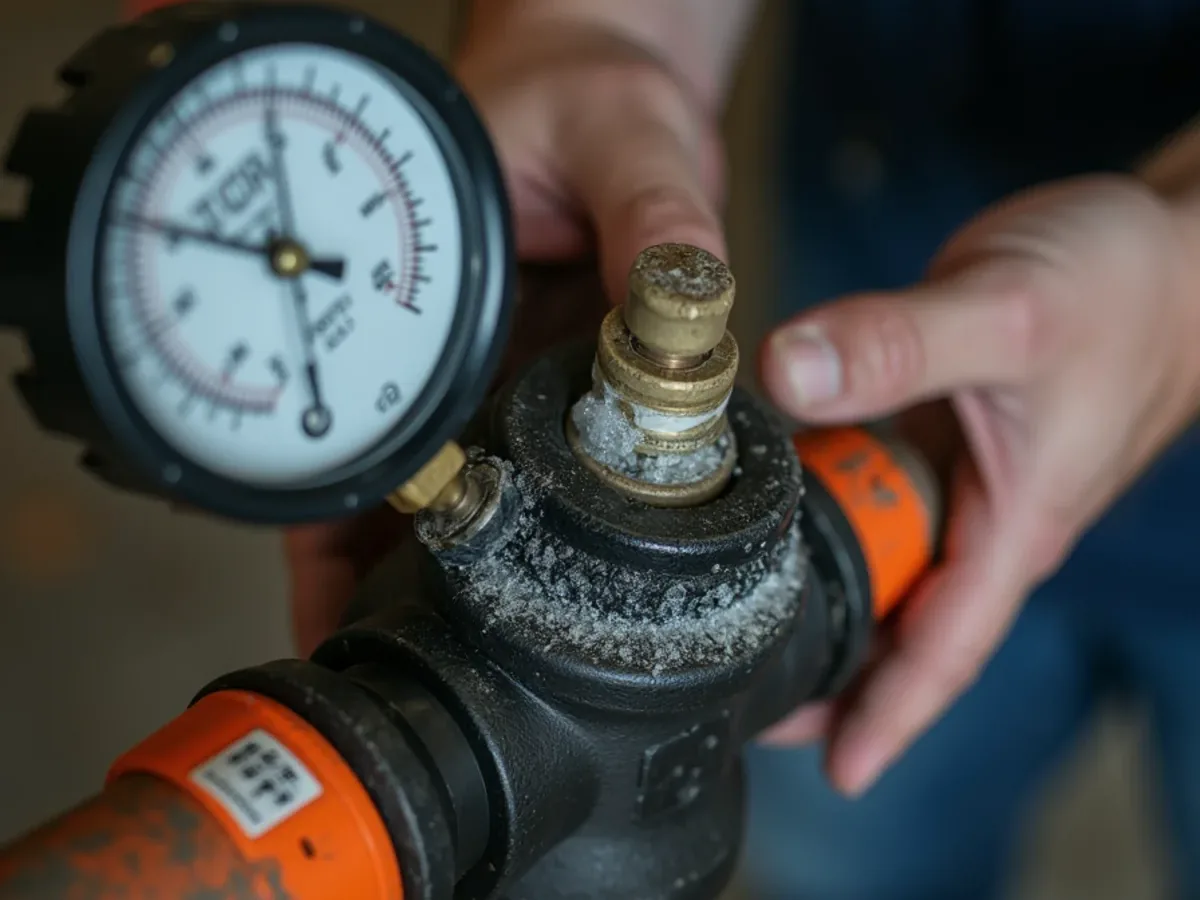
The line is isolated and held at test pressure while we watch the gauge. Nothing gets put into service until it holds.
- 6
Purge, light, and verify
We purge air from the line, light each appliance, verify operating pressure at the appliance, and check every connection with solution.
Need gas line installation & repair in Ooltewah or nearby?
Free estimate, written price before work starts, and an honest answer about whether you need the job at all.
- Licensed septic technician
- 22 Google reviews
- Free estimates on every job
- Locally owned & operated
What to do if you smell gas
Get everyone out of the building first. Not after you check the stove — first. Natural gas is lighter than air and propane is heavier, so both accumulate, and both are explosive within a range of concentrations.
Do not operate anything electrical on your way out. That means light switches, garage door openers, thermostats, and your phone. A switch contact produces a small spark, and a small spark is all it takes.
Do not light anything, obviously, and do not try to find the leak yourself with a flame. If you can safely reach an outside shutoff at the meter or the propane tank on your way out, close it. If you cannot reach it safely, leave it.
Once you are well clear of the building, call the gas utility emergency line. They will come and make the situation safe, and there is no charge for that call. Then call us to find and repair the actual leak once the utility has cleared the property.
Our article on gas line safety warning signs covers the subtler indicators worth knowing before you ever get to this point.
Sizing: the thing that gets skipped
The most common gas problem we find in existing homes is not a leak — it is a line that was adequate when it was installed and is not adequate for what has been added to it since. A half-inch branch that fed a single furnace does not carry a furnace plus a tankless water heater plus a gas range.
The symptom is subtle. Appliances work, but not well. A tankless heater cannot reach full output. A range burner drops when the furnace kicks on. A pilot light goes out on cold mornings when demand peaks. Homeowners chase appliance problems for months when the actual issue is pressure drop across an undersized line.
Proper sizing uses the total connected BTU load and the developed length of the run, including allowances for every fitting. It is straightforward arithmetic that takes a few minutes and it is the difference between a system that works and one that half-works.
If you are planning to add a gas appliance, have the whole system evaluated rather than just running a branch to the new unit. Finding out the main run needs upsizing before the new appliance is installed is much better than after.
What gas line work costs depends on
Gas jobs are quoted per run because the variables are specific. Free estimates, and we will tell you if the meter needs upgrading before you commit.
- Length and route of the run
- A short run in an open basement is quick. Sixty feet through a finished house, or an underground run to a detached kitchen, is a different job.
- Pipe size required
- Higher BTU loads and longer runs need larger pipe, which costs more in material and is harder to route through existing framing.
- Whether the meter can carry it
- Adding a tankless heater or a generator sometimes exceeds what the existing meter supplies. A utility meter upgrade is a separate process and we will flag it early.
- Interior or underground
- Underground runs to a pool heater, outdoor kitchen, or detached garage require trenching, proper depth, tracer wire, and appropriate materials.
- Access and finishes
- Open framing during a remodel is the cheapest time by a wide margin. Fishing pipe through finished walls and ceilings adds real labor and patching.
- Permits and inspection
- Permit fees are pass-through and listed separately. Inspection is not optional on gas work and we would not do it without one anyway.
We do not publish flat prices because two jobs on the same street can cost different amounts, and a quoted number that changes on arrival helps nobody. Every job starts with a free written estimate.
Questions
Gas Line Installation & Repair in Ooltewah — answered
Yes. Gas piping work requires a permit and an inspection, and there is a good reason for that — this is the system where mistakes are dangerous rather than merely inconvenient. We pull the permit and coordinate the inspection as part of every gas job. Unpermitted gas work also tends to surface at resale and during insurance claims.
Yes, both are common jobs. Generators in particular have a substantial BTU demand, so the first step is verifying that your meter and existing piping can supply it alongside everything else. Outdoor runs are installed at proper depth with the correct materials and tracer wire so the line can be located later.
The line is isolated and pressurized with air well above operating pressure, then held while we watch a gauge over a set period. Any drop means a leak. On existing systems we also use an electronic combustible gas detector and a leak-detection solution at every joint and connection. We do not put a line into service on a visual check.
Corrugated stainless steel tubing is code-approved and widely used, and it installs faster than rigid black iron through finished spaces. The critical requirement is proper bonding and grounding, because inadequately bonded CSST has been implicated in failures following nearby lightning strikes. We install it with the bonding the manufacturer and code require, and we check bonding on existing CSST whenever we work on a system that has it.
Often the line, and it is worth checking before you replace an appliance. The tell is whether performance drops when other gas appliances run — if your tankless heater struggles only when the furnace is on, that is a supply problem, not an appliance problem. We measure operating pressure at the appliance under full load, which settles the question quickly.
You might also need
Tankless Water Heater Installation
Tankless installation, conversion, and annual descaling. We size for your actual demand and your incoming water temperature, not a brochure number.
Learn moreWater Heater Repair
No hot water, not enough hot water, or rumbling. We diagnose the actual fault — thermocouple, element, thermostat, gas valve — instead of quoting a new unit by reflex.
Learn moreEmergency Plumbing
Burst pipes, sewage backups, and failed water heaters do not wait for business hours. Neither do we.
Learn more
Gas Line Installation & Repair — free estimate, fair price
Call and describe what you are seeing. We will tell you what it usually means, what it will take to check, and what it is likely to cost.
- Licensed septic technician
- 22 Google reviews
- Free estimates on every job
- Locally owned & operated