
Plumbing service
Pipe Repair & Whole-House Repiping in Ooltewah, TN
When patching stops making sense — a planned repipe done cleanly, with your water back on every night.
Repiping is a job nobody wants and some houses genuinely need. The tell is the pattern: one leak becomes two, two become four, and each repair costs money that does nothing about the next one. At some point the arithmetic flips, and continuing to patch a failing system costs more than replacing it.
The three materials that drive most repipes in this area are galvanized steel, which rusts closed from the inside on pre-1960 homes; polybutylene, the gray plastic pipe used from the late 1970s into the mid-1990s that fails at fittings without warning; and aging copper that has begun producing pinholes.
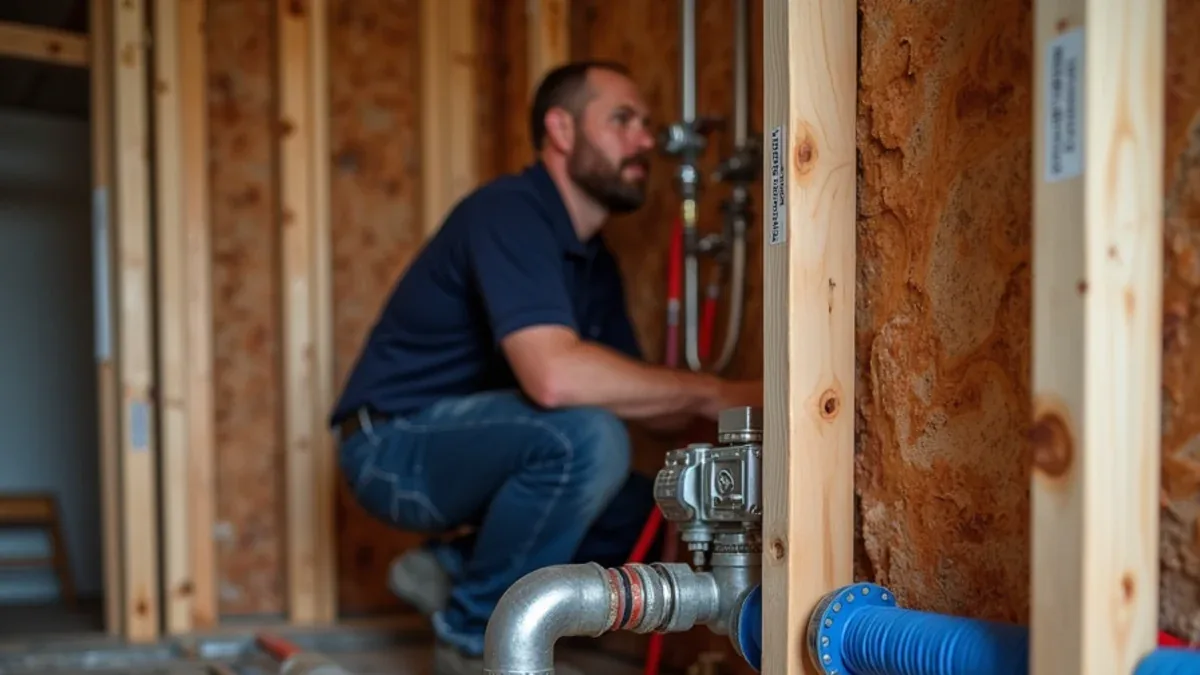
A repipe is disruptive, and we do not pretend otherwise. What we can control is how disruptive. We plan the routes to minimize drywall openings, work in stages so you have water at the end of every day, and leave the openings clean and ready for a drywall finisher.
Signs your home needs repiping
Rusty or brown water on the hot side
Discoloration when you first run a tap, especially in the morning, is corrosion coming off the inside of galvanized pipe.
Repeated pinhole leaks in copper
One pinhole is a repair. Three in two years means the whole system is at the same point in its life and the next one is already forming.
Weak pressure that has gotten worse over years
Galvanized pipe closes gradually with corrosion. If pressure at the far fixtures has declined slowly over a decade, this is why.
Gray polybutylene pipe
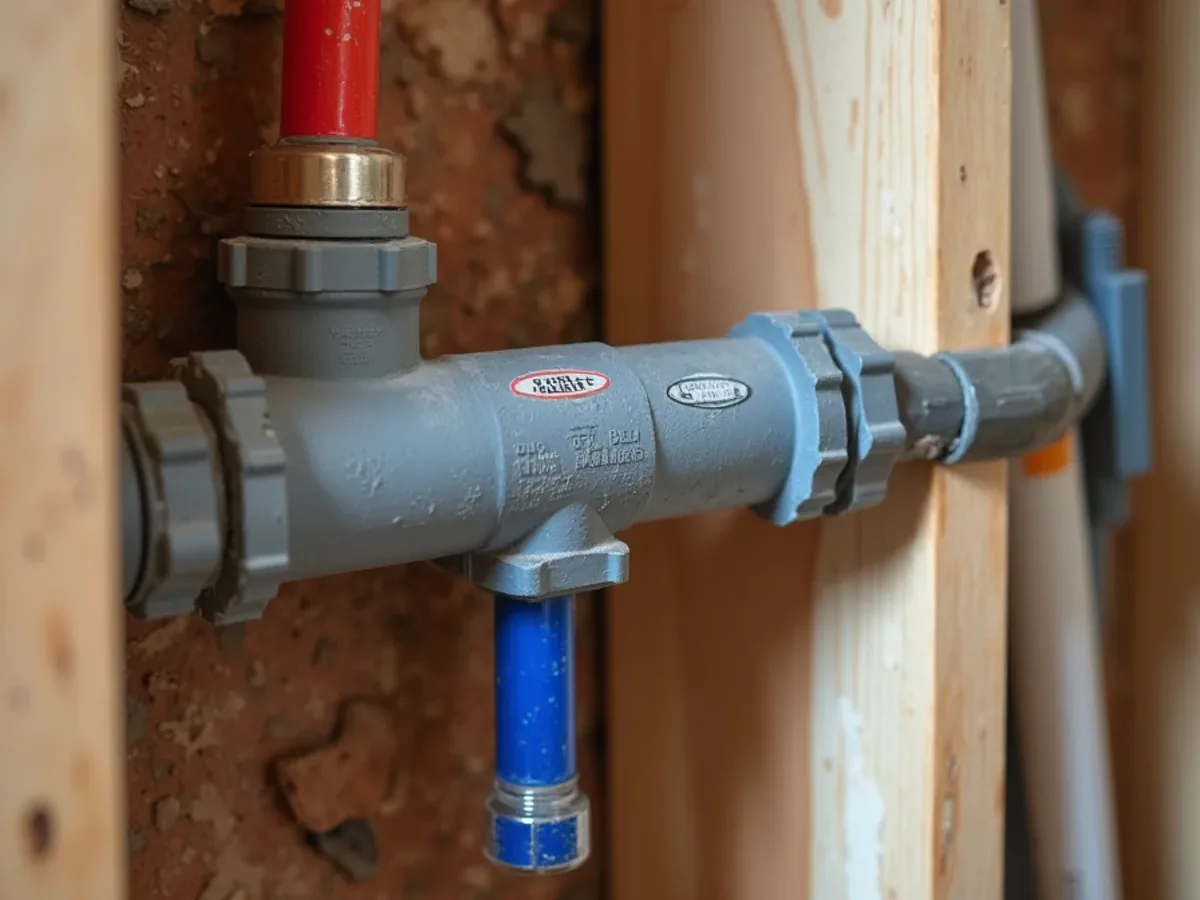
If you see gray plastic supply pipe with crimped metal or plastic fittings, that is polybutylene. It fails suddenly, often at the fitting, and insurers know it.
Visible corrosion at joints
Green or white crust on copper fittings, or rust bleeding at threaded galvanized joints, is the outside evidence of an inside problem.
You are already opening walls
A whole-home remodel is by far the cheapest time to repipe. The access is already there and the drywall is already coming off.
How we work
How a repipe actually runs
- 1
Walk the house and map the system
We trace every supply run, note fixture locations, and identify where existing pipe is accessible through attics, crawlspaces, and closets.
- 2
Plan routes to minimize openings
The goal is running new lines through attic and crawlspace wherever possible, so drywall openings are limited to drops at fixtures.
- 3
Protect the house
Floor protection, plastic sheeting, and dust containment go in before any cutting. A clean repipe is a matter of preparation, not luck.
- 4
Run new lines and tie in
New PEX or copper runs go in with proper support and, on PEX, a home-run or manifold layout where the house allows. Old pipe is abandoned in place or removed as access permits.
- 5
Pressure-test before closing
The new system holds test pressure and gets inspected before anything is covered. This is the step that prevents a leak behind new drywall.
- 6
Restore and clean
We patch openings back to a drywall-ready state, clean up thoroughly, and flush every line before you use it.
Need pipe repair & whole-house repiping in Ooltewah or nearby?
Free estimate, written price before work starts, and an honest answer about whether you need the job at all.
- Licensed septic technician
- 22 Google reviews
- Free estimates on every job
- Locally owned & operated
PEX or copper: what we recommend and why
PEX is cross-linked polyethylene, flexible tubing that has been used in residential plumbing for decades and is now the default in new construction. It does not corrode, it tolerates freezing far better than rigid pipe because it can expand slightly, it installs with far fewer fittings, and the reduced labor makes a repipe meaningfully cheaper.
Copper is rigid, proven over a century of use, and some homeowners simply prefer it. It handles high temperatures without question and it is not affected by UV exposure. Its weaknesses are the ones that put many homes into a repipe in the first place: it corrodes, and aggressive water chemistry or high pressure produces pinholes.
For most Ooltewah homes we recommend PEX, run in a home-run or manifold layout where the structure permits. That layout gives each fixture its own line from a central manifold, which means fewer joints inside walls, easier isolation for future repairs, and better pressure balance when two fixtures run at once.
One caution on PEX: it degrades with UV exposure, so any run in an unprotected location — an exposed crawlspace opening, an outbuilding run — needs to be sleeved or shielded. Rodents in crawlspaces are also worth guarding against.
The polybutylene problem
Polybutylene supply pipe was installed in a very large number of American homes between roughly 1978 and 1995. It is usually gray, sometimes blue or black, flexible, and stamped with "PB2110." It was cheap and easy to install and it was used widely in Tennessee during exactly the period a lot of this area was developing.
It fails from the inside as oxidants in treated water degrade the material, and it typically fails at fittings rather than in the middle of a run — which means it fails suddenly and at a joint that is usually inside a wall or ceiling. There is no reliable way to inspect for it or predict when a given fitting will let go.
The practical consequences reach beyond the plumbing. Some insurers will not write a policy on a home with polybutylene supply lines, or will write it with an exclusion, and it routinely surfaces as a negotiation item at closing. If you are buying a home built in that window, look at the pipe stubs under a sink or at the water heater before you waive inspection.
Our recommendation is unambiguous: if you have polybutylene, plan the repipe on your schedule rather than waiting for a fitting to fail while you are at work.
What repiping costs depends on
A repipe is a planned investment, not an emergency purchase, and we quote it in detail so you can see every line. Free estimate and a written scope.
- Size of the house and fixture count
- Repipes are priced largely by the number of fixtures and the total run length. A two-bath ranch and a four-bath two-story are very different jobs.
- Number of stories and slab versus crawlspace
- A single-story home over a crawlspace is the most straightforward. Two stories on a slab means routing through the attic and dropping walls, which is more labor.
- PEX or copper
- PEX costs less in both material and labor and performs excellently. Copper costs more and some homeowners prefer it. We will install either and explain the trade-offs.
- Full repipe or partial
- Sometimes only the hot side, or only one wing of the house, is failing. A partial repipe is a legitimate option and we will tell you when it makes sense.
- Drywall restoration
- We patch openings to a paint-ready or drywall-ready state depending on scope. Full texture and paint matching is usually handled by a finisher and we will say so up front.
- Additional work at the same time
- Replacing shutoff valves, adding a pressure-reducing valve, or relocating a fixture is far cheaper while the walls are open.
We do not publish flat prices because two jobs on the same street can cost different amounts, and a quoted number that changes on arrival helps nobody. Every job starts with a free written estimate.
Questions
Pipe Repair & Whole-House Repiping in Ooltewah — answered
For a typical single-family home, plan on two to five days of plumbing work depending on size, layout, and access, plus drywall repair afterward. We stage the work so your water is back on at the end of each day — you will have short interruptions during the day rather than days without water.
No. Most of the new pipe runs through attic and crawlspace, and wall openings are limited to drops at fixture locations. In a typical repipe that is a series of modest openings rather than removed walls. We patch them back to a drywall-ready or paint-ready state depending on the scope we agree on.
For residential supply lines, yes, and in several respects better. It does not corrode, it survives freezing far more reliably, and it uses fewer in-wall joints. Copper has a longer track record and handles UV and high heat better. Both are code-approved and both will outlast most owners. The material that fails is old galvanized, polybutylene, and aging copper — not modern PEX.
Almost never. It is dusty and there is noise, and there will be periods during the working day without water, but water is restored each evening. Households with someone working from home sometimes prefer to be out during the day, and we can work with whatever schedule suits you.
Yes, and that is a common standalone job. A failing service line shows up as a persistently spinning water meter with the house valve closed, a wet strip in the yard, or a drop in pressure at every fixture. Depending on the route and what is on top of it, we either open-cut a trench or use a trenchless pull to save your driveway and landscaping.
You might also need
Water Line Repair & Replacement
A wet strip in the yard, a meter that keeps turning, or pressure that dropped across the whole house. We find it before we dig.
Learn moreLeak Detection & Repair
A doubled water bill with no visible cause usually means a leak under a slab or inside a wall. We locate it precisely and open only what we must.
Learn moreBurst & Frozen Pipe Repair
Thawing, repair, and the freeze-proofing that stops it happening again. Tennessee homes are built for mild winters, which is exactly why a cold snap breaks pipes.
Learn more
Pipe Repair & Whole-House Repiping — free estimate, fair price
Call and describe what you are seeing. We will tell you what it usually means, what it will take to check, and what it is likely to cost.
- Licensed septic technician
- 22 Google reviews
- Free estimates on every job
- Locally owned & operated