Repiping is disruptive and expensive and nobody goes looking for it. The point at which it becomes the right decision is fairly identifiable, though, and it is worth understanding so the choice is yours rather than a surprise.
The three materials that drive most repipes
Galvanized steel
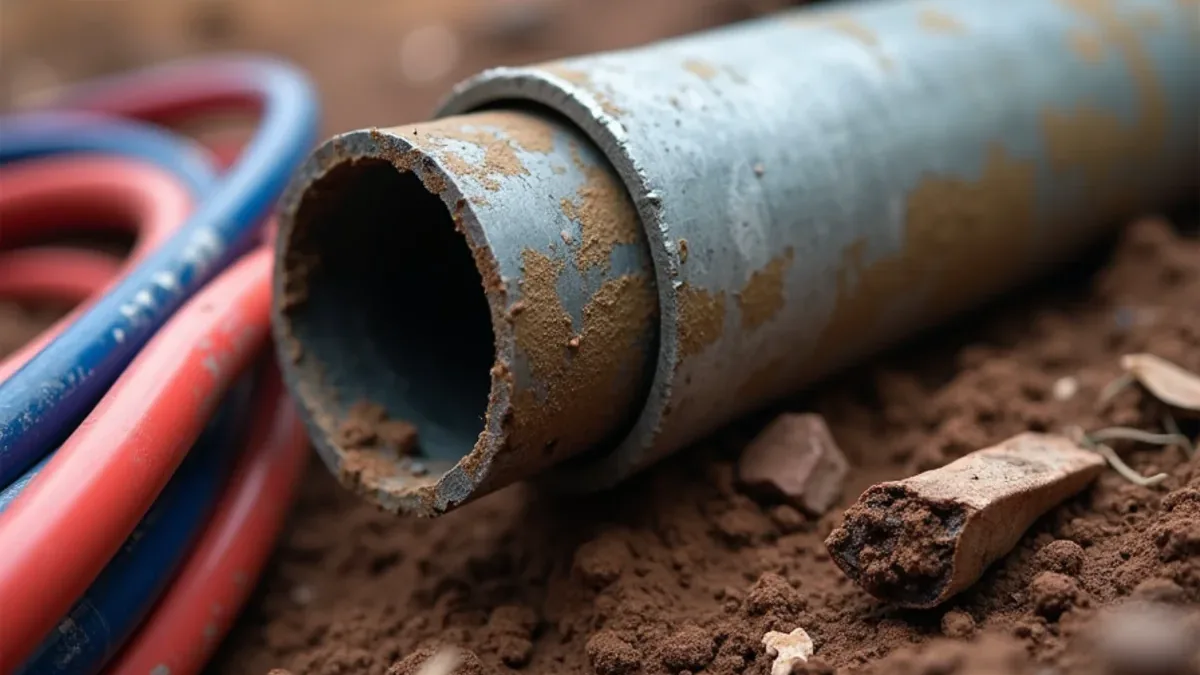
Standard in homes built before about 1960. It corrodes from the inside, and the interior diameter narrows year after year until pressure at the far fixtures becomes unusable.
The symptom is gradual: pressure declines so slowly nobody notices until a guest mentions the shower. You may also see rusty or brown water when a tap is first opened in the morning.
The important nuance is that replacing one section of an all-galvanized house just moves the restriction downstream. That is why partial repairs on galvanized so often disappoint.
Polybutylene
Installed very widely between roughly 1978 and 1995. Usually gray, sometimes blue or black, flexible, and stamped "PB2110." It was cheap and quick to install and it went into an enormous number of homes during exactly the period this area was developing.
It degrades internally from oxidants in treated water and typically fails at fittings — suddenly, and usually inside a wall or ceiling. There is no reliable way to inspect it or predict when a given fitting will let go.
The consequences reach beyond plumbing. Some insurers will not write a policy on a home with polybutylene supply lines, or will write it with an exclusion, and it routinely becomes a negotiation item at closing.
Aging copper
Copper is excellent material and most of it lasts decades. What ends it is pinhole corrosion — soil chemistry, water chemistry, high pressure, or abrasion thinning the wall until it perforates.
One pinhole in a thirty-year-old system is rarely the last. When the third one arrives in two years, the system is telling you something, and continuing to chase individual failures stops being good value.
The signs, in plain terms
- Rusty or discolored water, particularly on first draw in the morning
- Pressure at the far fixtures that has declined steadily over years
- More than two pinhole leaks in a couple of years
- Visible corrosion — green crust on copper, rust bleeding at galvanized joints
- Gray polybutylene supply pipe anywhere in the house
- You are already opening walls for a remodel, which is by far the cheapest time
What a repipe actually involves
Less destruction than people fear, if it is planned properly.
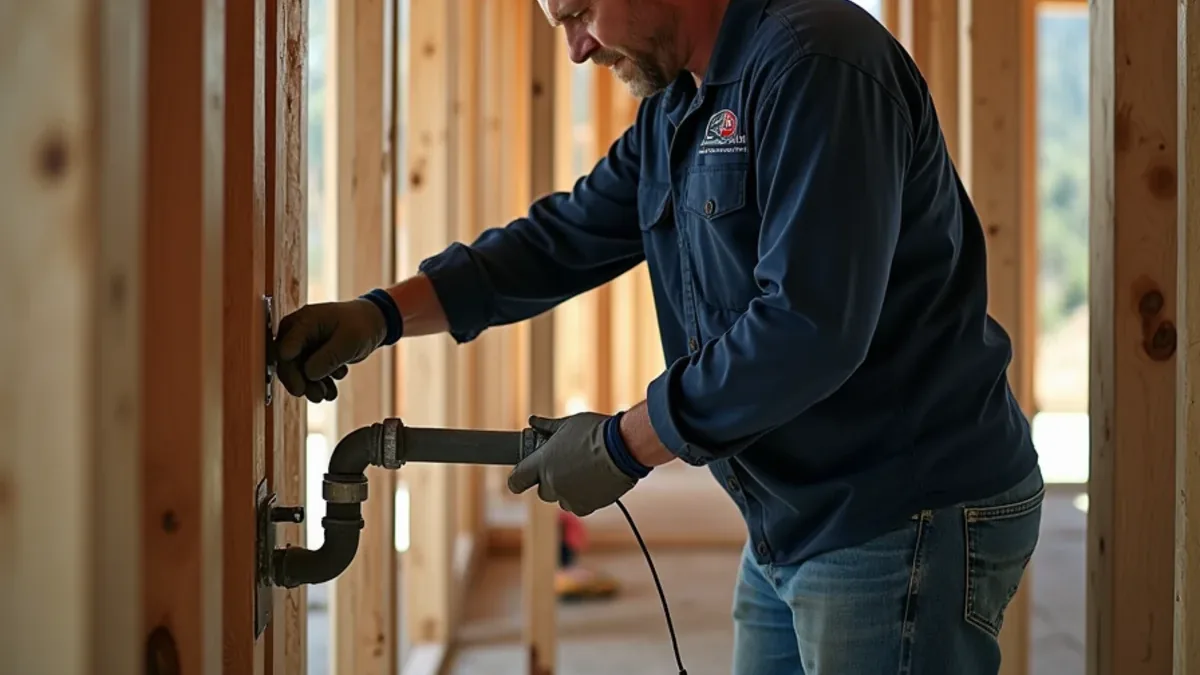
Most new pipe runs through attic and crawlspace, so wall openings are limited to drops at fixture locations. Those can frequently be placed in closets, behind cabinetry, or in less visible areas. We walk the house and show you exactly where the openings would go before you commit.
Work is staged so water is back on at the end of every day. Plan on two to five days of plumbing depending on size and access, plus drywall repair afterward.
PEX or copper?
For most homes we recommend PEX, in a home-run or manifold layout where the structure allows. It does not corrode, it tolerates freezing far better than rigid pipe, it uses far fewer in-wall joints, and the reduced labor makes the job meaningfully cheaper.
Copper is proven and some homeowners prefer it. It handles high temperature without question and is unaffected by UV. Its weaknesses are exactly the ones that put homes into repipes.
One caution on PEX: it degrades with UV exposure, so any run in an unprotected location needs sleeving. Rodents in crawlspaces are also worth guarding against.
Things worth doing while the walls are open
- Replace every shutoff valve with quarter-turn stops — the old multi-turn ones seize
- Swap rubber and plastic supply lines for braided stainless
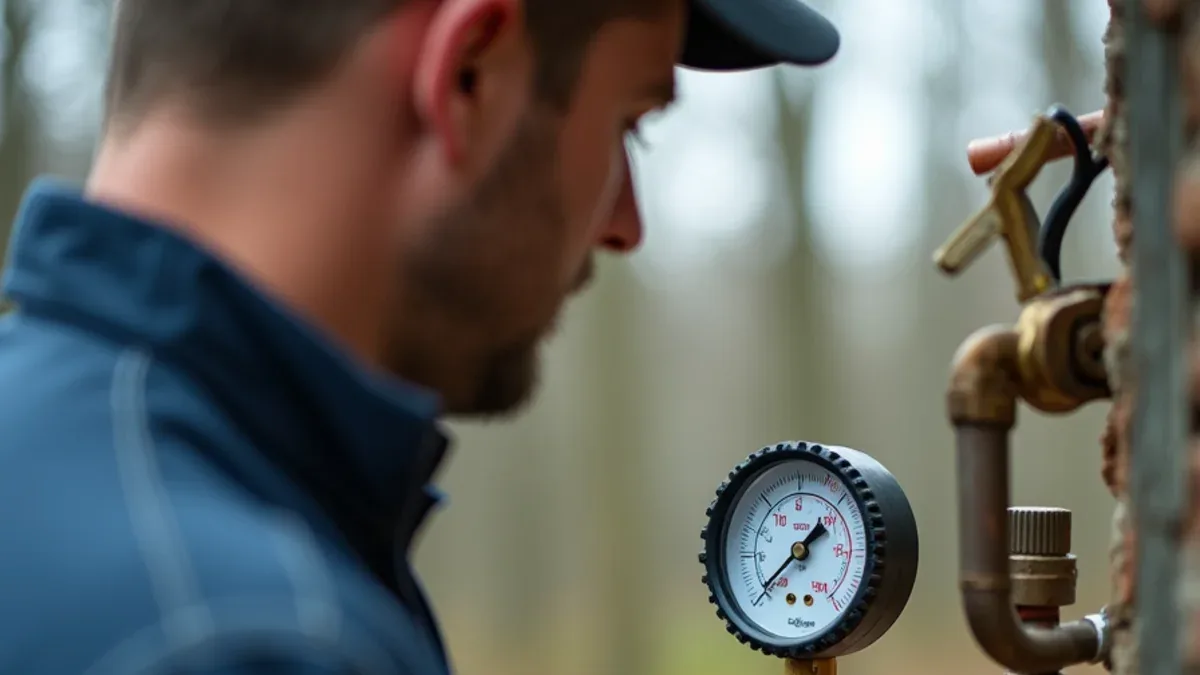
- Add a pressure-reducing valve if static pressure is above about 80 psi
- Relocate a fixture you have always wanted moved
- Add a hose bib, a laundry box, or a line for a future bathroom
All of it is a fraction of the cost while access already exists.
Timing it on your terms
The best repipes are planned. You get quotes, you choose the material, you schedule it for a week that suits you, and you arrange drywall finishing in advance.
The worst ones happen after a fitting lets go in a ceiling on a Sunday. If your house has any of the warning signs, the difference between those two scenarios is entirely a matter of deciding earlier.
We repipe across Ooltewah, Signal Mountain, Red Bank, Harrison and the surrounding area — details on our repiping page. Estimates are free and we will tell you honestly if a targeted repair is the better answer.
Frequently asked
Look at the supply stub-outs under a bathroom sink, behind a toilet, or at the water heater. Polybutylene is flexible plastic, usually gray, sometimes blue or black, and typically stamped "PB2110." It was installed widely between about 1978 and 1995. If your home is from that window, it is worth two minutes to check.
Almost never. It is dusty and noisy, and there are periods during the working day without water, but water is restored each evening. Some households working from home prefer to be out during the day, and we can work around whatever schedule suits you.
Sometimes, and we will tell you when it makes sense — for example if only the hot side or one wing has failed. On an all-galvanized house it usually does not, because replacing one section leaves the restriction downstream and the improvement disappoints. We map what is actually there before recommending either.
Need someone to actually look at it?
We are a licensed plumber and septic technician based in Ooltewah, serving Hamilton, Bradley and the surrounding counties. Free estimates on every job, and an honest answer about whether you need the work at all.