
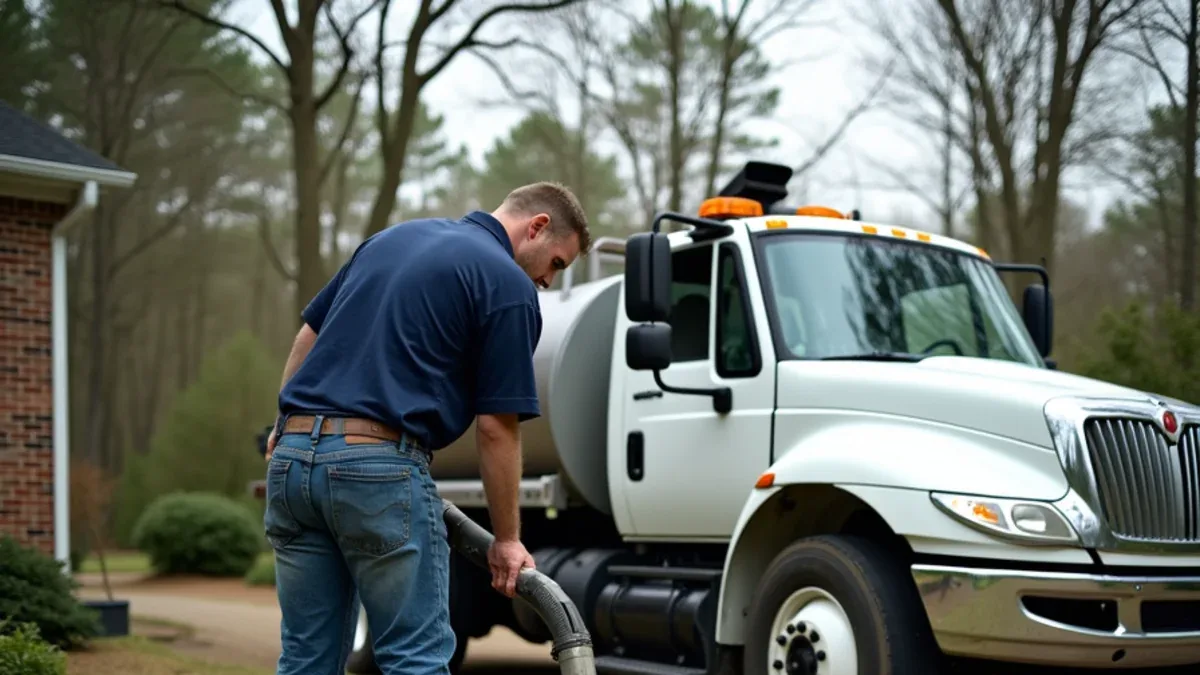
Septic service
Septic Tank Pumping in Ooltewah, TN
Pumped, cleaned, and inspected by a licensed septic tech — with a free estimate before we ever unroll a hose.
A septic tank does not fail on a schedule you choose. It fails on the Sunday your family is in town, or the morning of a home inspection, and by then the sludge layer has already worked its way into the drain field where the repair bill gets serious. Pumping on a regular cycle is the cheapest insurance a septic owner can buy, and it is the single most common call we take across Ooltewah, Apison, and Harrison.
Perfect Service Plumbing and Septic is run by a licensed septic technician, not a general plumber who subcontracts the dirty work. When we pump your tank we empty both compartments, wash the walls down, look at the inlet and outlet baffles, and tell you honestly what we saw — including the things that are fine. Estimates are free and the price we quote is the price you pay.
If you have never had your tank pumped, or you bought the house and the paperwork did not follow, we will locate the lid, probe for the tank, and get you back on a maintenance schedule. Read our guide on how often to pump a septic tank in Tennessee if you want the reasoning behind the interval before you call.
Signs your Ooltewah septic tank is overdue
Slow drains everywhere at once
One slow sink is a clog. Every sink, tub, and toilet draining slowly at the same time points at the tank or the line leaving it, not at the fixture.
Gurgling toilets after a load of laundry
When the tank is near capacity, a washing machine discharge pushes air back up the vent stack. That gurgle is the system telling you it has nowhere to put the water.
Bright green grass over the drain field
A lush, fast-growing strip in an otherwise ordinary yard means effluent is surfacing. It is the earliest visible warning that solids have carried past the tank.
Standing water or odor near the tank lid
Soft, spongy ground or a sulfur smell around the lid after rain usually means the tank is full and the outlet is submerged.
Backups in the lowest fixture in the house
Basement showers and first-floor tubs back up first. If sewage is appearing there, stop running water and call — this is an emergency septic call.
It has simply been five years
A four-person household on a 1,000-gallon tank is due at roughly the three-to-five-year mark. If you cannot remember the last pump-out, you are past due.
How we work
How we pump a septic tank
- 1
Locate and open the tank
We find the lid using your as-built drawing, a probe, or a locator. If you have risers, we are open in a minute. If the lid is buried, we dig a clean access hole and backfill it when we are done.
- 2
Measure before we pump
We measure the scum layer on top and the sludge layer on the bottom before anything comes out. Those two numbers tell us whether your pumping interval should be shorter, longer, or exactly where it is.
- 3
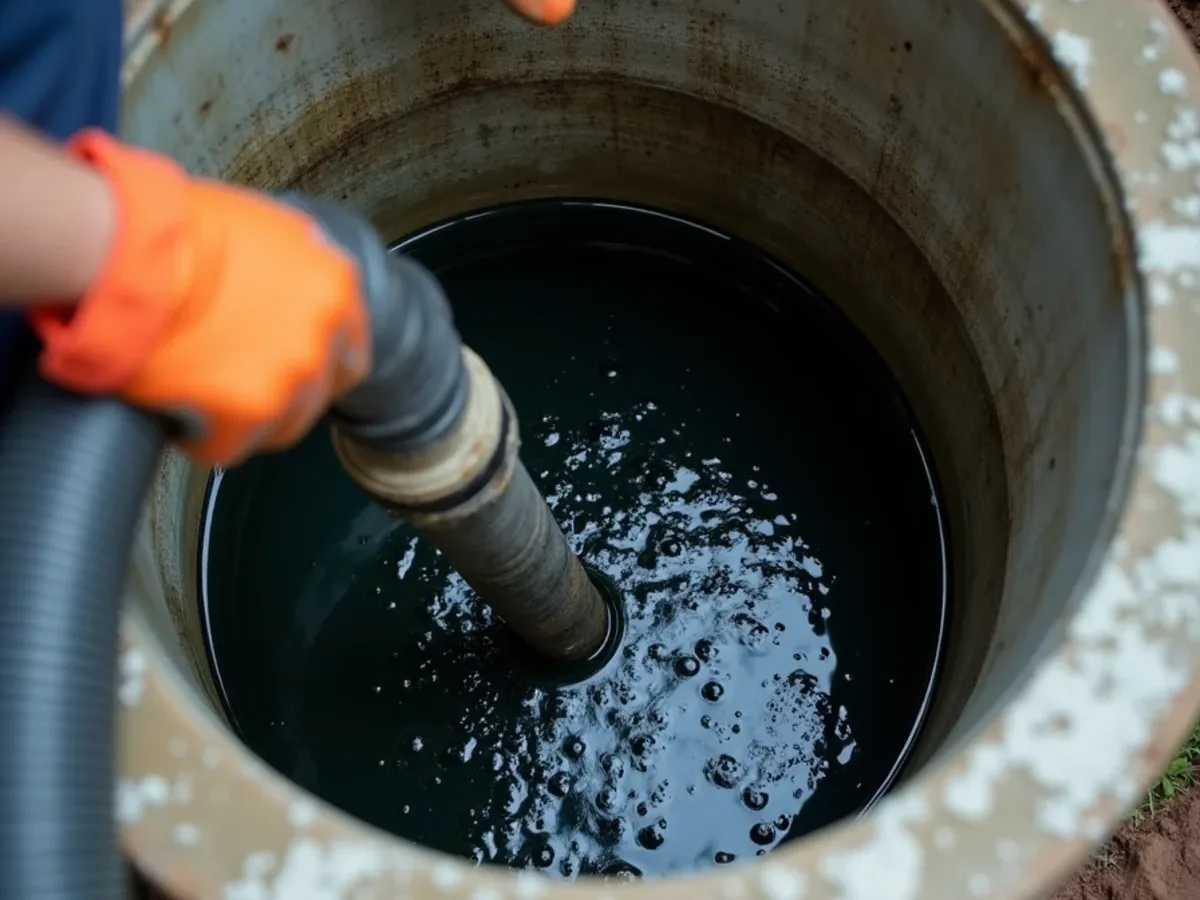
Pump both compartments
Most Tennessee tanks are two-compartment. Pumping only the first one leaves half the solids in place, so we pump both and backflush to break up any hardened crust.
- 4
Wash down and inspect
We rinse the walls, then inspect the inlet baffle, outlet baffle or effluent filter, and the tank structure itself for cracks and root intrusion. Anything we find gets photographed and explained.
- 5
Check the drain field response
We watch how the field accepts the first flow after pumping. Slow acceptance is an early sign of drain field trouble and we would rather tell you now than next year.
- 6
Leave you with a date
You get a written record of the sludge depths, what we serviced, and the month we recommend for your next pump-out. Take it to closing if you sell.
Need septic tank pumping in Ooltewah or nearby?
Free estimate, written price before work starts, and an honest answer about whether you need the job at all.
- Licensed septic technician
- 22 Google reviews
- Free estimates on every job
- Locally owned & operated
Why septic pumping matters more in this part of Tennessee
Large stretches of Hamilton and Bradley County were never brought onto city sewer. Drive out Snow Hill Road, Georgetown Road, or the rural routes around Birchwood and Apison and nearly every home is on its own system. Those systems sit in the clay-heavy soils of the Tennessee Valley, and clay does not absorb effluent the way sandy soil does.
That matters because a drain field in clay has less margin for error. When solids escape a full tank and reach the field, the biomat that forms in the trenches has fewer places to drain. A field that might have limped along for years in sandy ground can fail in one wet spring here. Pumping on schedule keeps the solids where they belong and protects the most expensive part of your system.
Rainfall makes it worse. The Chattanooga area averages well over fifty inches a year, and a saturated field simply cannot take on more water. That is why we tell customers to get the tank pumped before a wet season, not during one.
What we will not do
We will not sell you additives. There is no enzyme, yeast packet, or bottled bacteria that removes the inorganic sludge at the bottom of your tank, and some of the aggressive products on the shelf can push solids into the field. Our honest take is in this article on septic additives.
We will not pump a tank that does not need it. If we measure your layers and you have another two years, we will tell you that and charge you for the trip, not the pump-out. That is a short conversation that has earned us a lot of repeat customers.
We will not leave you guessing. If we find a cracked tank, a collapsed baffle, or roots in the inlet, you get photos and a plain-English explanation of what happens if you wait.
What affects the cost of a septic pump-out
We do not publish a flat number because two tanks on the same street can cost different amounts to service, and quoting blind helps nobody. Here is exactly what moves the price, so nothing on the invoice is a surprise. Every job starts with a free estimate.
- Tank size
- A 750-gallon tank on an older Ooltewah home costs less to empty than the 1,250- or 1,500-gallon tanks going into new construction off Snow Hill Road.
- How long since the last pump-out
- A tank pumped four years ago pumps easily. A tank that has gone fifteen years has a compacted sludge layer that takes water, agitation, and time to break loose.
- Access to the lid
- Risers at grade are the cheapest scenario. A lid buried eighteen inches under sod, or a tank the truck cannot reach without long hose runs, adds labor.
- Whether we have to locate the tank
- If nobody knows where the tank is, locating it is real work. Once we find it we mark it so it is never a mystery again.
- Repairs found during service
- A missing outlet baffle or a failed effluent filter is cheap to fix while the tank is open and expensive to fix later. We quote it before we touch it.
- Emergency versus scheduled
- A scheduled Tuesday pump-out costs less than a Saturday-night backup. Staying on a maintenance cycle is how you avoid ever paying the second price.
We do not publish flat prices because two jobs on the same street can cost different amounts, and a quoted number that changes on arrival helps nobody. Every job starts with a free written estimate.
Questions
Septic Tank Pumping in Ooltewah — answered
For most Ooltewah households, every three to five years. A family of four on a 1,000-gallon tank usually lands near the three-to-four-year mark, while two people on a 1,500-gallon tank can often go five. Garbage disposals, water softeners that discharge to the tank, and heavy laundry days all shorten the interval. We measure your sludge and scum layers at each visit and give you a specific date rather than a rule of thumb.
No. It helps if you know roughly where it is, but locating tanks is part of what we do. Bring us any as-built drawing or health department permit you have from closing, and we will take it from there. If we have to dig to reach the lid, we backfill and rake the area before we leave.
Usually yes, though heavy sustained rain is a bad time to service a system because the drain field is already saturated. If your yard is soft enough that the truck would rut it badly, we will reschedule rather than tear up your lawn. In a true backup we come anyway and work around it.
If you plan to stay in the home, yes. Risers pay for themselves over two or three pump-outs in avoided digging, and they make inspections far easier. We install them during a pump-out while the tank is already open, which is the cheapest time to do it.
Wipes of any kind, including the ones labeled flushable, plus feminine products, paper towels, cat litter, grease, coffee grounds, and harsh drain chemicals. All of it either fails to break down or kills the bacteria doing the work. We keep a full list in our post on things you should never flush on a septic system.
You might also need
Septic System Inspection
Buying a home on septic? We open the tank, load-test the field, and give you a documented report before your inspection period runs out.
Learn moreSeptic Tank Repair
Most septic problems are repairs, not replacements. We diagnose the actual failure and fix it, rather than selling a new system by default.
Learn moreDrain Field Repair & Replacement
Standing water, odor, and backups that pumping does not fix usually mean the field. We diagnose the cause first, then rebuild only what needs rebuilding.
Learn more
Septic Tank Pumping — free estimate, fair price
Call and describe what you are seeing. We will tell you what it usually means, what it will take to check, and what it is likely to cost.
- Licensed septic technician
- 22 Google reviews
- Free estimates on every job
- Locally owned & operated