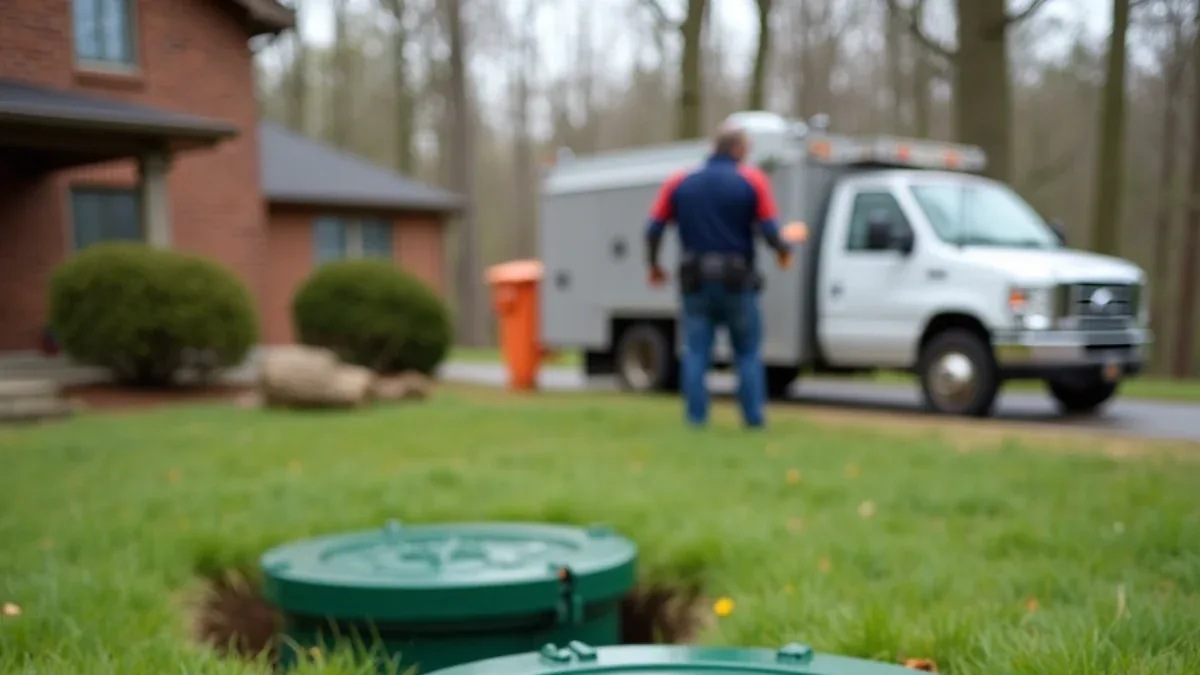

A septic system rarely fails without warning. It gives you a sequence of signals over weeks or months, each one a little louder than the last. The problem is that the early ones are easy to explain away — a slow sink is just a slow sink, and a gurgle is just an old house making noise.
By the time the signal is unambiguous, you are usually cleaning sewage off a bathroom floor. Here are the seven signs in roughly the order they appear, and what each one is actually telling you.
1. Every drain in the house is slow at once

One slow fixture is a clog in that fixture. Every fixture slowing down together is a system-level problem — the main line, the tank, or the field.
On a septic property this is the earliest reliable sign of a full tank. When the liquid level rises above the outlet, the whole house has to push against it, and everything drains a little more slowly. Most people adjust to it gradually and never consciously notice the change.
2. Toilets gurgle when the washing machine drains
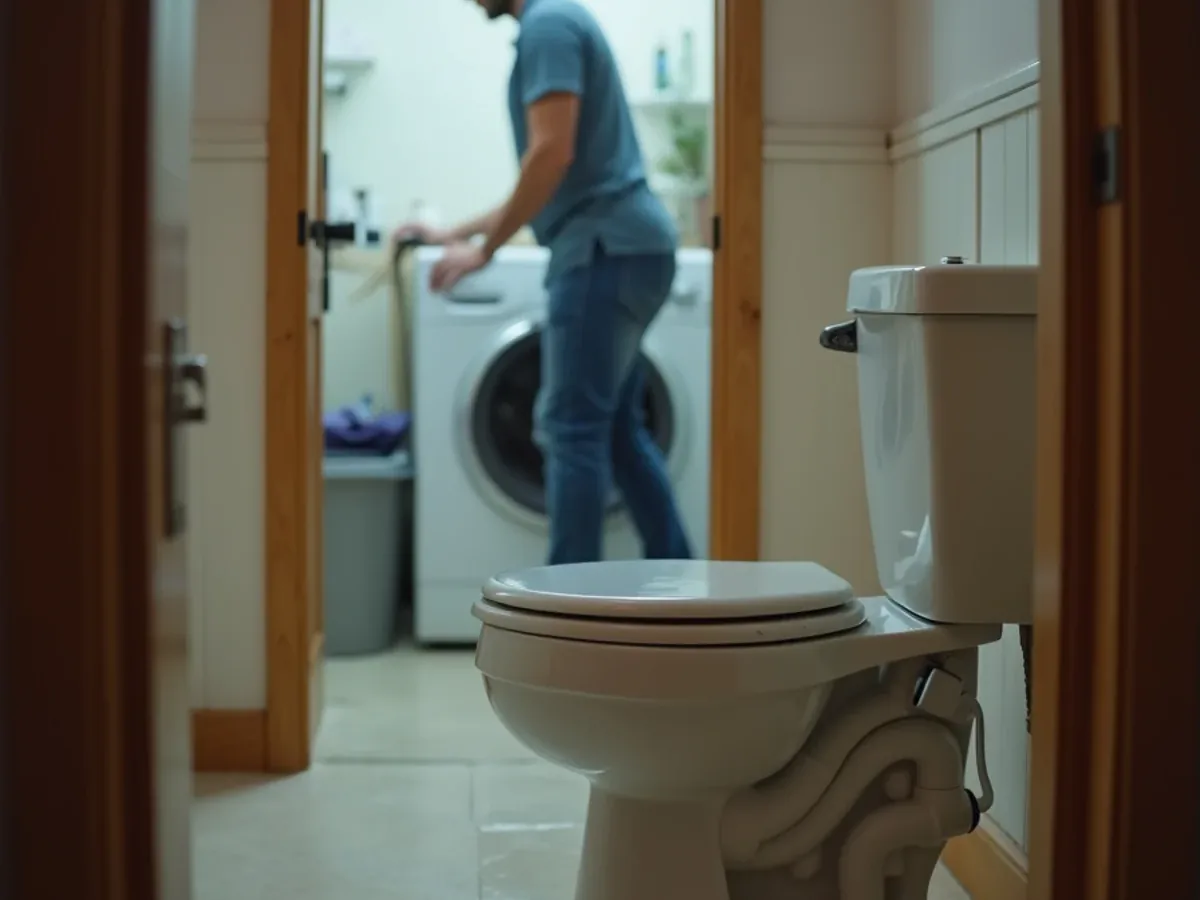
A washing machine dumps a large volume of water quickly. If the system cannot take it away fast enough, air gets displaced and pushes back up through the nearest fixture — usually a toilet, sometimes a tub.
That gurgle is the system telling you it has nowhere to put the water. It is a genuinely useful early warning and it is almost always ignored.
3. A bright green stripe over the drain field

Effluent is fertilizer. When solids escape a full tank and the field starts surfacing, the grass above it grows faster and greener than the rest of the yard.
In a dry August that stripe can be the only green thing in the yard, which makes it obvious. In a wet spring it blends in, which is one reason field problems often go unnoticed until summer.
4. Soft or spongy ground near the tank or field

Walk your field after a dry spell. If the ground gives underfoot when the rest of the yard is firm, effluent is surfacing. That is a health hazard as well as a system failure, and it means the soil is no longer accepting what the tank is sending it.
5. Sewage odor outside

A working septic system should not smell. If you catch sulfur or sewage near the tank lid or over the field — particularly after rain — the tank is likely full and the outlet submerged, or the field is surfacing.
Indoor sewer odor is usually a different problem: a dry trap in a rarely used fixture. Run water in that drain for thirty seconds and see whether the smell goes away.
6. Water backing up into the lowest fixture
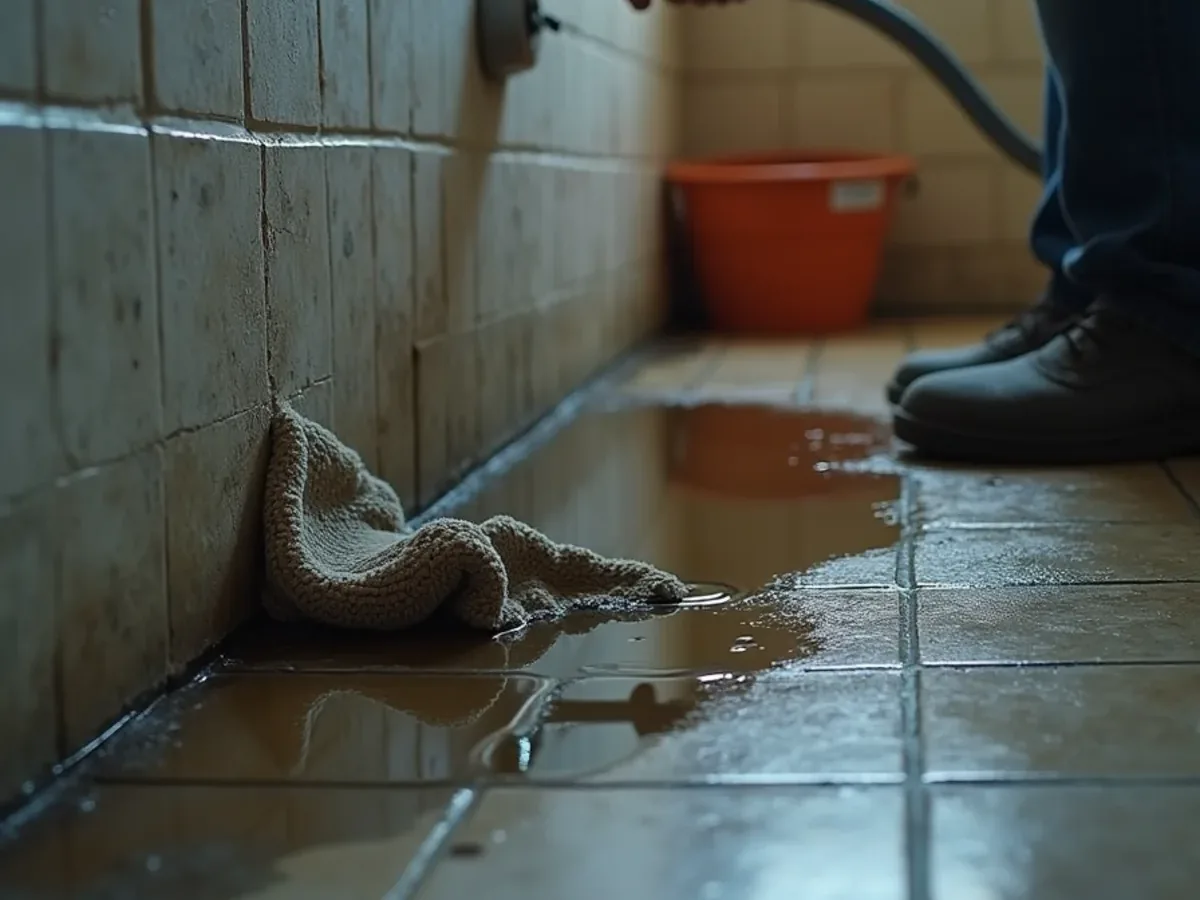
Basement showers, first-floor tubs, and floor drains are the lowest points in the drainage system, so they are where a backup shows first.
If sewage is appearing there, stop all water use immediately — including the washer and dishwasher — and call. Every gallon that leaves the house at this point has nowhere to go. This is an emergency septic call.
7. It has simply been too long

This is the sign with no symptom. If nobody has opened your tank since you bought the house, or the last pump-out is a hazy memory, you are past due regardless of whether anything seems wrong.
What to do next
- 1Reduce water use immediately — spread out laundry, take short showers, run the dishwasher only when full.
- 2Do a food-coloring test on every toilet. A silently running toilet can send hundreds of gallons a day into a tank that is already struggling.
- 3Walk the drain field and note any soft ground, standing water, or unusual grass growth.
- 4Check whether your utility bill includes a sewer charge. If it does not, you are on septic — surprisingly, not everyone knows.
- 5Call for a pump-out and inspection rather than waiting for the next sign.
What we do when we arrive
The first thing we check is the liquid level in the tank relative to the outlet. That single observation splits the diagnosis in half.
If the level is at or above the outlet, the tank or the field is the problem. If the level is normal but the house is still draining slowly, the problem is between the house and the tank — a belly in the line, a break, or roots at a joint. That is a camera inspection, not a pump-out.
From there we measure the sludge and scum depths, inspect the baffles and effluent filter, and watch how the field accepts the first flow after pumping. You get told what we found, including the things that are fine.
Preventing the next one
Pump on a real interval based on measurement, not a guess. Keep wipes out of the toilet — all of them, including the ones sold as flushable. Keep grease out of the sink. Fix running toilets promptly. And keep vehicles off the drain field.
If you are anywhere around Ooltewah, Apison, Harrison, or McDonald and you have noticed two or more of these signs, book a septic pumping and inspection. The estimate is free and catching it at sign two instead of sign six is the entire difference.
Frequently asked
Yes, and that is exactly why measurement beats symptoms. A tank can be well past the point where solids are escaping into the drain field while the house still drains acceptably. The damage to the field happens silently, and by the time symptoms appear the field has already taken years of abuse.
A single backup usually does not, provided you address the cause quickly. What ruins fields is sustained operation with a full tank, sending solids into the trenches month after month. One backup is a warning; ignoring it for another two years is the actual problem.
Not always — it can also indicate a blocked or restricted plumbing vent. But on a septic property, gurgling that appears when a large volume drains (a washing machine, a bathtub emptying) is a strong indicator that the system cannot take water away fast enough. It is worth checking the tank level before chasing vents.
Need someone to actually look at it?
We are a licensed plumber and septic technician based in Ooltewah, serving Hamilton, Bradley and the surrounding counties. Free estimates on every job, and an honest answer about whether you need the work at all.