
Plumbing service
Water Softeners & Filtration in Ooltewah, TN
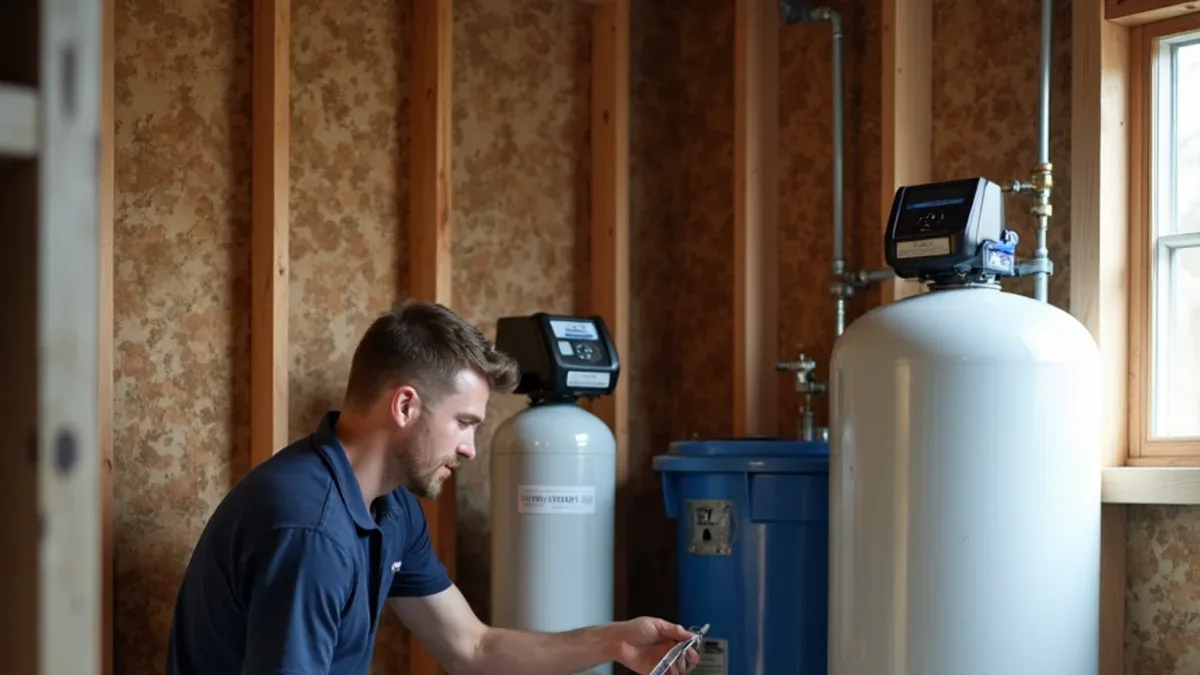
Test first, then treat. We size systems to your actual water chemistry instead of selling the same unit to every house on the street.
Hard water is the most common water complaint in this part of Tennessee and the one most often treated badly. Somebody sells a homeowner a softener sized off a rule of thumb, it regenerates too often or not often enough, and three years later the customer concludes softeners do not work.
They work. What they require is a test first. Hardness in grains per gallon, iron content, pH, and — for the many households out here on wells — bacteria and sediment. Those numbers determine the resin volume, the regeneration setting, and whether you need pretreatment before the softener at all.
We test, we explain what the numbers mean in plain terms, and we recommend the smallest system that actually solves your problem. Sometimes that is a whole-home softener. Sometimes it is a sediment filter and a drinking-water unit at the kitchen sink. The test tells us, not the catalog.
Signs you have a water quality problem
White scale on faucets and showerheads
The most visible sign of hardness. What you see on the outside is also happening inside your pipes and water heater.
Soap that will not lather
Hard water minerals bind with soap. You use more detergent, more shampoo, and more dish soap for the same result.
Spots on glassware and film on shower doors
Mineral residue left behind as water evaporates. Endless cleaning that comes back within days.
Water heaters failing early
Sediment insulates the burner and buries electric elements. Hard water is the main reason heaters here fail before their rating.
Orange or rust staining
Iron, common on well water in this area. A standard softener handles a little; higher levels need dedicated iron removal first.
Taste, odor, or cloudiness
Sulfur smell, chlorine taste, or cloudy water each point at different causes. Testing separates them before anyone buys equipment.
How we work
How we approach water treatment
- 1
Test the water
Hardness in grains per gallon, iron, pH, and on well systems bacteria and sediment. This is free and it is the whole basis of the recommendation.
- 2
Understand the household
Number of people, peak simultaneous demand, and whether the home is on city water or a private well. Resin volume is sized from usage, not house size.
- 3
Recommend only what solves it
Softening addresses hardness. It does not address taste, sediment, or bacteria. We tell you which problem each piece of equipment actually solves.
- 4
Plan the installation
Location, bypass valve, drain line for regeneration, and an electrical outlet. Placement decisions made now determine how easy service is later.
- 5
Install and program
Set the regeneration cycle to your measured hardness and actual water use. A softener programmed to a default setting either wastes salt or fails to soften.
- 6
Show you how it runs
How to add salt, what the display means, how to bypass it, and when to expect service. Then we retest at the tap to confirm it is working.
Need water softeners & filtration in Ooltewah or nearby?
Free estimate, written price before work starts, and an honest answer about whether you need the job at all.
- Licensed septic technician
- 22 Google reviews
- Free estimates on every job
- Locally owned & operated
Softening, filtering, and purifying are three different things
These get used interchangeably in advertising and they should not be. A water softener removes calcium and magnesium — the minerals that cause scale — by exchanging them for sodium ions on a resin bed. It does nothing for taste, chlorine, sediment, or bacteria.
A filter removes physical or chemical contaminants. A sediment filter catches grit. A carbon filter removes chlorine, improves taste, and reduces certain organic compounds. Neither one softens water.
Reverse osmosis forces water through a membrane fine enough to reject dissolved solids, and it produces genuinely purified water. It is slow and it wastes some water in the process, which is why it is normally installed at a single tap rather than for the whole house.
For most homes here, the sensible combination is a whole-home softener to protect the plumbing, water heater, and appliances, plus a reverse osmosis unit at the kitchen sink for drinking and cooking. That gives you scale protection everywhere and genuinely good water where you drink it, without paying to purify the water you flush.
Well water in southeast Tennessee
A large number of homes across Birchwood, Georgetown, Apison, and the rural stretches of Bradley and Meigs County are on private wells. Nobody tests that water for you. There is no utility issuing a report, and problems develop quietly.
The common findings out here are hardness, iron, manganese, and hydrogen sulfide — the rotten-egg smell. Iron and manganese stain fixtures and laundry, and iron will foul softener resin if it is not removed first, which is why order matters in a treatment train. Sulfur is usually a bacterial issue and needs its own approach.
Bacterial testing is the one that actually matters for health, and we recommend it annually for any household on a well, plus immediately after any flooding event or well work. If your home is on a well and a septic system — which describes a great many properties out here — the separation distance between them and the condition of both is worth understanding. Our guide to well water and septic living in rural southeast Tennessee covers what to watch.
What water treatment costs depends on
Equipment ranges widely and so does what a given house needs. We quote from test results, never from a package. Testing and estimate are free.
- What the test shows
- Moderate hardness on city water needs a straightforward softener. Well water with iron, sulfur, and sediment needs a treatment train, and that costs more.
- System capacity
- Resin volume is sized to household demand and hardness. Undersizing means constant regeneration and salt waste; oversizing means paying for capacity you never use.
- Salt-based or salt-free
- Salt-based ion exchange genuinely removes hardness and is the more effective option. Salt-free conditioners crystallize minerals so they do not stick — lower maintenance, less effective on very hard water.
- Plumbing modifications needed
- A garage with the main line accessible and a floor drain nearby is the easy case. Adding a drain line, an outlet, or rerouting the main adds labor.
- Drinking water treatment
- A reverse osmosis unit under the kitchen sink is a separate system for a separate purpose. Many households want both; some only want the RO.
- Ongoing costs
- Salt, filter cartridges, and periodic service. We tell you what a year of ownership actually costs before you buy, not after.
We do not publish flat prices because two jobs on the same street can cost different amounts, and a quoted number that changes on arrival helps nobody. Every job starts with a free written estimate.
Questions
Water Softeners & Filtration in Ooltewah — answered
Hardness varies by source and by whether you are on municipal water or a private well, so the only number that matters is the one from your own tap. We test it free. What we can tell you generally is that hard water is a well-documented, widespread issue across the Chattanooga area, and it is the reason so many water heaters here fail before their rated life.
They do different things. A salt-based softener actually removes hardness minerals through ion exchange, so your water is genuinely soft. A salt-free conditioner crystallizes the minerals so they are less likely to stick to surfaces — the hardness is still in the water. Conditioners need no salt and no drain and are lower maintenance, which suits some households, but on very hard water a salt-based system does more.
No. Ion exchange adds a small amount of sodium proportional to the hardness removed, and at normal hardness levels it is well below what you would taste. If you are on a sodium-restricted diet, a potassium chloride softener is a straightforward substitute, and a reverse osmosis unit at the kitchen tap removes it entirely.
This gets debated, and the practical answer is that a correctly sized, demand-initiated softener discharging normally is not a problem for a healthy septic system. What causes trouble is an oversized or badly programmed unit regenerating far more often than needed, which sends unnecessary volume into the tank. If your home is on septic, tell us — it affects how we size and program the system.
Adding salt every month or two depending on your hardness and usage, and a general check once a year. Beyond that, the resin bed lasts many years, and a cleaner is worth running periodically if there is any iron in your water. If you are on a well with real iron content, expect more attention — which is exactly why we test before recommending anything.
You might also need
Well Pump Repair & Installation
Submersible and jet pumps, pressure tanks, switches, and controls — for the many homes across rural southeast Tennessee that are not on city water.
Learn moreWater Heater Repair
No hot water, not enough hot water, or rumbling. We diagnose the actual fault — thermocouple, element, thermostat, gas valve — instead of quoting a new unit by reflex.
Learn moreToilet Repair & Installation
Running, weak-flushing, rocking or leaking toilets repaired, plus replacements set on a fresh seal with the shutoff valve updated while we are there.
Learn more
Water Softeners & Filtration — free estimate, fair price
Call and describe what you are seeing. We will tell you what it usually means, what it will take to check, and what it is likely to cost.
- Licensed septic technician
- 22 Google reviews
- Free estimates on every job
- Locally owned & operated