
Septic service
Field Line Repair & Replacement in Ooltewah, TN
Individual laterals fail before whole fields do. Repairing the failed run is a fraction of rebuilding everything.
Field lines — the perforated laterals that carry effluent out through the trenches — are treated as part of "the drain field" and quoted as if they all fail together. They usually do not.
A single lateral crushed by a vehicle, blocked by roots at one point, or collapsed where a trench settled will produce symptoms across the whole system while the other trenches sit perfectly serviceable. Rebuilding an entire field because one run failed is one of the more expensive mistakes in septic work, and it happens because nobody looked.
We locate and probe the field, work out which laterals are actually taking effluent and which are not, and repair the failed sections. Where the whole field genuinely is finished, we say so — but we establish that first.
Signs of a field line problem
One wet area with dry trenches beside it
The clearest indicator that this is a line or distribution problem rather than a failed field. Effluent is going to one run and not the others.
A soft strip following a single trench
Water surfacing along one lateral means that run is not accepting — crushed, blocked, or settled out of grade.
Symptoms that appeared after vehicle traffic
A delivery truck, a concrete pour, a trailer parked on the field. Laterals crush, and the timing is usually the giveaway.
Backups that returned soon after a pump-out
The tank was not the problem. Something downstream of the outlet is restricting flow.
Roots showing at the distribution box
If roots reached the D-box they are in the laterals too. Trees near a field find perforated pipe with impressive reliability.
A field that worked and then suddenly did not
Gradual decline suggests biomat and age. A sudden change suggests something physical — which is usually repairable.
How we work
How we repair field lines
- 1
Rule out the tank and the D-box first
A full tank or a settled distribution box produces identical symptoms and costs a fraction to fix. Always checked before anyone digs a trench.
- 2
Locate and map the field
Probing to find trench positions and depths, and to identify which runs are saturated and which are dry. This is where the repair scope gets decided.
- 3
Camera the laterals where useful
A line inspection shows roots, crushing and standing water inside the pipe, with footage marks so we dig once.
- 4
Expose the failed section only
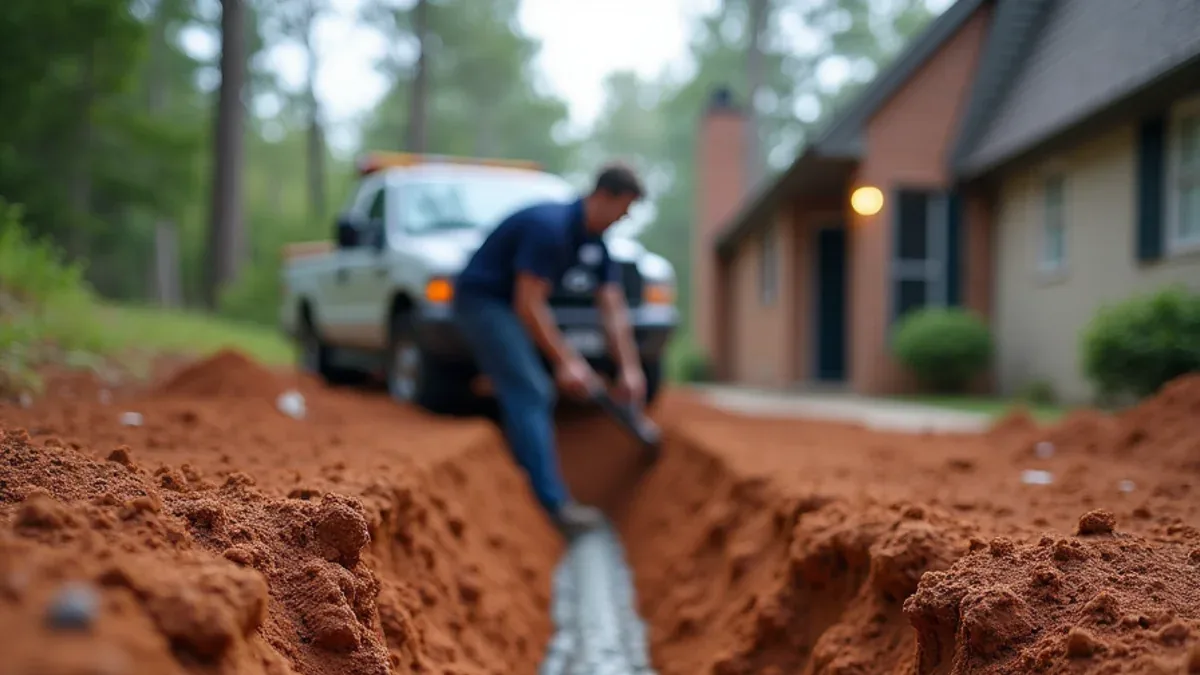
We open the run that has failed rather than the whole field. Trenches that are still working stay undisturbed.
- 5
Rebuild to spec
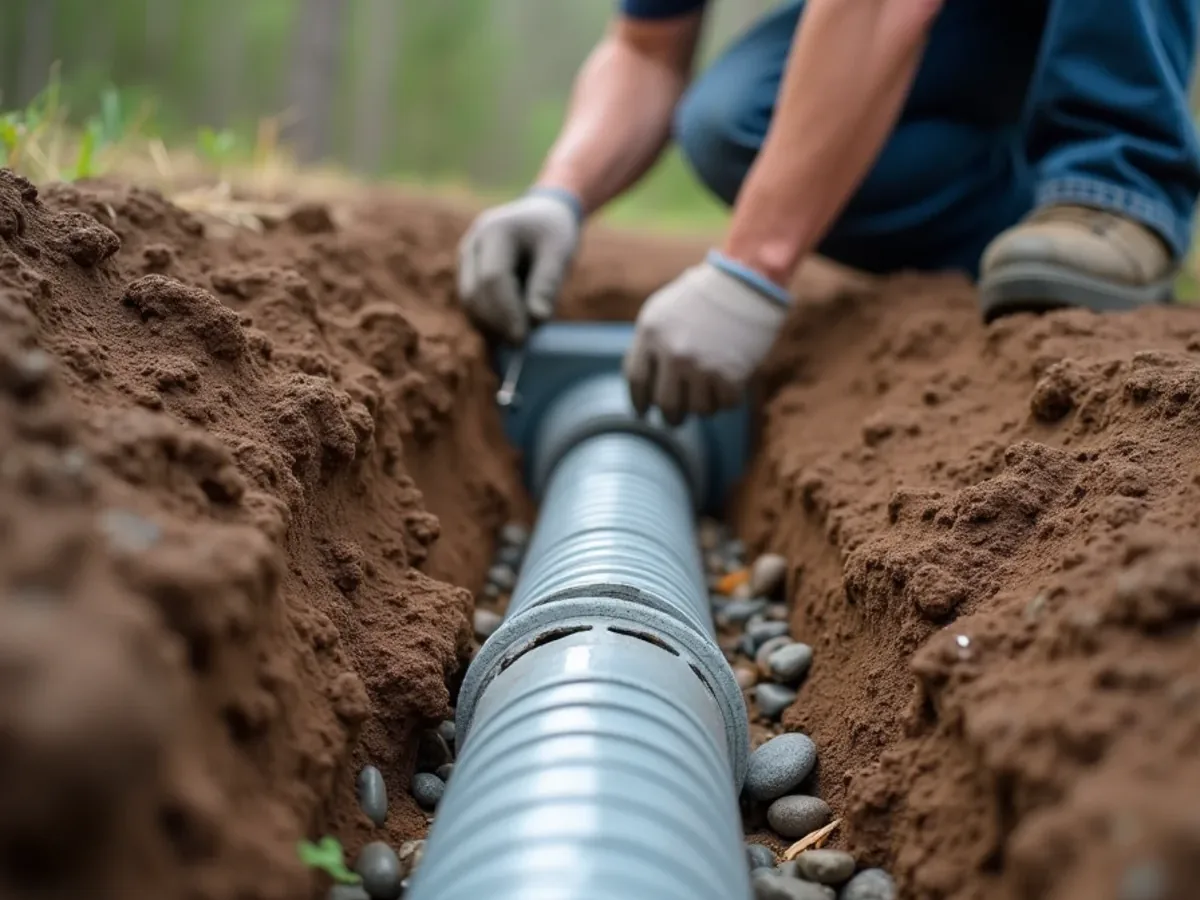
New perforated pipe at correct depth and grade, proper stone, fabric where the design calls for it, and the connection back to the distribution box made square.
- 6
Test and restore
Flow verified through the repaired run, then backfilled in compacted lifts, graded so surface water sheds away, and seeded.
Need field line repair & replacement in Ooltewah or nearby?
Free estimate, written price before work starts, and an honest answer about whether you need the job at all.
- Licensed septic technician
- 22 Google reviews
- Free estimates on every job
- Locally owned & operated
Why one lateral fails and the others do not
Fields are built as several parallel trenches fed from a distribution box, and the assumption is that flow splits evenly between them. In practice it rarely does for long.
A distribution box that settles even slightly out of level sends more effluent to one outlet than the others. That run then carries a disproportionate share of the household load for years, builds biomat faster, and fails while its neighbours are barely used. Correcting the box and repairing the overloaded run frequently restores the whole system.
The other single-run failures are physical. Vehicle traffic crushes shallow laterals — a delivery truck turning around, a trailer parked over the field, equipment during a build. Settlement puts a section out of grade so it holds water. And roots enter through the perforations themselves, which is why nothing with roots should be planted over a field.
What all of these have in common is that they are repairable. The failure that is not repairable is a mature biomat sealing every trench bottom, and that presents differently — uniform saturation across the whole field rather than one wet stripe.
Protecting the runs you have
Keep everything off the field. No vehicles, no trailers, no livestock, no sheds, no raised beds, no pools. Compacted soil does not recover and crushed laterals do not un-crush.
Plant grass and nothing else. Trees and shrubs find perforated pipe reliably, and by the time you see a symptom the roots are established through several feet of line.
Divert water away. Downspouts, driveway runoff and sump discharge should all shed away from the field rather than across it. Adding storm water to a field already handling household flow is one of the fastest ways to overload it.
And keep the tank pumped on a measured interval. Solids escaping a full tank are what actually seal trench bottoms, and every skipped pump-out moves the whole field closer to the failure that is not repairable.
What field line repair costs depends on
The gap between repairing one lateral and rebuilding a whole field is enormous, which is exactly why the diagnosis comes first. Estimate is free.
- How many runs are affected
- One crushed lateral in an otherwise sound field is a contained job. Four failed runs means you are effectively rebuilding.
- Length and depth of the trench
- Shallow laterals in accessible ground are straightforward. Deep runs, or ones under a slope, take more machine time and care.
- Access to the field
- Open ground the machine can reach is best. Fields behind fences, under mature trees, or on the far side of a septic tank are harder to work.
- Cause of the failure
- Roots may need the source addressed as well as the pipe. Crushing means checking whether traffic will happen again and protecting against it.
- Whether a permit is required
- Field alterations generally require county approval. Fees are pass-through and listed separately, and we handle the application.
- Restoration
- Graded and seeded is standard. Full sod costs more. Either way it is specified in the estimate rather than discovered later.
We do not publish flat prices because two jobs on the same street can cost different amounts, and a quoted number that changes on arrival helps nobody. Every job starts with a free written estimate.
Questions
Field Line Repair & Replacement in Ooltewah — answered
Often, yes, and that is exactly why we probe and map the field before quoting. A single crushed or root-blocked lateral in an otherwise sound field is a contained repair. Trenches that are still accepting effluent stay untouched. The distinction between one failed run and a failed field is a very large difference in cost.
Vehicle and equipment traffic, almost always. Laterals sit relatively shallow and they are not designed to carry load. A delivery truck turning around on the field, a trailer parked over it, or a concrete truck during construction will do it. If symptoms appeared shortly after something heavy was on the yard, that is usually the answer.
The pattern of wetness. One saturated stripe with dry ground over the neighbouring trenches points at a line or distribution problem. Uniform saturation across the entire field, with backups returning within days of a pump-out, points at biomat sealing the trench bottoms — which is a different and much larger job.
Yes, readily. Field lines are perforated by design, so roots do not even need a crack — they grow straight through the holes toward the moisture and nutrients. That is why nothing with roots should be planted over a drain field, and why trees near a field are worth taking seriously before symptoms appear.
Generally yes. Altering or replacing any part of a septic system, including field lines, requires county approval in Tennessee. We handle the application and coordinate the inspection as part of the job — unpermitted septic work has a habit of surfacing at resale.
You might also need
Drain Field Repair & Replacement
Standing water, odor, and backups that pumping does not fix usually mean the field. We diagnose the cause first, then rebuild only what needs rebuilding.
Learn moreSeptic Line Video Inspection
Recorded, located video of the line from the house to the tank — and of field lines where access allows. One hole in the right place instead of three.
Learn moreSeptic Tank Pumping
Every three to five years, most Ooltewah tanks need pumping. We pump the full tank, wash down the walls, and inspect the baffles while we are in there.
Learn more
Field Line Repair & Replacement — free estimate, fair price
Call and describe what you are seeing. We will tell you what it usually means, what it will take to check, and what it is likely to cost.
- Licensed septic technician
- 22 Google reviews
- Free estimates on every job
- Locally owned & operated