

Plumbing service
Well Pump Repair & Installation in Ooltewah, TN
No water on a well system is an emergency. We diagnose the pump, the pressure tank, and the controls before anyone pulls anything out of the ground.
Out past Ooltewah, in Birchwood, Georgetown, Apison, and across the rural parts of Bradley and Meigs County, a large share of homes get their water from a private well. When that system stops, there is no utility to call — the whole thing belongs to you, and the difference between a two-hundred-dollar fix and a five-thousand-dollar one is the diagnosis.
That diagnosis matters because "no water" has several possible causes and only one of them requires pulling the pump. A failed pressure switch, a waterlogged pressure tank, a tripped breaker, a bad capacitor in a control box, or a leak in the drop pipe will all produce the same symptom at the tap.
We work through them in order, cheapest and most accessible first. Pulling a submersible pump from a few hundred feet of well casing is the last step, not the first, and we have restored plenty of "dead" wells with a switch and an hour of work.
Well system symptoms and what they mean
No water at all
Check the breaker first. Then the pressure switch and the tank pressure. A failed pump is on the list, but it is not the top of it.
The pump runs constantly
Either it cannot build pressure — a leak, a failing pump, or a dropping water level — or the pressure switch is not cutting out. Continuous running destroys pumps.
Rapid cycling on and off
Classic waterlogged pressure tank. The bladder has failed, so there is no air cushion and the pump short-cycles. This is a common and fixable failure.
Pressure that surges then drops
Air in the system, a failing check valve, or a tank losing its charge. Often accompanied by spitting at the faucets.
Sandy or muddy water
A pump sitting too low in the casing, a failing well screen, or a casing problem. Sediment destroys pumps and fixtures, so this needs attention.
Breakers tripping repeatedly
A pump drawing more amperage than it should, a shorted wire in the well, or a failing control box. Do not keep resetting it.
How we work
How we diagnose a well system
- 1
Check power and controls
Breaker, disconnect, control box, and pressure switch contacts. A surprising share of "dead pumps" are burned switch contacts costing very little to replace.
- 2
Test the pressure tank
We check the precharge against the switch cut-in pressure. A waterlogged tank is one of the most common failures and one of the least expensive.
- 3
Measure amperage draw
What the pump actually pulls under load tells us a great deal about its condition without pulling it, including whether it is running dry.
- 4
Check water level and yield
A well that has dropped in a dry season produces the same symptoms as a failing pump. Knowing the static and drawdown levels separates the two.
- 5
Pull the pump only if needed
If the diagnosis points into the well, we pull it and inspect the pump, drop pipe, wire, and check valve. Often the wire or the pipe is the actual failure.
- 6
Replace and set up correctly
A new pump goes in at the correct depth with proper wire, a torque arrestor, and a properly charged tank. Then we shock-chlorinate if the well was opened.
Need well pump repair & installation in Ooltewah or nearby?
Free estimate, written price before work starts, and an honest answer about whether you need the job at all.
- Licensed septic technician
- 22 Google reviews
- Free estimates on every job
- Locally owned & operated
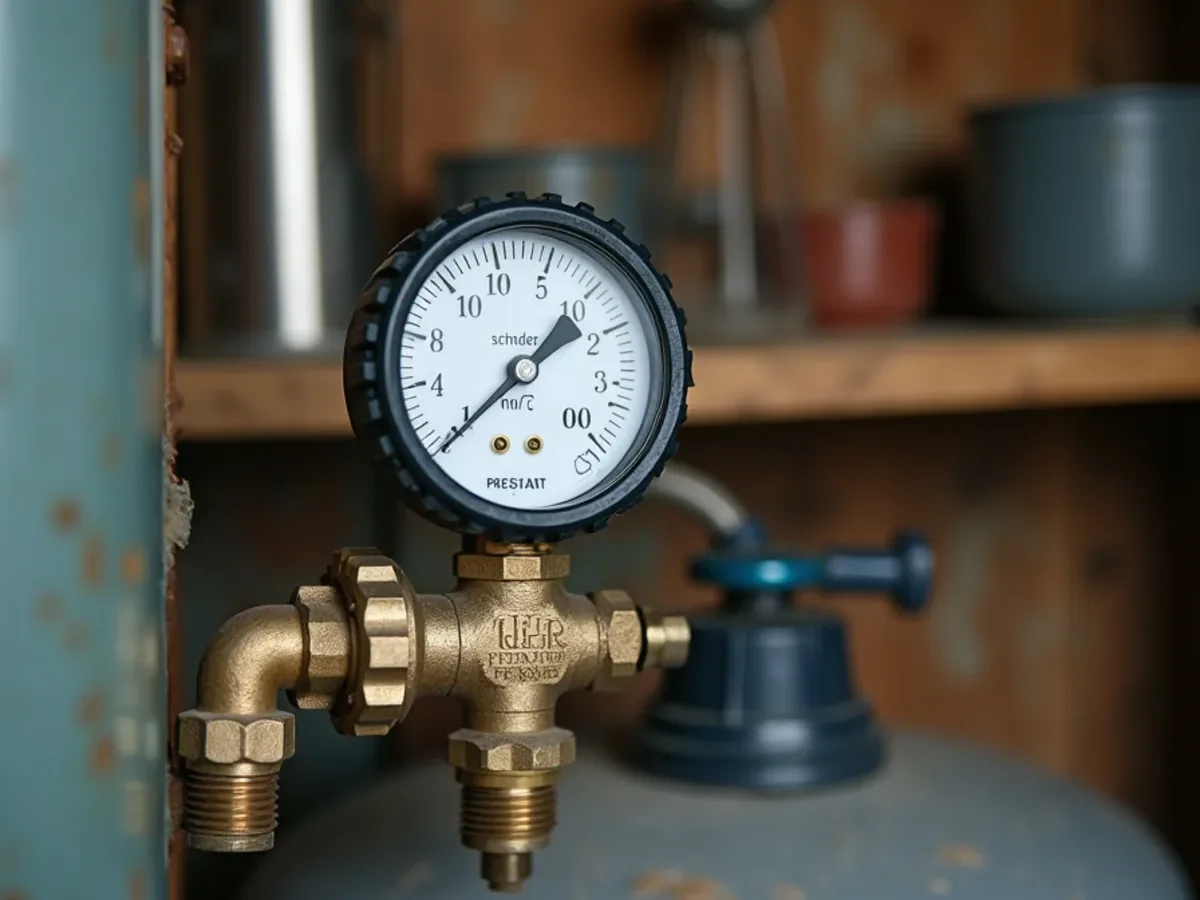
The pressure tank is the most misunderstood part of the system
A pressure tank is not storage in the way people assume. It is a cushion. Inside is a bladder or diaphragm separating water from a charge of compressed air, and that air is what pushes water to your fixtures between pump cycles.
When the bladder fails, the tank fills entirely with water and there is no cushion left. The pump then starts and stops every few seconds during any water use — the rapid cycling that homeowners describe as the pump "acting up." That short-cycling is what actually destroys pumps, because starting is when a motor draws its highest current and takes its most wear.
The test is simple. With the pump off and the system drained, the air charge at the schrader valve on top of the tank should sit a couple of psi below the pressure switch cut-in. If water comes out of that valve, the bladder has failed and the tank needs replacing.
Checking this annually costs nothing and it is the single best thing a well owner can do for pump life. If your pump is cycling rapidly, stop using water and call before the motor is the thing you are replacing.
Well and septic on the same property
Most rural properties out here have both, and they need to coexist at a proper separation distance. Tennessee sets minimum setbacks between a well and a septic tank and drain field for good reason, and those distances get compromised over time — a field gets extended, an outbuilding goes up, a new well gets drilled in a convenient spot.
If you are buying a rural property, this is worth checking alongside the septic inspection. Ask where the well is, where the tank and field are, and whether the separation meets current requirements. It affects both water safety and what you are permitted to do with the property later.
Test well water for bacteria annually and any time the well is opened, the area floods, or the water changes in taste, smell, or clarity. If a septic system on your property or a neighboring one has failed, test immediately rather than waiting for the annual date.
What well pump work costs depends on
Well work spans a wide range because the failures do. Diagnosis first, then a price — and the estimate is free.
- What actually failed
- A pressure switch is a small job. A pressure tank is moderate. A submersible pump three hundred feet down is the top of the range.
- Pump depth
- Everything about a submersible replacement scales with depth — the drop pipe, the wire, the labor to pull and reset.
- Pump type
- A shallow-well jet pump at the surface is far more accessible than a deep submersible. Constant-pressure systems with variable speed drives cost more but perform better.
- Wire and pipe condition
- When we pull a pump we inspect the drop pipe and wire. Replacing degraded components while everything is out is far cheaper than a second pull.
- Access to the wellhead
- A wellhead we can reach with a truck is straightforward. One behind a fence, up a slope, or in a pit takes longer.
- Water treatment needs
- If the water shows iron, sediment, or bacteria, treatment equipment is a separate quote and we will keep it separate.
We do not publish flat prices because two jobs on the same street can cost different amounts, and a quoted number that changes on arrival helps nobody. Every job starts with a free written estimate.
Questions
Well Pump Repair & Installation in Ooltewah — answered
A submersible pump typically runs eight to fifteen years, and a jet pump often less. The biggest factor is cycling: a pump on a healthy pressure tank that starts a reasonable number of times per day lasts far longer than one short-cycling on a waterlogged tank. Sediment and running dry both shorten life considerably.
Almost always a waterlogged pressure tank — the bladder has failed and there is no air cushion left. It is a common failure and the tank is far cheaper than the pump it will destroy if left alone. Occasionally it is a stuck check valve or an incorrectly set pressure switch. Stop using water and get it looked at, because short-cycling is actively damaging the pump.
Maybe, but check simpler things first. Look at the breaker and any separate disconnect at the well. Check the pressure gauge — if it reads zero, the pump is not delivering; if it reads normal, the problem is downstream. Pressure switch contacts burn out regularly and are inexpensive to replace. We work through all of it before considering pulling the pump.
Annually for bacteria and nitrates at minimum, and immediately after any flooding, any work on the well, or any change in taste, smell, or appearance. If there is a septic system on your property or a neighboring one — and out here there usually is — that annual test is genuinely worth doing rather than skipping.
Yes. A variable-speed constant-pressure system adjusts pump output to demand instead of cycling between two set points, so you get steady pressure whether one fixture or three are running. It costs more up front and it is noticeably better to live with, particularly in a house where someone always seems to be running water while somebody else is in the shower.
You might also need
Water Softeners & Filtration
Hard water scales your water heater, shortens fixture life, and leaves spots on everything. We test, size, and install the right treatment.
Learn moreLeak Detection & Repair
A doubled water bill with no visible cause usually means a leak under a slab or inside a wall. We locate it precisely and open only what we must.
Learn moreEmergency Plumbing
Burst pipes, sewage backups, and failed water heaters do not wait for business hours. Neither do we.
Learn more
Well Pump Repair & Installation — free estimate, fair price
Call and describe what you are seeing. We will tell you what it usually means, what it will take to check, and what it is likely to cost.
- Licensed septic technician
- 22 Google reviews
- Free estimates on every job
- Locally owned & operated