
Plumbing service
Sewer Line Repair & Replacement in Ooltewah, TN
We find the break before we dig — so you get one hole in the right place instead of three in the wrong ones.
The sewer line is the pipe nobody thinks about until it announces itself, usually by backing up into the lowest fixture in the house. It runs from your foundation out to the street or, on the many rural properties around here, out to a septic tank. Either way, it is buried, it is old on a lot of Ooltewah homes, and repairing it correctly starts with knowing exactly what is wrong and exactly where.
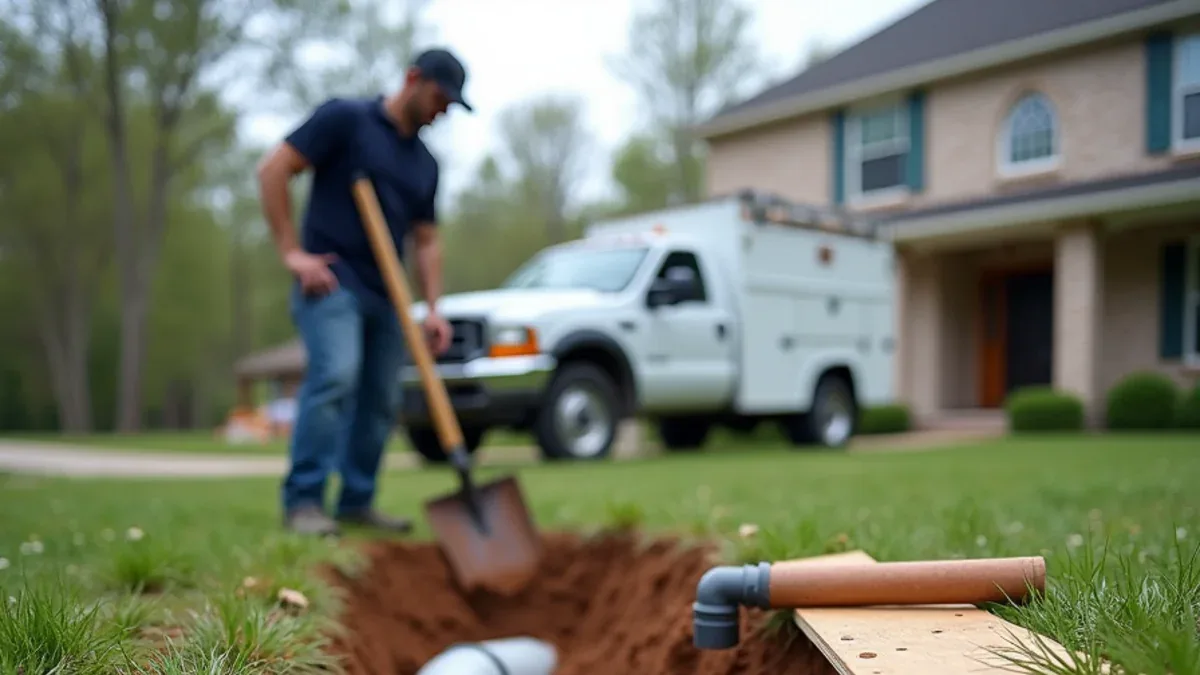
We will not dig a trench on a hunch. Every sewer repair starts with a camera and a locator, so when the shovel goes in we know the depth, the position, and the failure. That is what turns a two-day exploratory dig into a half-day repair.
Depending on the failure and the pipe, the fix might be a spot repair on a single section, a cleanout installation, a full replacement, or a trenchless option that saves your driveway and your mature trees.
Signs the sewer line itself is the problem
Repeated main line backups
Clearing the same main line more than once or twice a year means something physical is wrong with the pipe, not with your habits.
Multiple fixtures backing up together
The lowest drains in the house go first. If the tub and the toilet both back up when the washer runs, the main is restricted.
A sinkhole or soft depression in the yard
A line leaking below grade washes soil away. A sinking strip that follows the path of the sewer line is a strong indicator.
Unusually lush grass along one line
Same principle as a septic field. A leaking sewer line fertilizes what is above it.
Sewer odor in the yard
A cracked line vents gas into the soil. If you smell it outside near the house, the line is compromised.
Rodent or insect activity near the foundation
A broken sewer line is an entry point. Persistent rodent problems around the foundation are worth a camera run.
How we work
How we handle a sewer line repair
- 1
Clear the line enough to see
A camera cannot see through standing sewage. We cable or jet first, then inspect a line that is actually visible.
- 2
Camera and locate
We record the run, note the footage of the failure, and use a sonde and locator to mark the exact spot and depth on the surface.
- 3
Identify the pipe material
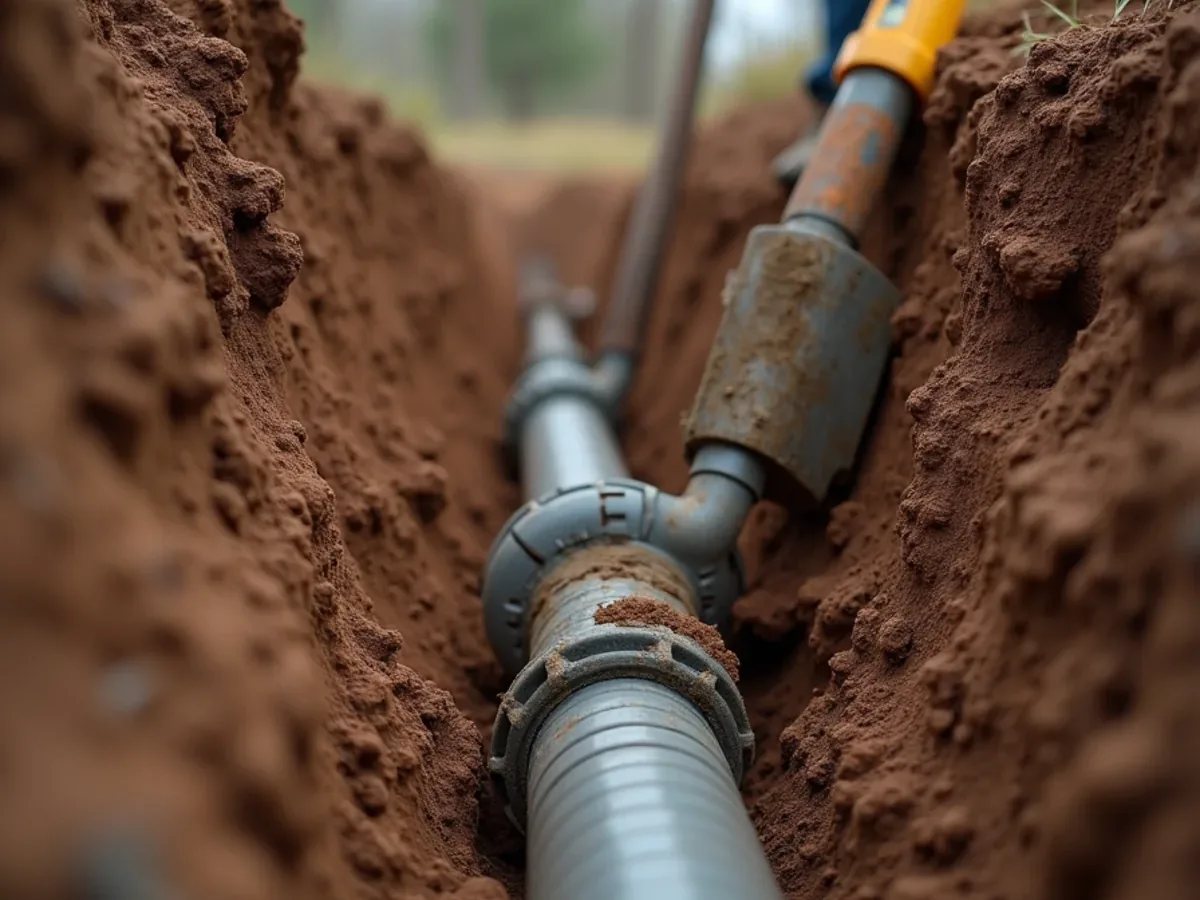
Clay, cast iron, Orangeburg, PVC. The material determines both the failure mode and which repair methods are on the table.
- 4
Present the options honestly
Spot repair, full replacement, or trenchless. Each has a cost, a disruption level, and a service life. We lay all three out.
- 5
Locate utilities and pull permits
Every dig gets utility locates first. Where a permit is required for the work, we handle it.
- 6
Repair, test, restore
New pipe goes in at proper grade, we test the flow, backfill in compacted lifts so the ground does not settle later, and restore the surface.
Need sewer line repair & replacement in Ooltewah or nearby?
Free estimate, written price before work starts, and an honest answer about whether you need the job at all.
- Licensed septic technician
- 22 Google reviews
- Free estimates on every job
- Locally owned & operated
What is actually under older Ooltewah homes
Sewer lines in this area tell you roughly when the house was built. Homes from the 1940s through the 1960s frequently have vitrified clay — durable material, but installed in short sections with joints that roots exploit relentlessly. Cast iron shows up through the 1970s and fails from the inside as scale builds and the bottom of the pipe corrodes away.
Then there is Orangeburg, a bituminized fiber pipe used widely in post-war construction into the early 1970s. It is essentially tar-impregnated wood pulp, it has a service life measured in decades rather than generations, and it fails by deforming — the round pipe slowly goes oval and then collapses. If a camera shows Orangeburg, there is no repair worth doing. It gets replaced.
PVC arrived in the 1970s and 80s and is what nearly every home built since has. It rarely fails on its own; when it does, the cause is usually a belly from poor bedding at installation or physical damage from later excavation.
Trenchless: when it makes sense and when it does not
Trenchless repair covers two techniques. Pipe lining inserts a resin-saturated liner into the existing pipe and cures it in place, creating a new seamless pipe inside the old one. Pipe bursting pulls a bursting head through the old pipe, fracturing it outward while drawing new pipe in behind.
Both need access pits at each end rather than a full trench, which is the whole appeal. If your sewer line runs under a concrete driveway, a paved patio, or the root zone of an oak you actually care about, trenchless can save more in restoration than it costs in premium.
It is not universal. Lining requires a host pipe that still holds its shape, so a collapsed or badly offset line is out. Bursting requires a path that will not damage adjacent utilities. And on a shallow line under open lawn, honestly, open-cut is cheaper and the grass grows back. We tell customers which category they are in rather than steering them toward the more expensive method by default.
What sewer line repair costs depends on
Sewer work has the widest cost range of anything we do, from a short spot repair to a full replacement under a driveway. The diagnosis tells us which. Estimate is free.
- Length of pipe affected
- A single cracked section is a spot repair. A line that has failed along its whole length is a replacement, and the run length sets the price.
- Depth
- Three feet down is routine. Eight feet down requires shoring, a larger machine, and considerably more time.
- What is on top of it
- Open lawn is the best case. A concrete driveway, a patio, mature landscaping, or a county road all add removal and restoration cost.
- Open-cut versus trenchless
- Trenchless lining or bursting costs more per foot but far less in restoration when the line runs under hardscape or established trees.
- Existing pipe material
- Orangeburg and badly deteriorated clay cannot be lined and must be replaced. Sound clay or cast iron is often a good lining candidate.
- Permits and restoration
- Permit fees, right-of-way requirements if the work reaches the street, and how you want the surface finished afterward all factor in.
We do not publish flat prices because two jobs on the same street can cost different amounts, and a quoted number that changes on arrival helps nobody. Every job starts with a free written estimate.
Questions
Sewer Line Repair & Replacement in Ooltewah — answered
A camera inspection is the only way to be certain, and it takes under an hour. The behavioral clue is repetition: a line that clogs once and then behaves for years was clogged. A line that backs up every few months, or that a cable clears easily and then re-blocks, has a physical defect — roots, a belly, an offset joint, or a break.
A spot repair on a single section is typically a day. A full open-cut replacement of a residential line runs two to four days depending on length, depth, and what has to be removed and restored on the surface. Trenchless work is often faster on site because there is far less excavation, though the setup and curing add their own time.
On municipal sewer, the homeowner is generally responsible for the lateral from the house to the connection point, and the utility owns the main. Exactly where that line of responsibility falls varies by jurisdiction. On a septic property the entire system is yours, from the foundation to the drain field. We help you determine which side of the line a failure is on before anyone starts spending.
Standard policies usually exclude damage from wear, age, and root intrusion, which covers most sewer failures. Some carriers offer a service line endorsement that does cover it, and it is inexpensive if you can add it before you need it. We document every repair thoroughly so you have what a claim requires if you decide to file.
Only by eliminating the way in. Cutting and jetting clears roots and buys real time, often a year or two, but roots return through the same crack or joint. A permanent fix means lining or replacing the affected section so there is no opening. On older clay lines with many joints, the honest choice is between a maintenance schedule and a replacement, and we will lay out the economics of both.
You might also need
Sewer Camera Inspection
A recorded, located video inspection of your sewer or drain line — the fastest way to turn a mystery into a decision.
Learn moreHydro Jetting
Grease-coated kitchen lines, sludge-packed sewers, and roots that keep coming back. Jetting cleans the pipe instead of just opening a hole through it.
Learn moreDrain Cleaning
Kitchen, bathroom, laundry, or main line. We clear it mechanically, confirm the line is open, and find out what caused it.
Learn more
Sewer Line Repair & Replacement — free estimate, fair price
Call and describe what you are seeing. We will tell you what it usually means, what it will take to check, and what it is likely to cost.
- Licensed septic technician
- 22 Google reviews
- Free estimates on every job
- Locally owned & operated