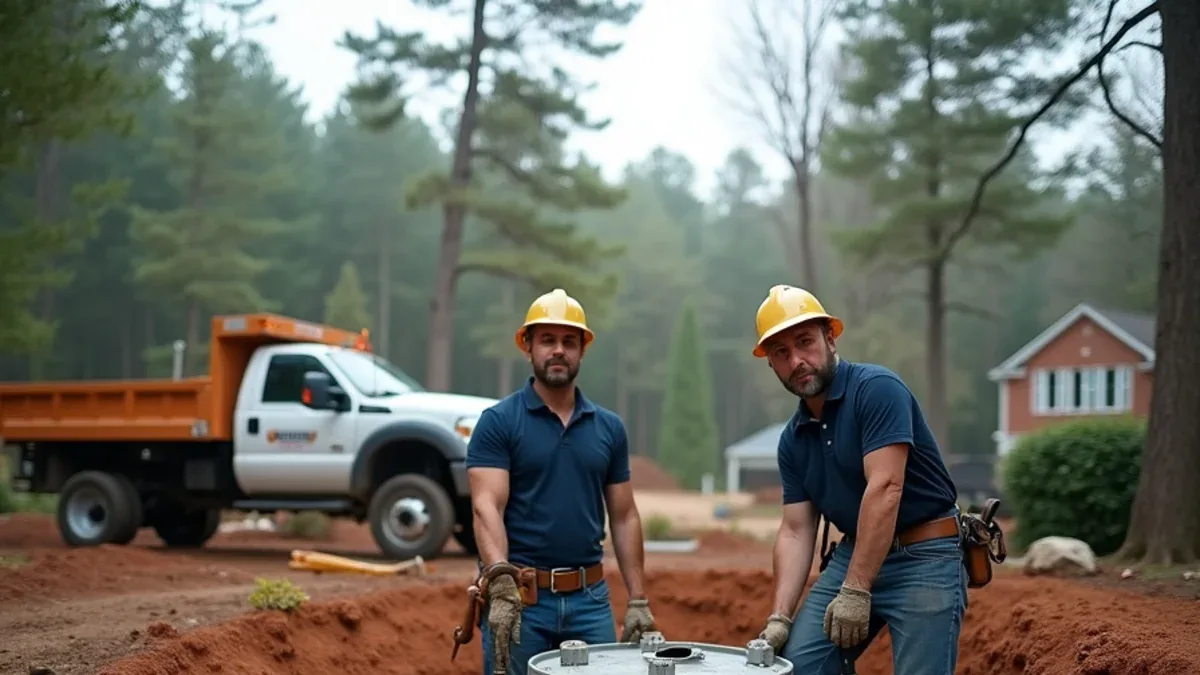
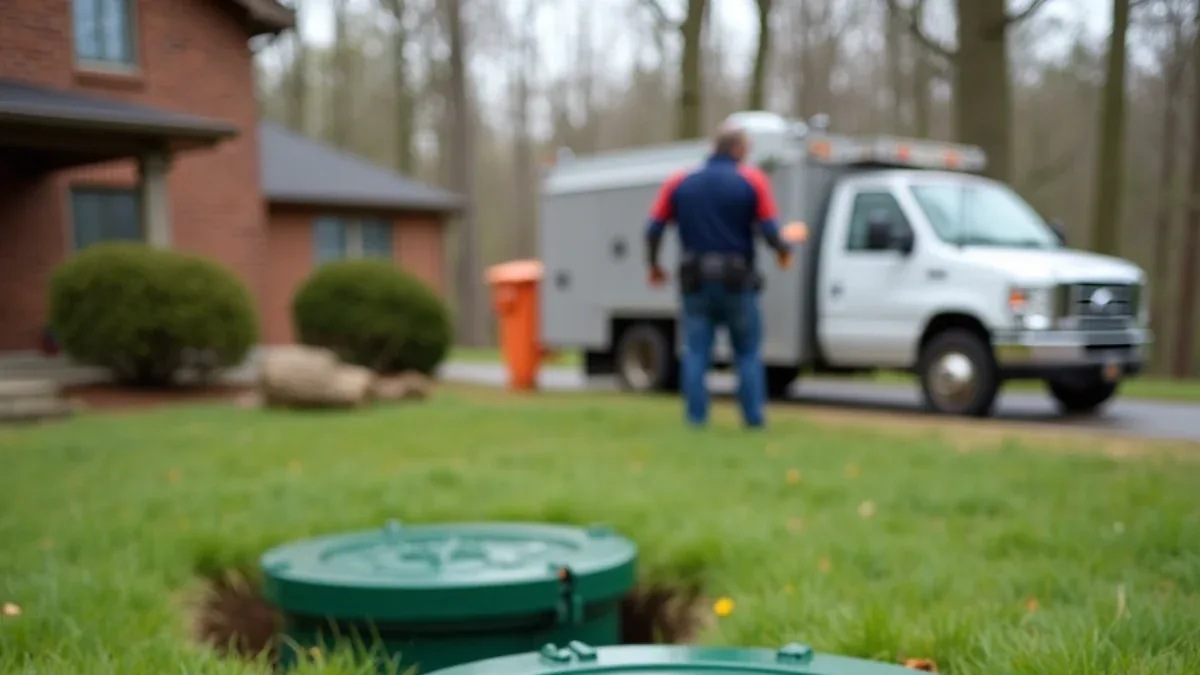
A septic tank riser is a short section of pipe — usually polyethylene, typically a couple of feet across — that extends the tank access opening up to ground level, capped with a sealed and secured lid.
That is the entire concept. Instead of lids buried under a foot of sod, you have covers at grade that lift off.
Why it matters more than it sounds
Every septic service starts by getting the lids open. If they are buried, somebody is paid to locate and excavate them, and then backfill afterward. On a tank nobody has located before, that can be a substantial share of the visit.
That cost repeats every three to five years for pumping. If your tank has an effluent filter — and most installed in the last twenty years do — it repeats annually, because filters need pulling and rinsing once a year.
Which is precisely why so many effluent filters have never been cleaned. Nobody digs up a lawn for a fifteen-minute job, so it does not happen, and then the filter blocks completely and the house backs up.
The safety argument
This one deserves its own section. A septic lid is not a manhole cover. Old concrete lids crack, and older steel tank tops rust from the top down until they will no longer carry weight.
People and livestock have fallen into septic tanks through failed lids. It is rare and it is catastrophic, and the failure gives no warning — the lid looks fine until the moment it does not.
Never stand on a septic lid. If yours is concrete and cracked, or steel and rusting, treat it as unsafe now rather than at the next service. A riser fitted with a bolted or locking lid removes that risk entirely, which is why we specify one as standard rather than as an upgrade.
When to fit them
- During a pump-out — by far the cheapest moment, since the tank is already located and open
- On a system with an effluent filter, because annual access changes the payback completely
- On a pump system, where floats, panel and alarm need regular attention
- On rural property where every service visit involves a real drive
- During installation of a new system, where the marginal cost is trivial
- Before selling, because accessible lids make an inspection faster and signal a maintained system
Doing it properly
Three things separate a good riser installation from one that causes problems.
It has to seal to sound concrete. A riser fitted to a spalling tank top will admit groundwater, and groundwater entering a tank is its own expensive problem. Where the concrete has deteriorated, that gets repaired first.
It has to sit slightly proud of finished grade so surface water sheds away rather than pooling on the lid. Not sunk, and not standing up high enough to catch a mower.
And the lid has to be secured — bolted or locking. That is the safety point above, and it is not optional on a property with children or animals.
The one thing not to do
Do not bury a riser to hide it. People do this because a green circle in a lawn is not beautiful, and it defeats the entire purpose — you now have a buried lid with an extra component in the way.
Decorative covers exist if the appearance bothers you. Grass grows around them and they disappear more than people expect.
We fit risers across Ooltewah, Apison, Birchwood and the surrounding counties, usually during a scheduled pump-out when the cost is lowest. Full detail on our riser installation page.
Frequently asked
For anyone staying in the home, yes. Fitted during a pump-out they typically pay for themselves across two or three service visits in avoided digging, and considerably more over the life of a system. They also make it far likelier the tank actually gets serviced on schedule, because the friction of locating and excavating is gone.
Not if it is fitted properly. It has to seal to sound concrete with the correct adhesive and gasket, and sit slightly proud of grade so surface water sheds away rather than pooling on the lid. A riser fitted to a spalling tank top genuinely can admit water, which is why the concrete condition gets checked first.
No — that defeats the entire purpose, and you end up with a buried lid plus an extra component in the way. Decorative covers exist if the appearance bothers you, and grass grows around them so they disappear more than people expect.
Need someone to actually look at it?
We are a licensed plumber and septic technician based in Ooltewah, serving Hamilton, Bradley and the surrounding counties. Free estimates on every job, and an honest answer about whether you need the work at all.