Almost every plumbing emergency gets worse in the time between when it starts and when help arrives. What you do in those minutes has more effect on the final bill than almost anything we do afterward.
Here is the sequence for each of the common situations.
First: know where your main shutoff is
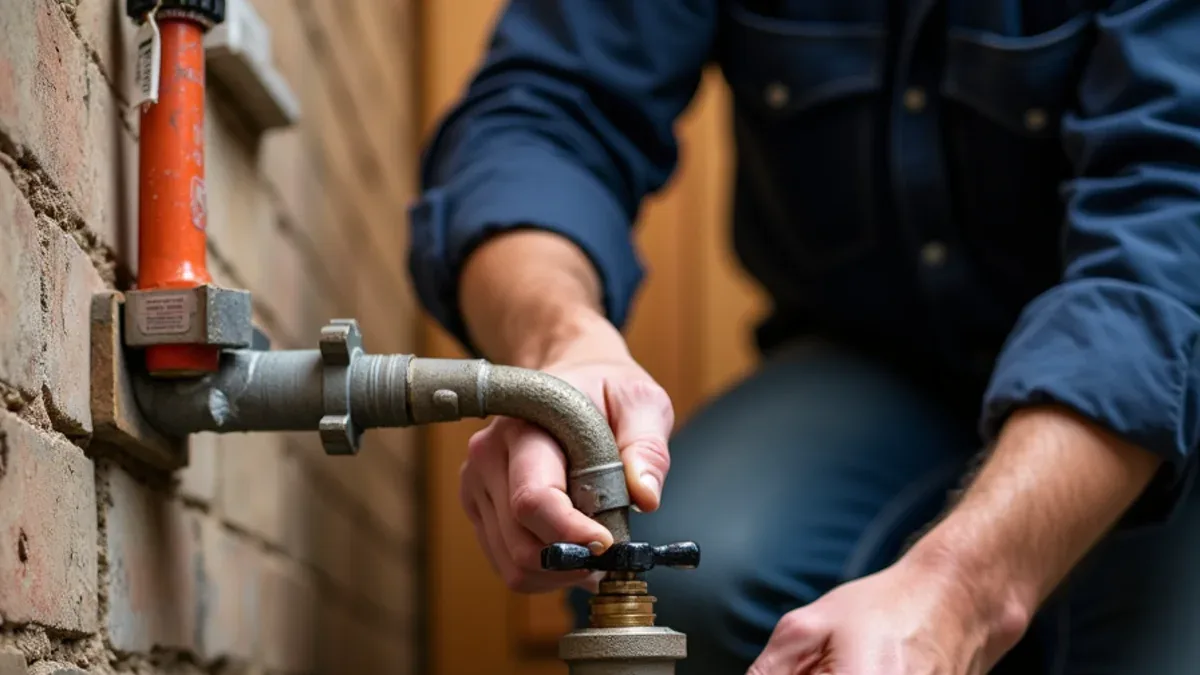
Do this today, not during an emergency. Your main shutoff is usually where the service line enters the house — a crawlspace, a basement, a utility closet, or a meter box near the street.
Turn it clockwise until it stops. If it is a lever-style ball valve, turn it a quarter turn so the handle sits across the pipe.
Test it now. A valve that has not moved in fifteen years sometimes will not, and finding that out during a flood is the worst possible moment. If yours is seized, replacing it is a small job on an ordinary day.
A burst or actively leaking pipe
- 1Shut the main valve. Everything else is secondary.
- 2If the leak is at one fixture, use the local shutoff instead — under the sink, behind the toilet, at the water heater — so the rest of the house keeps water.
- 3If water is anywhere near outlets, a panel, or a furnace, cut power to that circuit at the breaker before you enter the area. If you cannot reach the breaker safely, stay out.
- 4Open the lowest faucets in the house to drain what is still in the pipes.
- 5Move what you can — rugs up, furniture legs onto blocks, boxes off the floor.
- 6Photograph everything before you clean up, for insurance.
Sewage backing up into the house
Stop all water use immediately, including the washing machine and dishwasher. Every gallon leaving the house right now has nowhere to go.
Keep people and pets out of the affected room. This is a biohazard, not a nuisance. Do not plunge a system-wide backup — it accomplishes nothing and can push contamination further into the house.
If your home is on septic, this is a septic emergency rather than a drain clog, and the answer is usually a tank pump-down before anything else.
The smell of gas
Leave the building. Not after checking the stove — first.
Do not operate anything electrical on the way out: light switches, garage door openers, thermostats, or your phone. A switch contact produces a spark and a spark is all it takes.
If you can safely reach an outside shutoff at the meter or the propane tank on the way, close it. If you cannot reach it safely, leave it.
Once you are well clear of the building, call the gas utility emergency line. There is no charge for that call. Then call us once the utility has made the property safe. More detail in our article on gas line safety warning signs.
A leaking water heater
Close the cold water supply valve at the top of the unit. Turn off the gas control valve, or switch off the breaker for an electric unit.
If it is weeping from the tank body itself, that tank has failed and it will not stop on its own. If it is dripping from a fitting or the T&P discharge line, it is usually less urgent but still needs attention.
No water at all
On city water: check whether neighbors have water, in case it is a main break. Check that your main valve has not been partially closed.
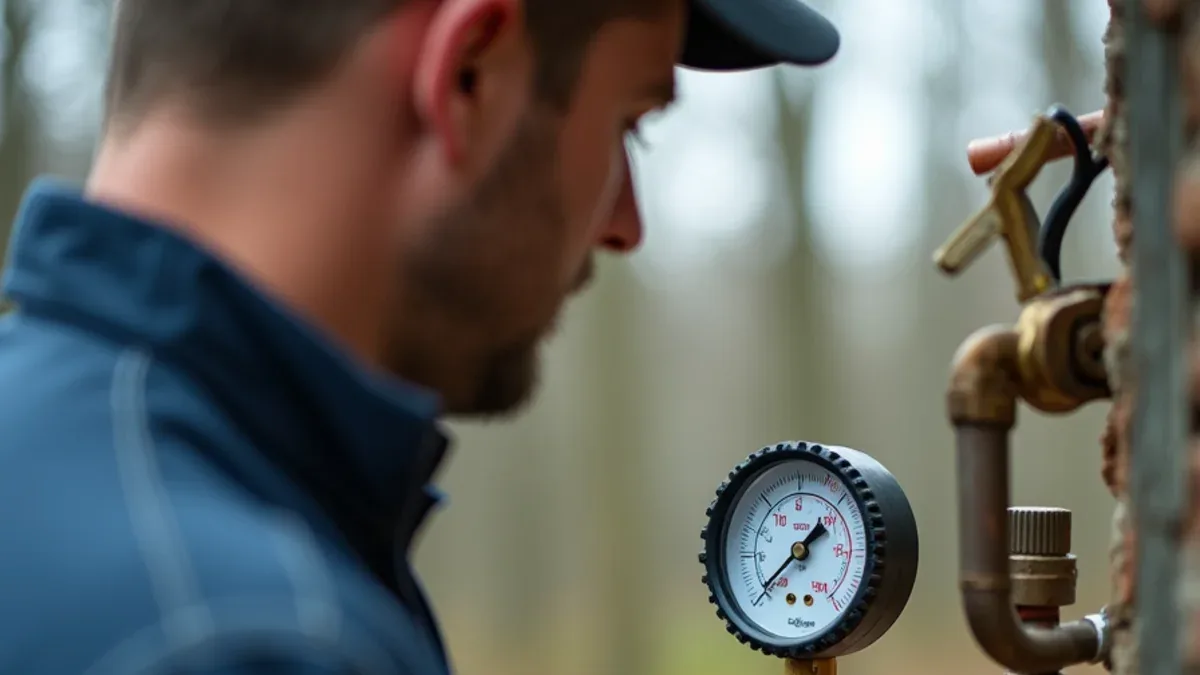
On a well: check the breaker first, then the pressure gauge. Zero pressure means the pump is not delivering. Normal pressure means the problem is downstream. Pressure switch contacts burn out regularly and are inexpensive — see our well pump page.
In winter, no water on a cold morning usually means a frozen line, and that is the moment to act — before the thaw finds the split.
What to tell us when you call
- What you are seeing, and roughly when it started
- Whether you have shut the water off, and whether you were able to
- Whether the house is on city sewer or a septic system
- For septic: when the tank was last pumped and whether you know where it is
- Whether any alarm is sounding
Those answers let us bring the right truck and the right equipment on the first trip, which on an emergency matters a great deal.
The things not to do
- Do not pour chemical drain cleaner into a backed-up line — it will not reach the blockage and it makes the job hazardous
- Do not keep resetting a breaker that keeps tripping
- Do not plunge a whole-house backup
- Do not use an open flame on a frozen pipe
- Do not run the dishwasher or washer "just this once" while a system is backing up
We take emergency calls across Ooltewah, Collegedale, Apison, Harrison, East Brainerd and the wider area. We tell you the after-hours rate on the phone before we dispatch, and the repair estimate is still free.
Frequently asked
Usually where the service line enters the house — in a crawlspace, basement, utility closet, or a meter box near the street. Find it and test it on an ordinary day, because a valve that has not moved in years sometimes will not. If yours is seized, replacing it is a small job now and a disaster during a flood.
For a gas heater, turning the gas control to "vacation" or off is sensible if the water will be off for any length of time. For electric, switch off the breaker — an element energized in a tank that has drained will burn out quickly. For a brief shutoff during a repair it is usually not necessary.
Not usually in the shut-everything-off sense, but it should not wait a month either. A slow leak inside a wall or under a floor causes mold and structural damage long before it becomes visible, and it can double a water bill. Get it located and repaired rather than watching it.
Need someone to actually look at it?
We are a licensed plumber and septic technician based in Ooltewah, serving Hamilton, Bradley and the surrounding counties. Free estimates on every job, and an honest answer about whether you need the work at all.