The Chattanooga area averages well over fifty inches of rain a year, a lot of it arriving in heavy spring bursts. The valley soils are clay-heavy, which means water sheds across the surface rather than soaking in.
Put those together and a single storm can produce three apparently unrelated problems in one house on the same afternoon. They are not unrelated at all.
What a heavy storm actually does
The water table rises
Groundwater comes up, sometimes into the zone where septic drain field trenches sit. A field surrounded by saturated soil cannot accept effluent regardless of its condition, so the house backs up.
That is the single most misdiagnosed septic symptom in this region. The field has not failed — it is temporarily unable to do its job. Our article on drain field failure signs covers how to tell the difference.
Surface water goes where the grade sends it
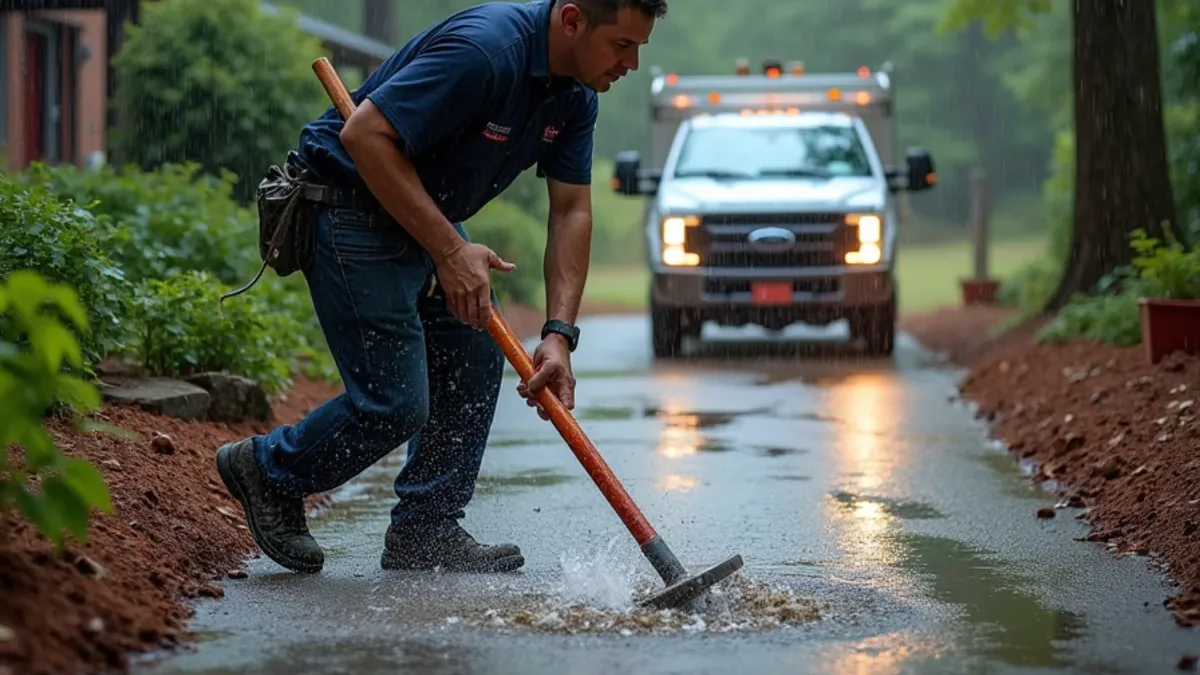
On clay, runoff moves. Toward foundations, across drain fields, into crawlspaces, and into any low spot the landscaping has created.
This is where most storm damage originates, and it is the cheapest thing on the list to fix.
Groundwater finds cracked tanks
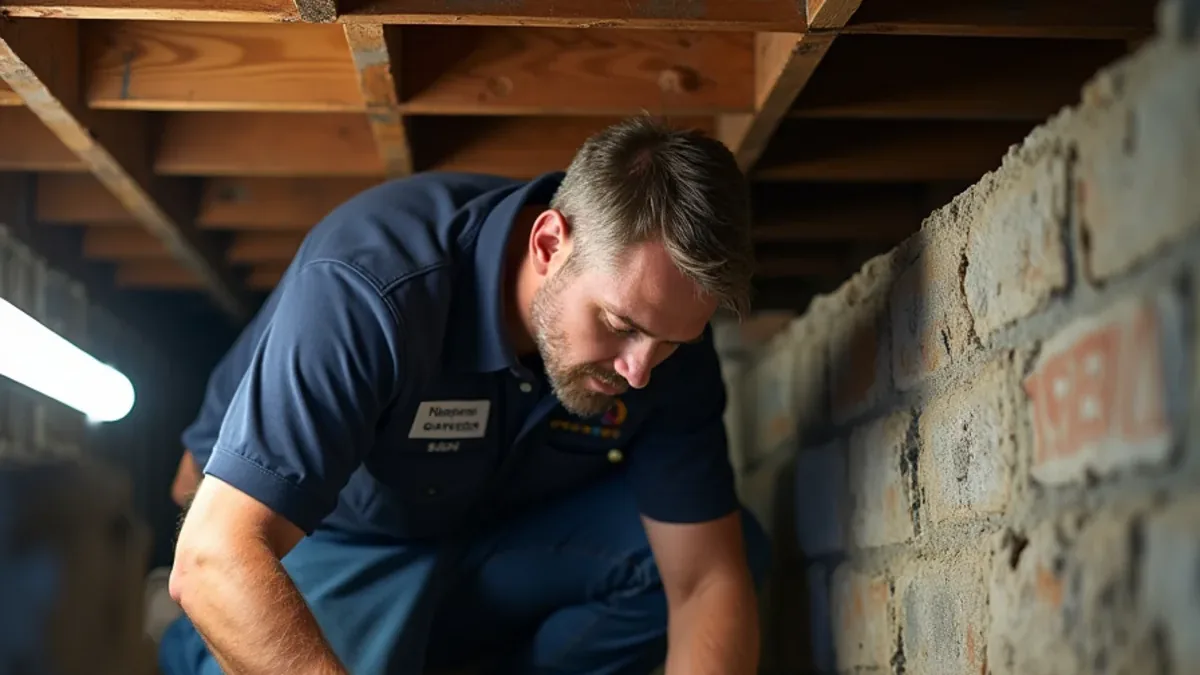
On sloped properties around Harrison, Soddy-Daisy and the ridges, water moving through soil finds cracks below a tank's liquid line or a failed lid seal, and fills the tank independently of anything the household does.
The tell is a tank that refills on its own within days of being pumped. It is a repair, not a replacement.
Roots find the extra moisture
A cracked sewer lateral leaks moisture into the surrounding soil, and roots grow toward it. Storm season accelerates that, which is why main line backups cluster in spring in older neighbourhoods.
What to do before storm season
- 1Extend every downspout six to ten feet from the foundation. This is the highest-value item and it is cheap.
- 2Check grade — soil should fall away from the house for the first several feet. Settled beds and built-up mulch reverse it.
- 3Make sure driveway runoff sheds around your septic drain field, not across it.
- 4Test the sump pump properly, and test the battery backup. Our sump pump checklist has the method.
- 5Pump the septic tank if it is due, while the ground is still firm.
- 6Clear gutters. A blocked gutter puts the whole roof load at one corner of the foundation.
- 7On an older home, consider a sewer camera inspection before the wet season rather than during a backup.
During and after a storm
If drains slow during heavy rain, reduce water use. On a septic property that is not optional — the field is already handling more than it can, and every gallon you add makes it worse.
If a septic system floods, do not pump the tank while the ground is saturated. An empty tank in waterlogged soil can float out of the ground or be crushed. Wait for the ground to drain, then have it inspected.
If a well was flooded, do not drink the water until it has been shock-chlorinated and tested. Normal appearance and taste mean nothing.
The pattern worth recognising
A system that works perfectly in September and struggles in February is not a failing system. It is a system at its limit, and the limit is being reached by water rather than by age.
That distinction is worth thousands, because the fixes are completely different. Reducing what reaches the field — grading, downspouts, fixing a running toilet, spreading laundry across the week — frequently restores a marginal system for very little money.
We work across Chattanooga, Harrison, Ooltewah and the surrounding counties through storm season. If you are seeing seasonal symptoms, get them diagnosed before somebody quotes you a new drain field.
Frequently asked
Two likely reasons. The drain field may be temporarily saturated because the water table has risen into the trench zone, so the soil cannot accept effluent regardless of the field's condition. Or groundwater may be entering the tank through cracks or a failed lid seal, filling it independently of household use. The second is a repair, not a replacement.
Wet soil and root growth. A cracked or jointed lateral leaks moisture into the surrounding ground, roots grow toward it, and spring is when they grow fastest. Add saturated soil reducing how quickly water moves away and the line that coped all winter suddenly does not.
Extend your downspouts six to ten feet from the foundation. A downspout discharging at the base of a wall puts hundreds of gallons directly against it in a single storm, and extending it often halves what a sump pump has to handle. Check the grade falls away from the house while you are out there.
Need someone to actually look at it?
We are a licensed plumber and septic technician based in Ooltewah, serving Hamilton, Bradley and the surrounding counties. Free estimates on every job, and an honest answer about whether you need the work at all.