
Almost every emergency we attend had a preventable cause. Not all of them — pipes fail, tanks reach the end — but most.
Here is the year, season by season. Most of it takes minutes and costs nothing.
Spring
- Test every hose bib before connecting a hose. Water inside the wall means a freeze split over winter — shut it off and call.
- Test the sump pump by pouring water into the basin, and test the battery backup.
- Check gutters and extend downspouts six to ten feet from the foundation.
- Do the food-coloring test on every toilet — drops in the tank, wait fifteen minutes, look for color in the bowl.
- Walk the septic drain field looking for soft ground, standing water, or unusually green grass.
- On a well, test for bacteria and nitrates.
Summer
- Flush the water heater. Twenty minutes, and it removes loose sediment before it hardens on the tank bottom.
- Clean every aerator and showerhead — unscrew and soak in vinegar. The flow improvement is often dramatic.
- Check under every sink for slow weeps at supply connections and traps.
- Test your water pressure with a gauge on a hose bib. Under 40 or over 80 psi both need attention.
- Check the water heater's T&P discharge line is clear and correctly routed.
- Book the septic pump-out if it is due, while the ground is firm and the schedule is open.
Autumn
- Disconnect every garden hose. This is the single highest-value item on the whole list.
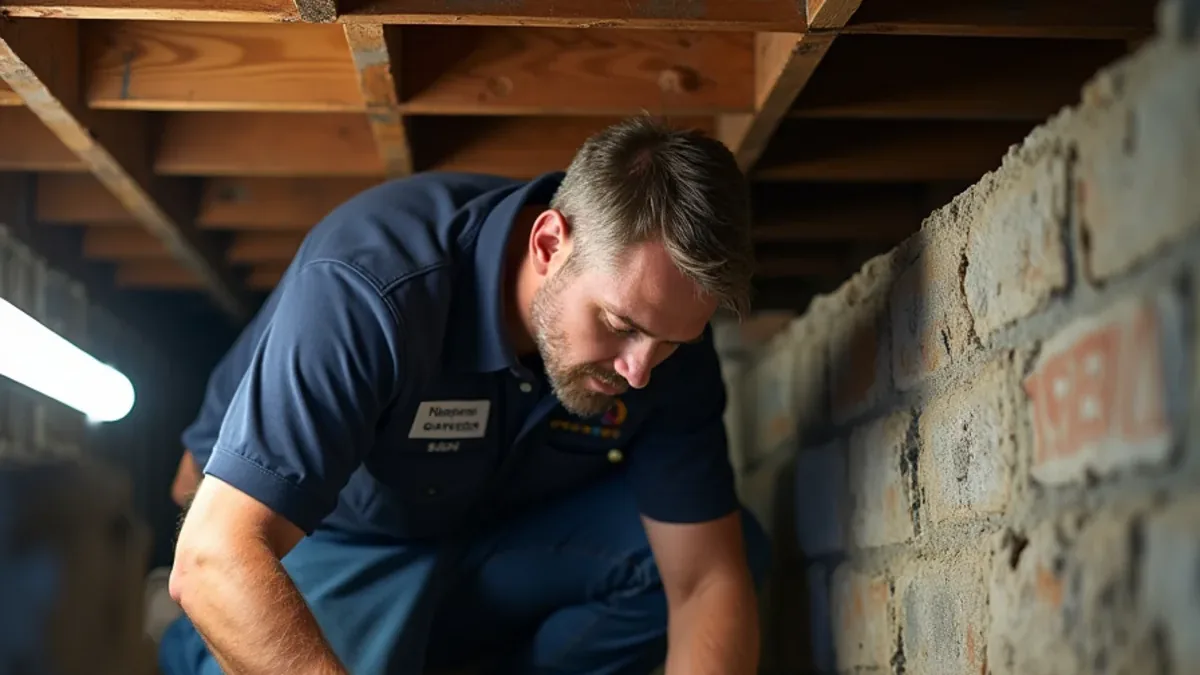
- Insulate pipe in vented crawlspaces, unheated garages, and along north-facing exterior walls.
- Locate your main shutoff valve, confirm it turns, and show everyone in the house.
- Clean the septic effluent filter if your tank has one.
- Service any yard hydrants before the ground freezes — they are far easier to fix now than in January.
- Have the tankless water heater descaled if you have one. Annually is not optional on this water.
Winter
- Before a hard freeze, let a tap on an exterior wall drip and open cabinet doors under those sinks.
- Close crawlspace vents when a serious cold snap is forecast — and reopen them in spring.
- Keep the thermostat steady day and night rather than setting back overnight.
- If leaving town, set heat no lower than about 55°F, or shut off the water and drain the system.
- Reduce water use during prolonged wet spells if you are on septic.
- If a tap gives nothing on a cold morning, act then — before the thaw finds the split.
Every few years
- Check the water heater anode rod. It is a sacrificial rod that corrodes so the tank does not, and almost nobody replaces it.
- Pump the septic tank on your measured interval — not a guessed one.
- Replace rubber and plastic supply lines with braided stainless. They have a service life and when they go, they go completely.
- Replace seized multi-turn shutoff valves with quarter-turn stops.
- On an older home, run a sewer camera inspection as a baseline before there is a problem.
Things specific to this area
Hard water is the local complication. It scales aerators and showerheads, shortens water heater life, and wears faucet cartridges faster than they should wear. Annual flushing and periodic descaling matter more here than the manufacturer's manual implies. Our article on hard water in the Chattanooga area covers what it actually costs.
And if you are on septic — which across Apison, McDonald, Harrison and the county roads is most people — add the field walk and the filter cleaning to the list. Those two habits protect the most expensive component you own.
Frequently asked
Disconnecting garden hoses before winter. It takes two minutes and it prevents the most common freeze failure in this region — a hose traps water in the bib and the pipe behind it, on an exterior wall, and a hard freeze splits it. Nothing shows until you open the tap in spring, into the wall.
Annually, and it matters more here than in soft-water areas. Flushing removes loose sediment before it hardens into a layer that insulates the burner and buries electric elements. It takes about twenty minutes and it can add years to a heater on this water.
Clean the effluent filter if your tank has one. Walk the drain field looking for soft ground, standing water or unusually green grass. Do the food-coloring test on every toilet, because a silent runner sends hundreds of gallons a day into your field. And confirm your pumping interval is still right for your household size.
Need someone to actually look at it?
We are a licensed plumber and septic technician based in Ooltewah, serving Hamilton, Bradley and the surrounding counties. Free estimates on every job, and an honest answer about whether you need the work at all.