A water bill that doubles without any change in habits almost always means water is leaving somewhere it should not. The useful thing is that you can narrow it down substantially yourself, before paying anyone to look.
Here is the sequence we would run, in the order we would run it.
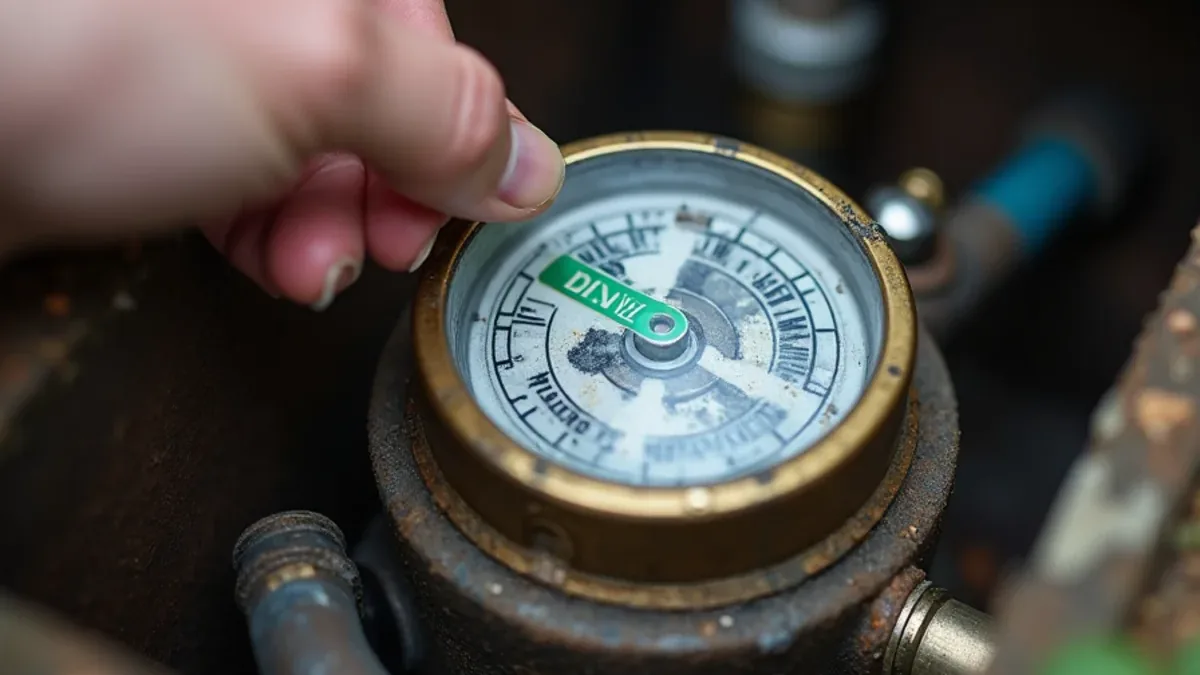
Step 1: The meter test (five minutes)
- 1Turn off every water-using thing in the house — taps, ice maker, humidifier, irrigation system.
- 2Find your water meter and look for the low-flow indicator: usually a small triangle, star, or dial that spins on any flow at all.
- 3Watch it for a couple of minutes.
If it moves, water is escaping somewhere. If it does not, you may not have a leak — skip to the usage section below.
Step 2: Check every toilet
This is the most common culprit by a wide margin, and the cheapest to fix.
Put a few drops of food coloring in the tank of each toilet. Do not flush. Come back in fifteen minutes. If color has appeared in the bowl, the flapper is leaking.
A poorly sealing flapper can pass hundreds of gallons a day, silently, for months. The part costs a few dollars and most people can replace it themselves.
If your home is on septic, this matters beyond the bill — that water goes straight into your tank and drain field, and hydraulic overload is a leading cause of premature field failure.
Step 3: The visible checks
- Under every sink — feel the supply lines and the trap connections, not just look
- Around the base of the water heater, and the T&P discharge pipe
- Every hose bib, including any you rarely use
- The washing machine supply hoses, which have a service life people forget
- Behind the refrigerator if it has an ice maker or water dispenser
- The irrigation system — a stuck valve or a broken head runs unnoticed for weeks
Step 4: The hidden ones
If the meter is still moving after all that, the leak is not visible. The main candidates are a slab leak, a leak inside a wall, or an underground service line.
Slab leaks
Common in homes built on concrete slabs with copper supply lines underneath — which describes a lot of East Brainerd, Collegedale, and Ooltewah housing from the 1980s and 90s.
The tells are a warm spot on the floor (from a hot-water line), the sound of running water with everything off, a drop in pressure, and sometimes new cracks in tile or flooring as the soil beneath moves.
In-wall leaks
A musty smell, a stain that keeps reappearing on a ceiling or wall, paint bubbling, or a warm patch on drywall. These are slow leaks and they cause mold damage long before they cause water damage.
Underground service line
If the meter kept moving with the house valve closed, this is it. Look for an unusually green or soggy strip in the yard following the line from the meter to the house.
What each leak actually costs you
| Leak | Roughly how much it wastes | How you catch it |
|---|---|---|
| Toilet flapper not seating | Commonly cited at 200+ gallons a day, and silent | Food coloring in the tank; color reaches the bowl |
| Faucet dripping once a second | A few gallons a day — thousands over a year | Visible, but easy to stop noticing |
| Irrigation zone stuck open | Very large, very fast | A wet zone, or a meter still turning with the house off |
| Outdoor spigot or split hose bib | Steady, and often hidden behind the wall | Check every spigot with the hose disconnected |
| Slab or yard line leak | Continuous, day and night | Meter test with everything off, then acoustic location |
The order matters. Toilets account for more surprise bills than everything else combined, they cost a few dollars to fix, and you can rule them out yourself in twenty minutes. Do that before paying anyone to look for something more exotic.
What we do at this point
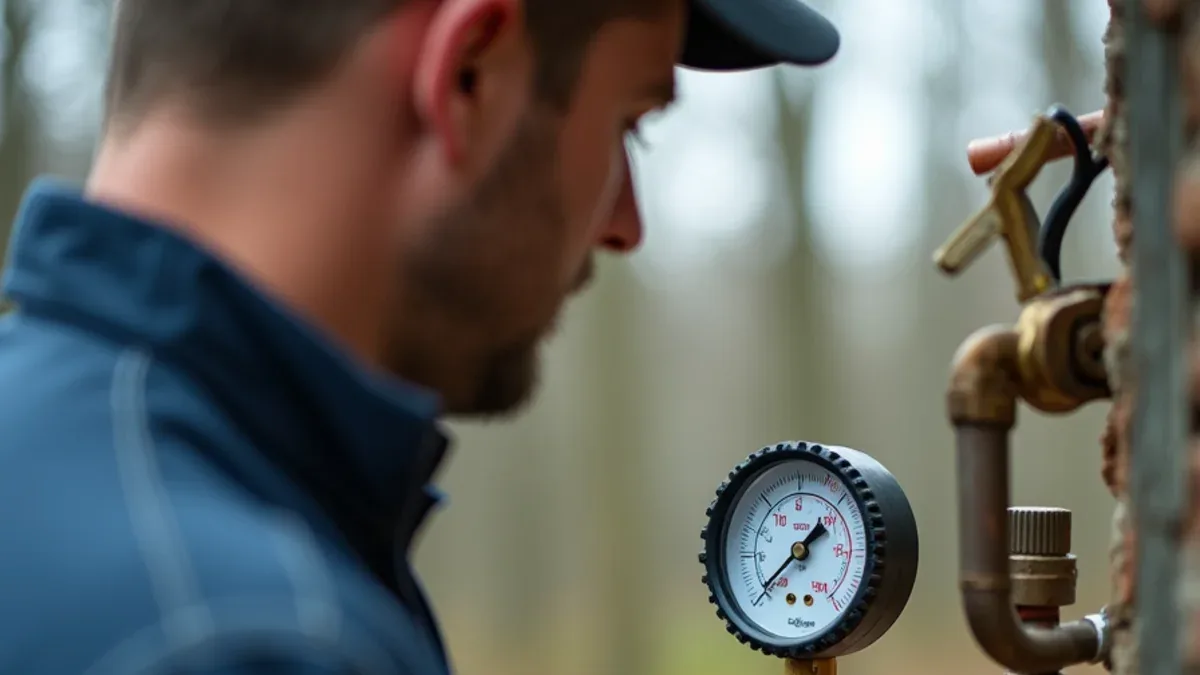
We locate the leak before opening anything. Acoustic listening equipment picks up the sound of pressurized water escaping through concrete or drywall. Thermal imaging shows the heat plume from a hot-water leak. Pressure isolation confirms which section of the system is losing water.
Between them we can usually put a mark within a small area. Full detail on our leak detection page.
When it is not a leak
If the meter test came back clean, look at usage instead.
- Irrigation running more than you think — check the controller schedule, including any "second program"
- A new household member, a returning student, or extended guests
- A pool or hot tub filled or topped up
- A water softener regenerating far more often than it should, usually from bad programming
- A utility rate increase — compare the rate on the bill, not just the total
- A meter reading estimated rather than actual on the previous bill, making this one a catch-up
The habit worth keeping
Do the meter test once a season and the toilet food-coloring test every spring. Between them they catch the large majority of household water waste before it appears on a bill.
If you have run through all of this and the meter is still turning, we do leak location across Ooltewah, East Brainerd, Collegedale and the surrounding area. Estimates are free.
Frequently asked
Far more than people expect — a poorly sealing flapper can pass hundreds of gallons a day, and it does it silently. It is the single most common cause of a mysteriously high water bill, and the repair part costs a few dollars. On a septic system it is worse than a cost problem, because all that water loads your drain field.
You can confirm one exists using the meter test and narrow it to inside-versus-outside by closing the house valve. Pinpointing it is another matter — that needs acoustic listening equipment or thermal imaging. What you can do yourself is the diagnosis; what needs equipment is the location, and locating precisely is what saves you from opening the floor in the wrong place.
Many utilities have a leak adjustment policy for a documented, repaired leak, though the terms vary. Keep the invoice and any documentation of the repair, and ask. It is worth a phone call — the adjustment can be substantial on a bill that spiked from a hidden leak.
Need someone to actually look at it?
We are a licensed plumber and septic technician based in Ooltewah, serving Hamilton, Bradley and the surrounding counties. Free estimates on every job, and an honest answer about whether you need the work at all.