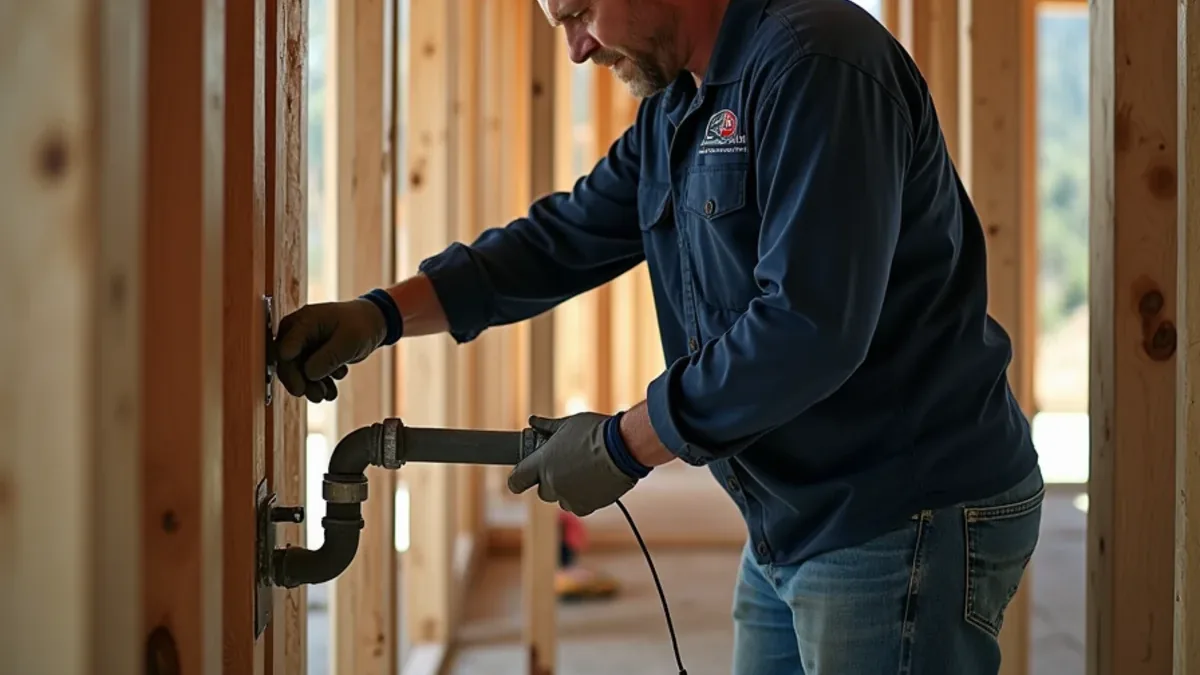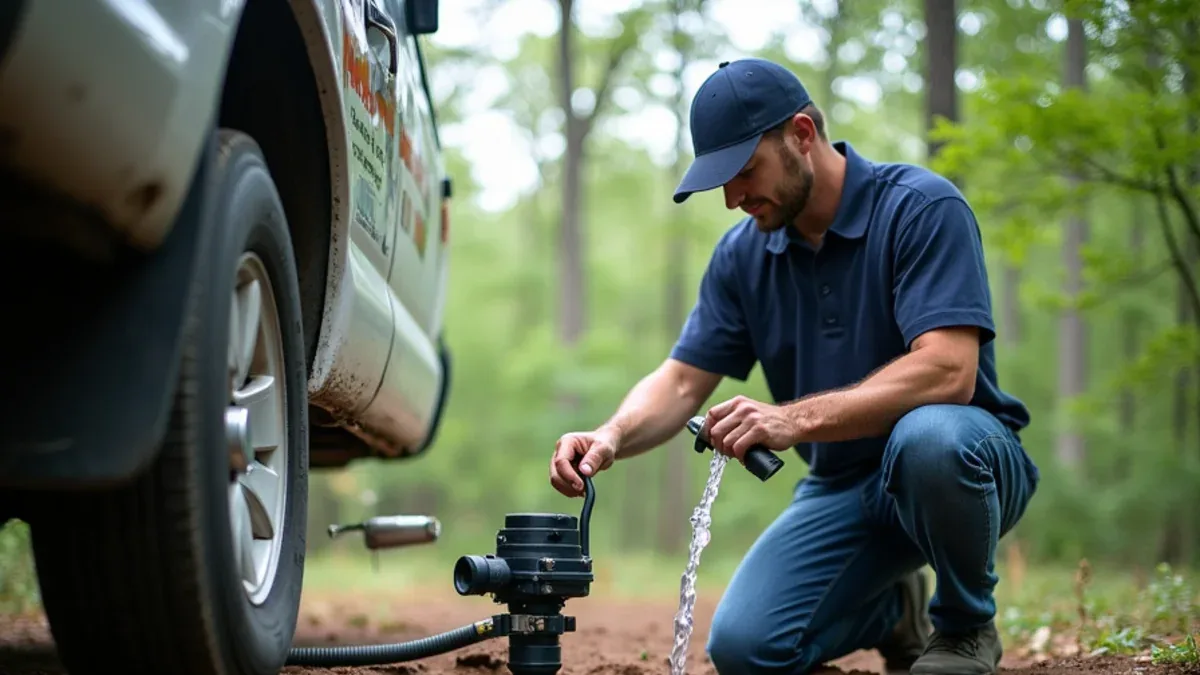
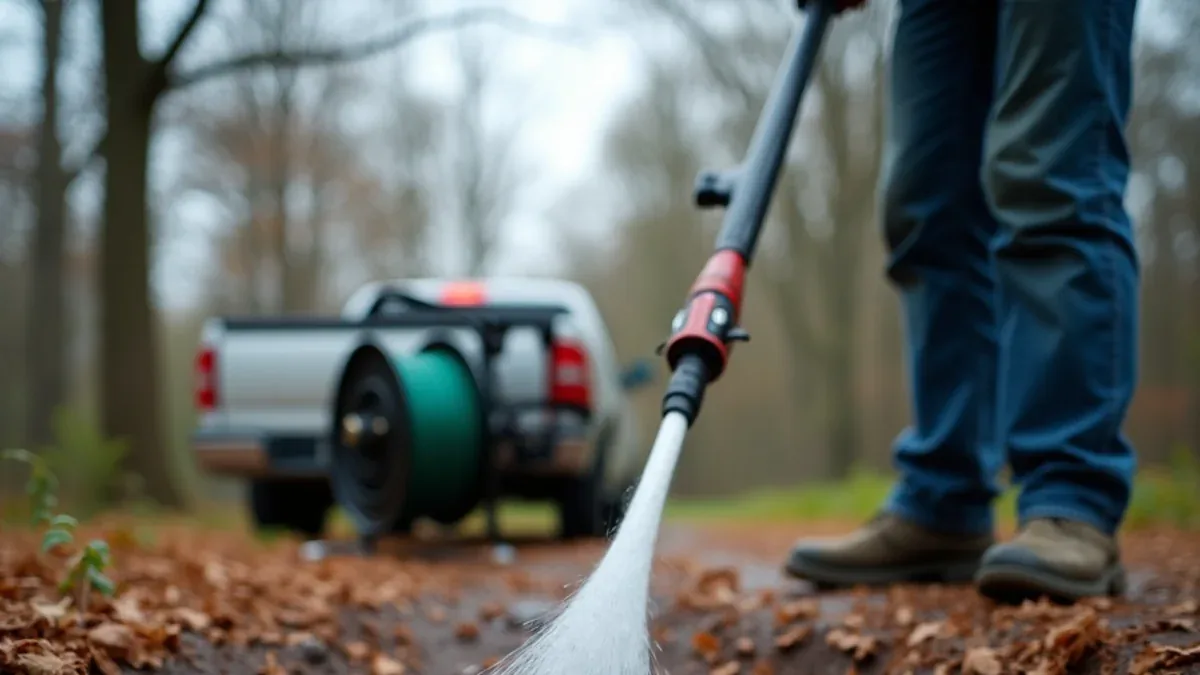
Hydro jetting is high-pressure water fed into a drain line through a specialized nozzle. Jets aimed backward propel the hose forward while scouring the pipe wall in every direction as it goes.
The result is a pipe cleaned back to its original diameter, rather than a channel punched through whatever was blocking it. That is the whole difference, and it is a bigger difference than it sounds.
How it differs from a drain snake
A cable machine drives a flexible steel snake into the line with a head on the end — a cutter for roots, a retrieving head for soft obstructions. It physically breaks through or pulls out a specific blockage.
A jetter does not target a blockage. It cleans the entire circumference of the pipe as it travels. Grease coating, sludge, scale, and root debris all come off the wall and get flushed out.
| Cable / snake | Hydro jetting | |
|---|---|---|
| What it does | Punches through an obstruction | Scours the full pipe wall |
| Best for | First-time clog, specific blockage | Recurring clogs, grease, sludge, scale |
| Typical duration of fix | Months on a coated line | Years on a cleaned line |
| Cost | Lower | Higher |
| Pipe condition needed | Tolerant of poor pipe | Requires structurally sound pipe |
When jetting is the right call
- The same line has clogged more than once in a year
- Kitchen lines in homes over about twenty years old, where grease has had time to build
- Commercial kitchen lines downstream of a grease trap
- Cast iron mains with decades of scale narrowing the pipe
- Root debris you want flushed out rather than left in the line
- Before a camera inspection, when a dirty pipe would make the footage inconclusive
When it is the wrong call
This part matters more than the sales pitch. High pressure into a pipe that has already lost structural integrity makes things worse, sometimes dramatically.
Pipe that should not be jetted: anything already cracked, offset, or collapsing; badly deteriorated clay; and Orangeburg, the bituminized fiber pipe used in post-war construction that fails by deforming. Jetting Orangeburg can finish it in a single pass.
What a jetting job looks like
- 1Camera the line where pipe condition is in any question
- 2Select nozzle and pressure to match the pipe size and what is in it
- 3Work from a proper cleanout, with the surrounding area protected
- 4Jet in stages down the line, pulling material back toward the access point
- 5High-volume flush to carry loosened material out
- 6Confirm full flow at every fixture on that line
- 7Post-jet camera on main lines — with the pipe clean, defects are finally visible
Jetting on a septic property
Jetting the line between the house and the tank is fine and often needed. What matters is where the material goes: downstream, which is your tank.
If your tank is anywhere near due, combine the two. You get a clean line and a clean tank in one visit, and the solids just flushed in do not sit waiting to head for the drain field. Details on our septic pumping page.
We never jet drain field lines at high pressure without a specific reason and the right equipment. Field lines are perforated and fragile, and treating them like a sewer main turns a repairable field into a replacement.
How long does it last?
For a residential kitchen or main line, a properly jetted pipe commonly stays clear for several years, against months for a cabled line on the same pipe.
The variable is what goes down it afterward. Grease and wipes rebuild a coating regardless of how clean the pipe started. Jetting resets the clock; it does not change the habits.
We jet residential and commercial lines across Ooltewah, Hixson, Red Bank, Chattanooga and the surrounding area. Full details on our hydro jetting page, and we will tell you honestly when a cable is the better value.
Frequently asked
It is safe for pipe that is structurally sound, including old cast iron in good condition. It is not safe for pipe that is cracked, offset, or collapsing, and it should never be used on Orangeburg. That is exactly why we run a camera first on older lines — twenty minutes of looking prevents turning a cleaning job into an excavation.
Meaningfully more, because it takes longer, uses more equipment, and often includes a camera run. The relevant comparison is not jetting against one cabling — it is jetting once against cabling the same line every few months for years. On a recurring clog, jetting is usually the cheaper path.
It removes them thoroughly and flushes the debris out, which a cable does not always do. It cannot stop them returning, because they come back through whatever crack or joint let them in. A post-jet camera run shows the entry point so you can decide between a maintenance schedule and a permanent repair.
Need someone to actually look at it?
We are a licensed plumber and septic technician based in Ooltewah, serving Hamilton, Bradley and the surrounding counties. Free estimates on every job, and an honest answer about whether you need the work at all.