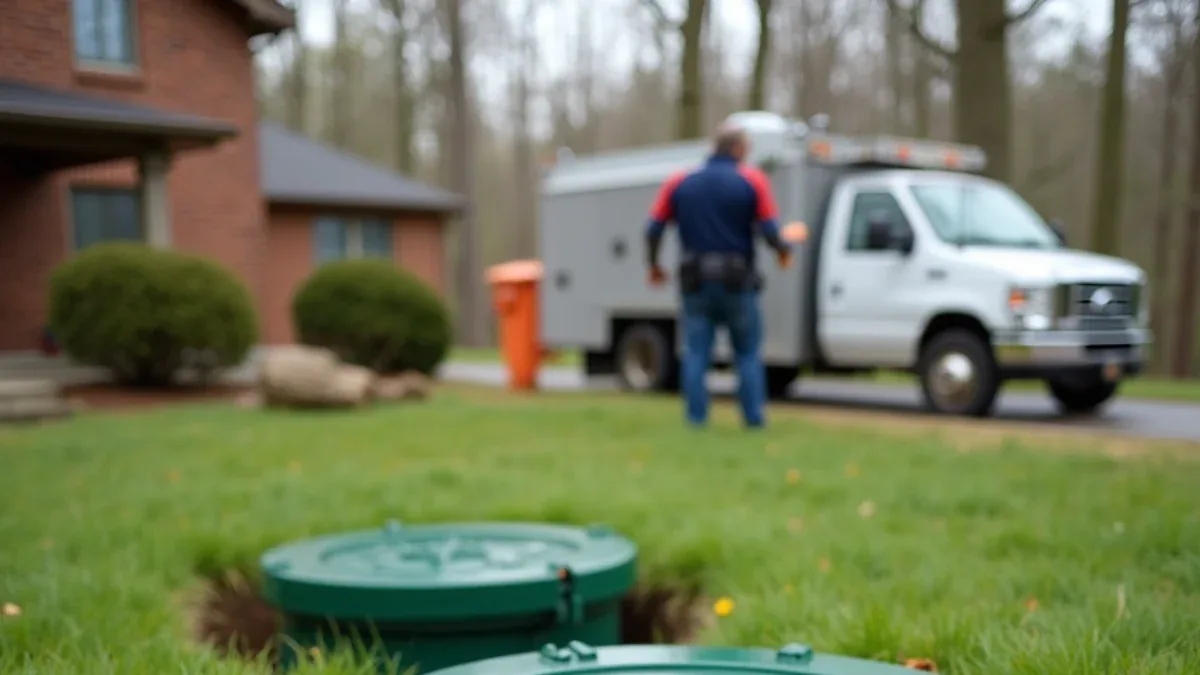
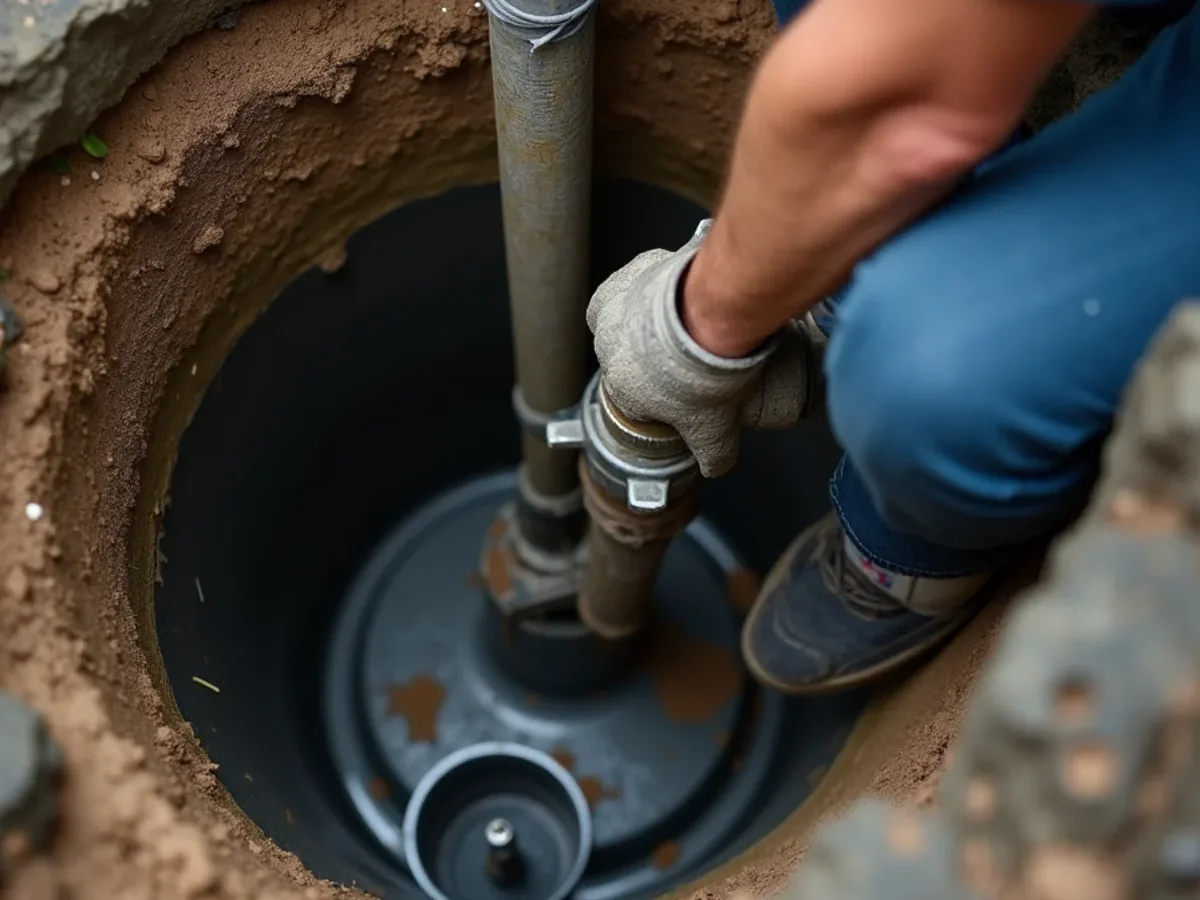
A septic tank is one of the few things a homeowner is asked to make an expensive decision about while being unable to see it. Somebody who can see it says the tank is gone. The number that follows is large. There is no obvious way to check the claim.
So here is how the decision is actually made, in enough detail that you can ask useful questions about your own tank — whoever ends up doing the work.
The rule in one sentence
Almost everything else follows from that distinction.
What counts as a repair
These are components. They fail routinely, they are designed to be serviceable, and replacing one costs a small fraction of a new tank.
- Inlet and outlet baffles or tees — the most common failure of all, and the one most often mistaken for a dead system.
- The effluent filter — cheap, removable, and frequently just blocked.
- The lid, and the riser and seal above it.
- The distribution box, which can tilt or block and starve half the field.
- The inlet or outlet line where it enters or leaves the tank.
- Hairline cracks above the water line, which can often be sealed.
A missing outlet baffle is worth understanding, because it is the classic case. The baffle stops floating scum leaving the tank. Without it, grease and solids go straight to the drain field. The homeowner sees backups and slow drains, concludes the system has failed, and starts pricing replacements — when the actual fault is a part that can be replaced in an afternoon.
What counts as a replacement
These are structural. They cannot be patched into a reliable tank, and attempting it buys a season at best.
- Cracks in the floor or lower walls — groundwater comes in, effluent goes out.
- A steel tank that has rusted through, which they do from the lid down.
- A tank that will not hold its level between pump-outs.
- A collapsed or collapsing lid, which is also an immediate safety hazard.
- A tank materially undersized for the current bedroom count.
How a tank is actually assessed
The assessment is not complicated, but it does require opening the tank and pumping it, and it cannot be done from the surface.
- 1Check the water level against the outlet invert. A level below the outlet means the tank is leaking.
- 2Pump the tank so the walls and floor are visible.
- 3Inspect the walls and floor for structural cracking, and steel tanks for perforation.
- 4Check both baffles are present and intact — a startling number are not.
- 5Check the lid, risers and seals.
- 6Probe the drain field and check the distribution box, because the tank may not be the problem at all.
That last step is the one most often skipped, and it is the one that decides whether you are having the right conversation. A full inspection costs a trivial amount next to either outcome.
Is repair actually cheaper?
When repair is genuinely an option, it is dramatically cheaper — often by an order of magnitude. But that comparison only holds if the repair lasts.
| Situation | Right call | Why |
|---|---|---|
| Missing or broken baffle, sound tank | Repair | Restores the tank to full function for a small cost |
| Blocked effluent filter | Repair | Often a clean rather than a replacement |
| Tilted distribution box | Repair | Can bring a whole field back to life |
| Hairline crack above water line | Repair | Sealable, and not structural |
| Cracked floor or lower wall | Replace | Patching fails and you pay twice |
| Rusted steel tank | Replace | Corrosion continues everywhere you cannot see |
| Tank undersized for the house | Replace | No repair changes capacity |
Patching a structurally failed tank is not a saving. It is a deferral with a service charge attached, and you still buy the tank afterwards.
Questions worth asking before you agree
If you have been told you need a replacement, these are reasonable and any competent contractor will answer them without irritation:
- 1Was the tank pumped and entered, or assessed from the lid?
- 2What specifically has failed — which component, or which part of the structure?
- 3Are both baffles present?
- 4Has the drain field been probed, and what did it show?
- 5If the field is sound, is the quote for the tank alone?
- 6What happens to the old tank, and is that in the price?
- 7Are the permit and inspection fees included or extra?
The fifth one matters most. The field is the expensive half of a septic system, and it does not automatically fail when the tank does. If a quote covers the whole system, you are entitled to know what evidence says the field needs replacing too.
When both genuinely need doing
Sometimes the honest answer is that the tank and the field are both finished. When that happens, doing both at once is genuinely cheaper than two separate jobs — the equipment mobilises once, the permit covers one project, and the yard is disturbed once.
That is a real saving rather than a sales line, but it should be presented with the evidence for both halves. What the numbers look like and why is covered in the replacement cost guide.
How to avoid the question entirely
Most tanks that fail early fail for reasons that were visible years before. Pumping on a sensible interval keeps solids out of the field. An effluent filter protects the field for very little money. An inspection every few years finds a missing baffle while it is still a cheap problem.
The households that end up replacing systems early are rarely unlucky. They are usually the ones where nobody opened the tank for fifteen years.
Frequently asked
From the surface, you mostly cannot, and that is the honest answer. The signs that point towards structural failure are a tank that loses level between pump-outs, visible cracking in the walls or floor once it is pumped, a steel tank old enough to have corroded through, and a lid that is soft or collapsing. All of those require the tank to be opened and emptied to confirm.
Repair, substantially, whenever repair is genuinely viable — components cost a fraction of a tank. The caveat is that this only holds if the repair is a real fix. Sealing a structurally cracked tank or patching rusted steel buys a season, and then you pay for the replacement as well as the repair.
Age and material far more than abuse. Steel tanks from the 1970s and 1980s are reaching the end of their service life across this area and fail predictably, lid first. Concrete tanks usually fail at the baffles long before the shell goes, which is exactly why so many tanks written off as dead actually need a component.
A concrete tank pumped on a sensible interval commonly runs forty years or more. Steel is the short one, often twenty-five to thirty. Plastic and fibreglass sit between the two and depend heavily on how carefully they were installed and backfilled.
It depends entirely on where the crack is. Above the water line, often yes — it can be sealed and the tank goes on working. In the floor or the lower walls, no. Those cracks let groundwater in and effluent out, the pressure differential works against any patch, and the repair fails.
Need someone to actually look at it?
We are a licensed plumber and septic technician based in Ooltewah, serving Hamilton, Bradley and the surrounding counties. Free estimates on every job, and an honest answer about whether you need the work at all.