
Septic service
Drain Field Replacement in Ooltewah, TN
When the field is genuinely finished — designed for the soil you actually have, permitted properly, and built so the reserve area is still there for next time.
A drain field replacement is the biggest expense in residential wastewater, and it is the one job where cutting the price almost always costs more later. The field is where the system actually works — the tank just buys time for solids to settle. When effluent is surfacing in the yard or backing into the house after the tank has been pumped, the field is usually the reason.
The important thing to understand is that a replacement is not a rebuild of what was there. The field that just failed was designed against a soil evaluation that may be thirty years old, for a house that may have had two fewer bedrooms. We design the new one against the ground as it is now, in the location the soil will actually support.
We also protect the reserve area while we do it. Every permitted septic system in Tennessee has one — the ground set aside for the next field. Building over it, or driving across it, is how a property ends up with no legal option at all.
Signs the field is finished, not just struggling
Effluent surfacing over the field
Standing water or soft, wet ground over the trenches in dry weather is a health hazard and a code violation. It means the soil can no longer take what the system is sending it.
Backups that return within weeks of pumping
Pumping the tank empties the tank. If the house backs up again within a month, the problem is downstream, and the tank was never the cause.
Grass that is greener and faster over the trenches
A field line you can read from across the lawn is a field that is discharging too shallow. Early on this is the only visible sign.
Smell outdoors in still weather
A properly working field does not smell. Persistent odour over the field area, as opposed to around the tank lid, points at saturation.
Ponding found on a probe or camera
We probe the trenches and run a camera where it helps. Standing effluent in the laterals is the definitive answer.
Repeated field repairs that keep failing
If lines have been jetted or sections replaced more than once and it keeps returning, the soil interface is sealed and no amount of work on the pipe will change that.
How we work
How a field replacement runs
- 1
Confirm the field is the failure
We pump and inspect the tank, check the distribution box, and probe the field. A tilted D-box or a collapsed lateral is a repair, not a replacement, and we would rather find that.
- 2
Soil evaluation
A licensed soil scientist evaluates the reserve area — soil profile, depth to restrictive horizon, seasonal water table. That result determines the design. The old field design does not.
- 3
Design and permit
Trench length, spacing and type come from the soil result and the design flow for the house. We submit the construction permit package to the county and the state.
- 4
Protect what stays
We stake the new field, the route in, and everything that must not be driven on — the remaining reserve area, the well and its setback, the tank, and the drive.
- 5
Build the field
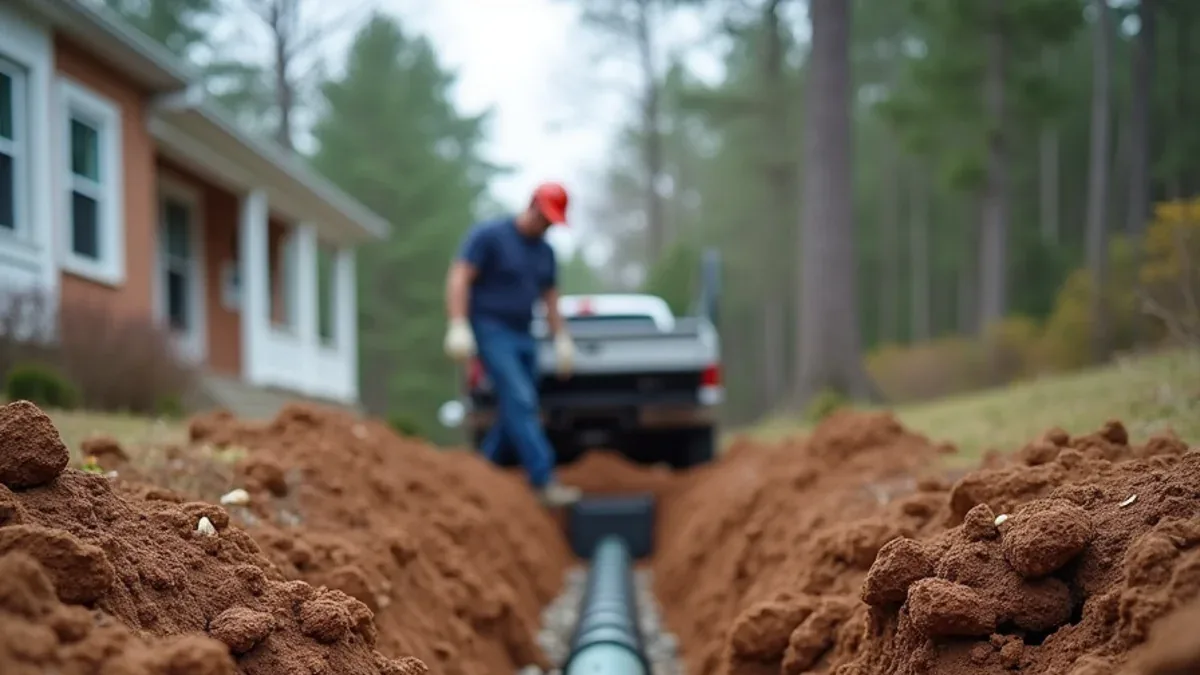
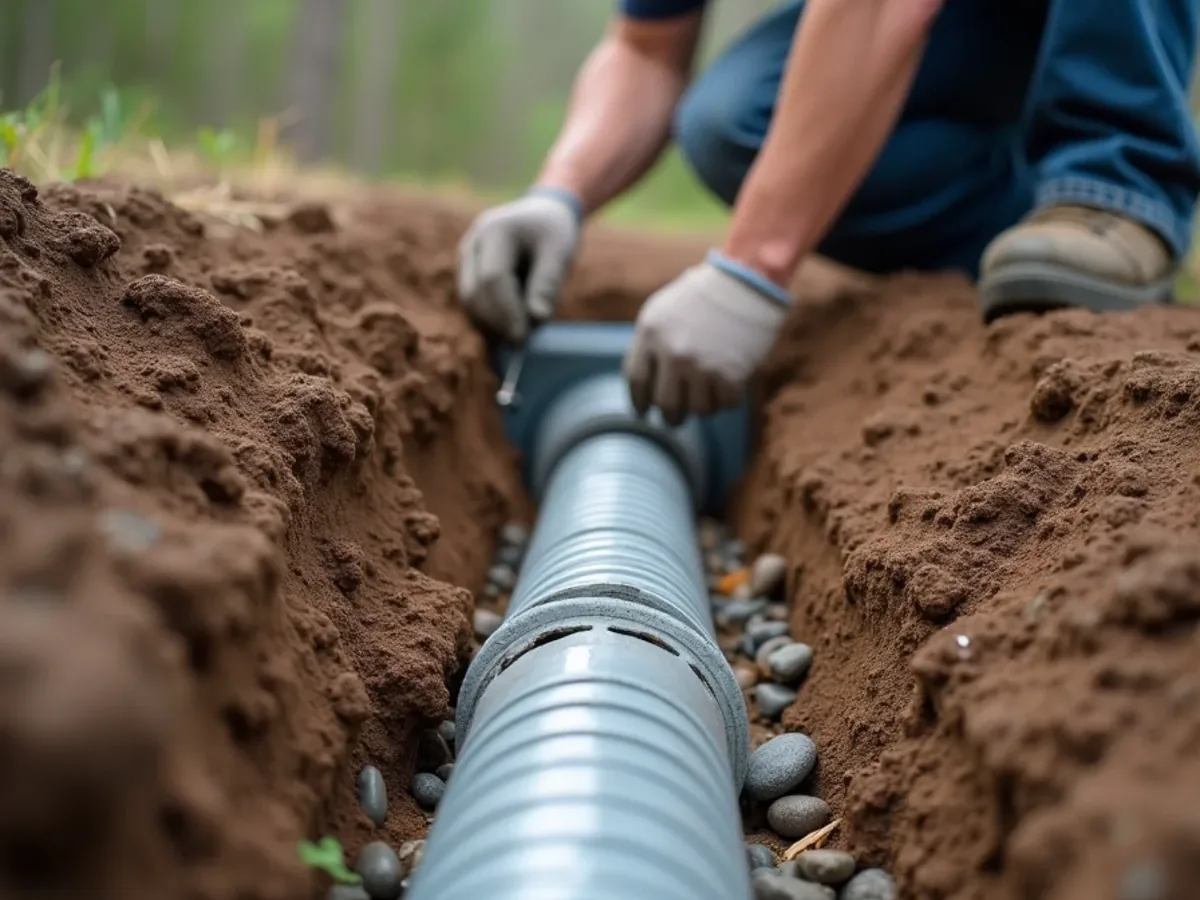
Trenches or chambers at the specified depth and spacing, with the stone, fabric and distribution the design calls for, cut on contour so every line loads evenly. We do not shorten trench runs to fit a lawn.
- 6
Inspect, cover and restore
County inspection before cover. Then backfill, final grade so surface water sheds away from the field rather than into it, and seed.
Need drain field replacement in Ooltewah or nearby?
Free estimate, written price before work starts, and an honest answer about whether you need the job at all.
- Licensed septic technician
- 22 Google reviews
- Free estimates on every job
- Locally owned & operated
Why we will not simply rebuild the old field
The field that failed was built to a design based on a soil evaluation from whenever the system went in, under rules that have changed, for a house that may since have grown. Rebuilding in the same footprint to the same spec repeats whatever caused the failure, and in most cases the county will not permit it anyway.
There is also a physical reason. A failed field has a biomat — a sealed organic layer at the soil interface — that is what stopped it accepting water. That ground needs years of rest to recover, if it ever does. Building the new field on rested reserve ground is not a preference, it is the whole reason the reserve area exists.
The reserve area is the thing to protect
Every permitted system here was approved with a reserve area set aside for exactly this day. It is the single most valuable piece of a septic property and the easiest one to lose, usually to a shed, a pool, an extension or a gravel parking area put in by someone who did not know it was there.
If you are buying rural property, find the reserve area on the permit before you plan anything. If you already own and are not sure where it is, we can pull the permit and show you. A lot without a usable reserve area is a lot where the next field becomes an engineering problem instead of a construction one.
Ooltewah, Collegedale and the ground out east
Soil here changes sharply over short distances. The flatter ground around Ooltewah and Collegedale often has workable depth, while lots climbing toward Snow Hill or out toward Harrison can hit rock shallow enough to rule out a conventional field entirely. Two neighbours can get completely different designs and completely different numbers, and neither quote is wrong.
That is also why we will not price a field over the phone. The honest answer before a soil evaluation is a range so wide it is useless, and the useful answer is a few days away.
What drives drain field replacement cost
This is the largest number in septic, so we itemise it. The soil evaluation comes first because it decides the design, and the design decides most of the cost — which is why no honest quote exists before that result. Free estimates.
- What the soil evaluation returns
- Good soil with depth gives a conventional gravity field, which is the cheapest outcome. Shallow bedrock, heavy clay or a high water table pushes the design toward low-pressure pipe, drip or a mound, and those cost considerably more to build and to run.
- Design flow
- Trench length is driven by bedroom count and soil loading rate. A five-bedroom house on marginal soil needs a great deal more field than a three-bedroom house on good ground.
- Whether a pump is required
- If the new field cannot be fed by gravity, the design needs a pump tank, pump, floats and a control panel, plus power run to it. That is a meaningful addition.
- Site access and spoil
- Field construction moves a lot of material. Where the machines can get in, and where the spoil can go, changes the hours significantly on wooded or steep lots.
- Clearing and restoration
- A reserve area that has grown up in trees has to be cleared and the stumps dealt with before anything is built. Restoration afterwards is part of the quote, not an extra.
- Whether the tank comes along
- If the tank is also near the end, doing both while the equipment is on site costs less than two mobilisations. If the tank is sound, we leave it alone and say so.
We do not publish flat prices because two jobs on the same street can cost different amounts, and a quoted number that changes on arrival helps nobody. Every job starts with a free written estimate.
Questions
Drain Field Replacement in Ooltewah — answered
Sometimes, and it is always worth checking first. A tilted or blocked distribution box starves some lines while flooding others, and relevelling it can bring a whole field back for very little. Roots, a crushed lateral or a single collapsed run can often be repaired. What cannot be reversed is a sealed soil interface across the whole field — once the soil will not accept water, the field is finished regardless of what the pipe looks like.
The construction is usually two to five days depending on field size, soil and access. The timeline that matters more is the one before that: the soil evaluation and the permit typically add two to four weeks. If you are in failure and the house is backing up, we can often keep you running with scheduled pumping while the permit moves.
A well-designed field on good soil, not overloaded and not driven on, commonly runs twenty-five to forty years. The things that shorten it are consistent: too much water, solids carrying over from a tank that is not pumped, and compaction from vehicles. The effluent filter and a sensible pumping interval are what protect it.
No, and that includes the reserve area. A field needs oxygen in the soil to work, and it needs to not be crushed. Driveways, slabs, decks, pools, sheds and regular vehicle traffic all end fields early. Grass over a field is ideal; trees are a problem because of roots.
Yes. The old evaluation described a site that has since had a septic system operating in it for decades, and the rules it was approved under have changed. The new design has to be based on a current evaluation of the ground the new field will actually go into.
This is the hard case and it is worth knowing early. Options narrow to an advanced treatment system with a much smaller footprint, a drip field, or in some cases a design that uses ground the conventional rules would not allow. Those are more expensive and some require ongoing service contracts. We would rather find this out at inspection than on the day you need a field.
Yes, though not overnight. We grade and seed as part of the job, and the field area regrows normally over a season. The trench lines stay slightly visible for a while as the fill settles, which is normal and not a fault. What we will not do is leave you with spoil heaps and ruts.
You might also need
Drain Field Repair & Replacement
Standing water, odor, and backups that pumping does not fix usually mean the field. We diagnose the cause first, then rebuild only what needs rebuilding.
Learn moreSeptic Tank Replacement
Replacing a failed tank without replacing a working drain field, with the permit and the old tank handled properly.
Learn moreAdvanced & Alternative Septic Systems
Mound systems, low-pressure pipe and drip dispersal for sites where a gravity field is not permittable. Plus the maintenance they genuinely require.
Learn more
Drain Field Replacement — free estimate, fair price
Call and describe what you are seeing. We will tell you what it usually means, what it will take to check, and what it is likely to cost.
- Licensed septic technician
- 22 Google reviews
- Free estimates on every job
- Locally owned & operated