Search for what a septic replacement costs and you will get a national range that spans an order of magnitude. That is not the writers being lazy. It is because the honest answer genuinely depends on things no national average can know: what the soil does twenty inches down on your lot, how many bedrooms the house has, and whether a machine can reach the back of the property without crossing the field you are trying to save.
What we can do is tell you exactly which variables move the number, in what direction, and by roughly how much relative to each other. That is more useful than an average, because it lets you read a quote and understand why it says what it says.
First: are you replacing a tank, a field, or a system?
This is the single biggest fork in the road, and a surprising number of homeowners are quoted for the whole system when only half of it has failed.
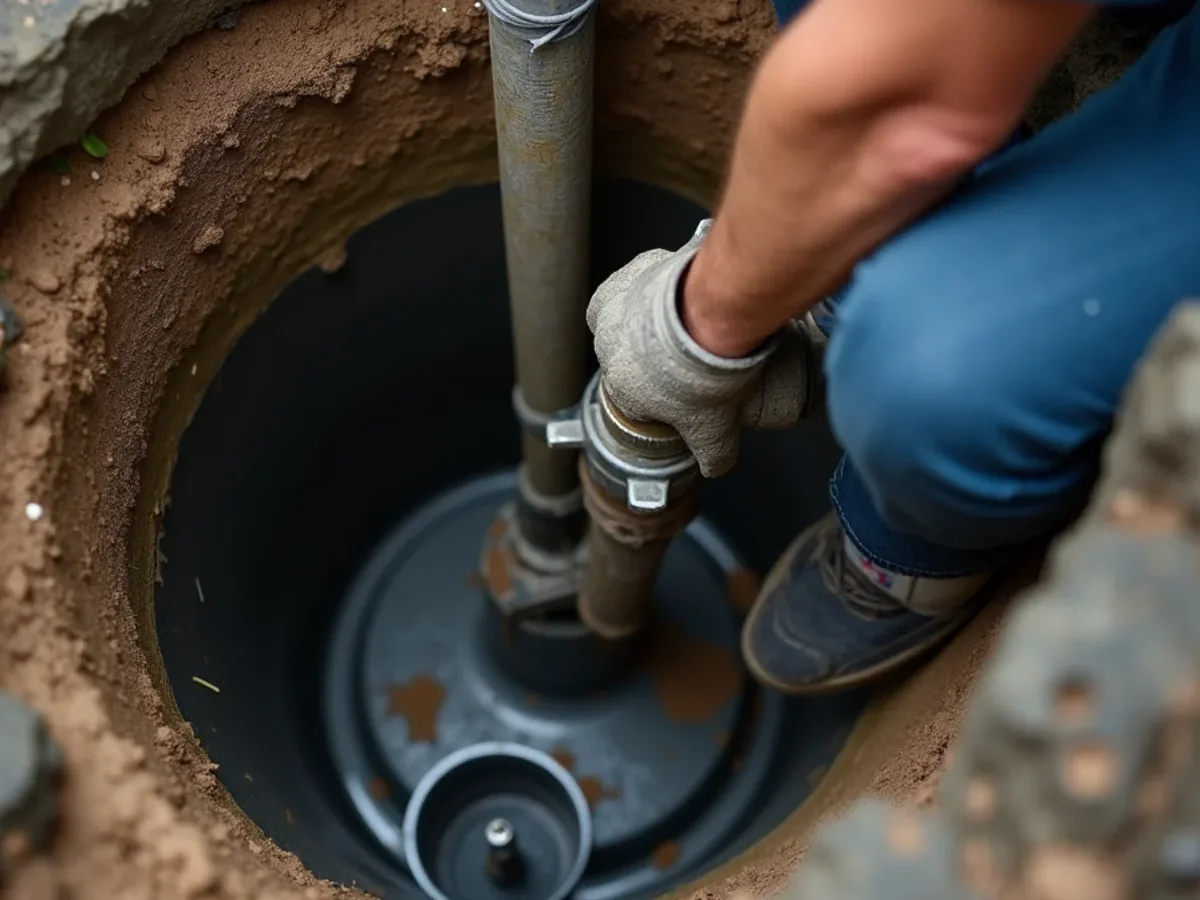
The tank and the drain field fail independently. A steel tank can rust through at twenty-five years while the field it feeds is still fine. A concrete tank can outlive two fields. Replacing a tank alone is a fraction of the cost of replacing a field, because the field is where the excavation, the design and the material volume live.
- Tank only — the smallest of the three jobs, usually one to two days of work.
- Drain field only — the largest single component, driven almost entirely by the soil result.
- Full system — cheaper than the two jobs done separately, because the equipment mobilises once.
Anyone quoting a full system replacement without having probed the field and opened the tank is guessing. Ask what they found. If the field is sound, you want a quote for a tank replacement and nothing more.
The soil evaluation decides most of a field replacement
For a drain field, the soil evaluation is not paperwork. It is the thing that determines the design, and the design determines most of the cost. A licensed soil scientist looks at the soil profile, the depth to a restrictive horizon, and the seasonal water table in the reserve area where the new field will go.
The result puts you into one of roughly three bands:
| Soil result | Typical design | Relative cost |
|---|---|---|
| Good depth, workable loam | Conventional gravity trenches | Lowest |
| Marginal depth or heavier clay | Low-pressure pipe or chambers, often with a pump | Meaningfully higher |
| Shallow bedrock, high water table, or no usable reserve | Drip dispersal, mound, or advanced treatment | Highest, plus ongoing service |
This is why two neighbours get very different numbers and neither quote is wrong. Around Ooltewah and Collegedale the flatter ground often has workable depth. Lots climbing toward Snow Hill or running out toward Harrison can hit rock shallow enough to rule out a conventional field entirely.
Design flow: bedrooms, not people
Tennessee sizes septic systems on bedroom count, not on how many people currently live in the house. That catches people out. A couple in a five-bedroom house needs a five-bedroom system, because the next owners might not be a couple.
Design flow sets tank capacity and, combined with the soil loading rate, sets the total trench length in the field. Two extra bedrooms can add a surprising amount of field. If you have added bedrooms since the system went in, the replacement will be larger than what you had — this is usually the moment that gets discovered.
Access, and why it matters more than people expect
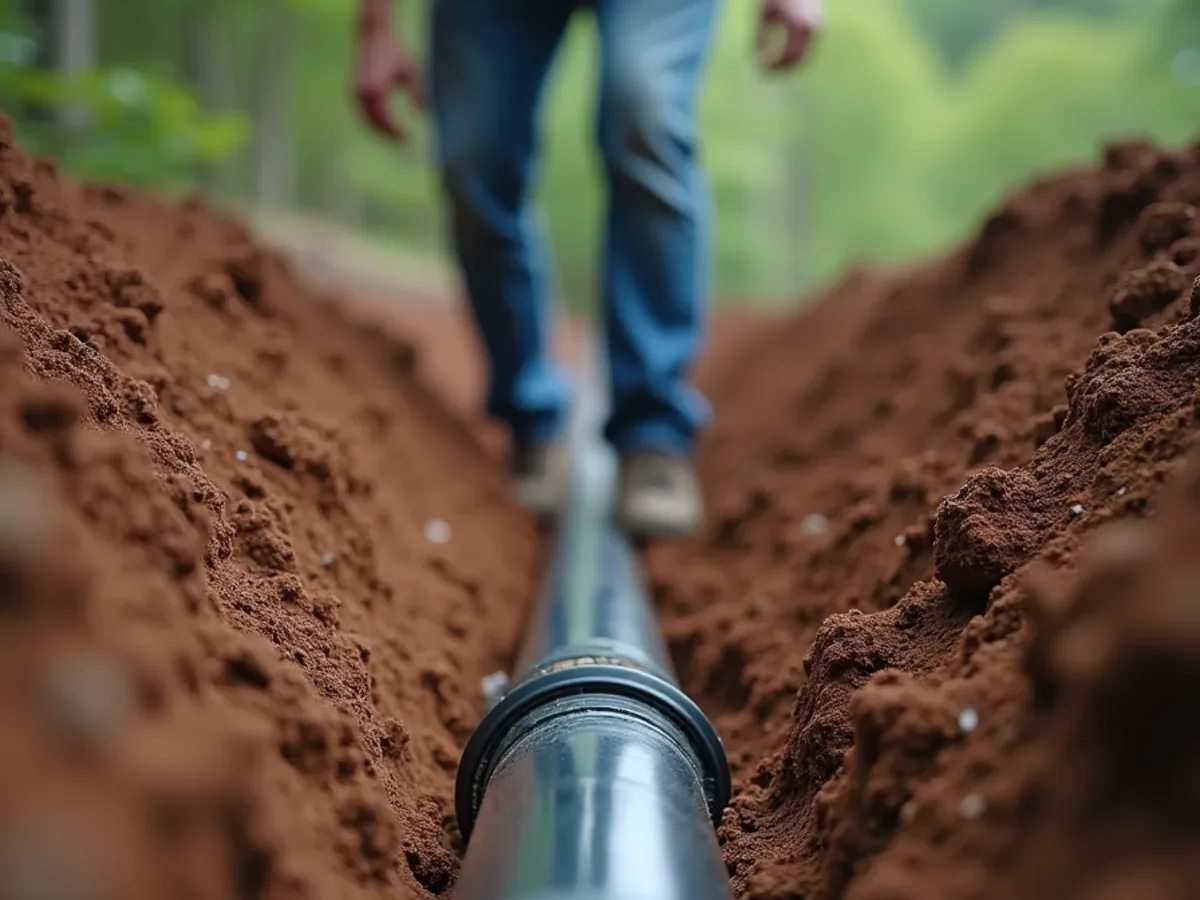
Field construction moves a lot of material. Where the machines can get in, and where the spoil can go, changes the hours significantly.
- A tank thirty feet off a driveway is a different job from one behind a fence or under a deck.
- Narrow access means smaller machines, which means more passes and more hours.
- Wooded reserve areas need clearing and stump removal before anything is built.
- Steep ground limits what can work safely and how spoil can be handled.
- On wet clay we will sometimes recommend waiting rather than rutting a pasture.
Whether the design needs a pump
If the new field cannot be fed by gravity from the tank, the design needs a pump tank, a pump, floats, a control panel and power run out to it. That is a real addition to both the build cost and the long-term running cost, because pumps are a service item and gravity is not.
Gravity is always preferred where the site allows it. When we lay out a replacement we look hard at whether a different field location keeps the system on gravity, because that decision pays for itself for the next thirty years.
The old tank has to be dealt with properly
An abandoned septic tank cannot simply be left in the ground full. Tennessee rules require it to be pumped and then either removed or crushed in and backfilled so it cannot become a void. Removing a tank whole costs more than crushing it in place, and some sites only permit one of the two.
It adds a few hours. It is not optional, and a quote that does not mention the old tank is a quote worth questioning.
Permits and inspections
Replacing a tank or a field in Hamilton County requires county approval and an inspection before cover, even for a like-for-like tank swap. County fees are what they are; we pass them through at cost and show them as a separate line so you can see what is ours and what is the county.
Permitting also takes time — typically two to four weeks including the soil evaluation. If the house is actively in failure, scheduled pumping can keep you running while the permit moves. Factor that into the timeline, not just the budget.
What makes the total go up after the quote
Honest surprises exist. These are the ones we see most, and all of them are better found before the quote than after:
- The inlet line or distribution box is also failing — far cheaper to replace while the ground is open.
- Groundwater higher than expected, requiring dewatering or shoring.
- Rock encountered shallower than the evaluation suggested.
- The reserve area turns out to be partly built over, shifting the field location.
- An old system was never properly abandoned and is found during excavation.
How to compare two quotes fairly
If you have two numbers that are far apart, the gap is almost never labour rate. It is scope. Before you conclude one is expensive, check that both quotes include the same things:
- 1Is the soil evaluation included, or billed separately?
- 2Does the price include permit and inspection fees, or are they excluded?
- 3What happens to the old tank, and is that line visible?
- 4Is the trench length the same? A shorter field is a cheaper field and a shorter-lived one.
- 5Is a pump included in one and assumed away in the other?
- 6Is restoration — backfill, final grade, seed — included or left to you?
- 7Is the distribution box new or reused?
What protects the investment afterwards
Once a new field is in, three things decide whether you get twenty years or forty out of it, and all three are cheap:
- Pump the tank on a sensible interval so solids never reach the field. This is the whole ballgame.
- Fit and clean an effluent filter — it is a small part protecting the most expensive one.
- Keep vehicles, structures and trees off both the field and the remaining reserve area.
A maintenance plan exists mostly to make the first of those happen on schedule rather than when someone remembers.
Frequently asked
If both genuinely need replacing, yes — doing them together costs less than two separate jobs because the equipment, the permit process and the site disruption happen once. But that is only true if both actually need it. If the field is sound, replacing it alongside a failed tank is money spent for nothing. We probe the field before quoting precisely so that decision is based on evidence.
For a tank replacement we can get reasonably close once we know the material, size and access. For anything involving a drain field we genuinely cannot, because the soil evaluation determines the design and the design determines most of the cost. A phone number before that result is a guess, and the gap between a conventional gravity field and a mound system on the same property is enormous.
Usually not for failure due to age or wear, which is what most replacements are. Sudden accidental damage is sometimes covered. It is worth a call to your insurer before you assume either way, and worth reading what the policy says about the drain field specifically, since it is often treated differently from the tank.
In Tennessee the work has to be permitted and inspected, and the installer has to be licensed for the system type. Beyond the legal position, the parts that go wrong are the parts that are invisible afterwards — trench depth, bedding, elevations, loading rates. A field built slightly wrong works for a year or two and then does not, and at that point the reserve area may be gone.
Need someone to actually look at it?
We are a licensed plumber and septic technician based in Ooltewah, serving Hamilton, Bradley and the surrounding counties. Free estimates on every job, and an honest answer about whether you need the work at all.