A septic pump-out is the least glamorous money a rural homeowner spends and comfortably the best value. It is the one maintenance item that directly protects the drain field, which is the part that costs serious money to replace.
Two houses on the same road can still be quoted differently for what looks like the same job. None of that is arbitrary — here is what moves it.
Tank size
The obvious one. Tanks here are commonly 1,000 to 1,500 gallons, with larger tanks on bigger houses. Disposal is charged by volume at the treatment facility, so a bigger tank genuinely costs more to empty — this part is not markup.
How long it has been
A tank pumped on schedule has a manageable sludge layer that pumps out cleanly. A tank that has not been touched in fifteen years has compacted sludge that has to be broken up and worked loose, sometimes with water added back to mobilise it. That is a longer job.
This is the single most common reason a quote comes in higher than a neighbour paid. The cheapest pump-out is the one that happens before it is overdue.
Whether the lid can be reached
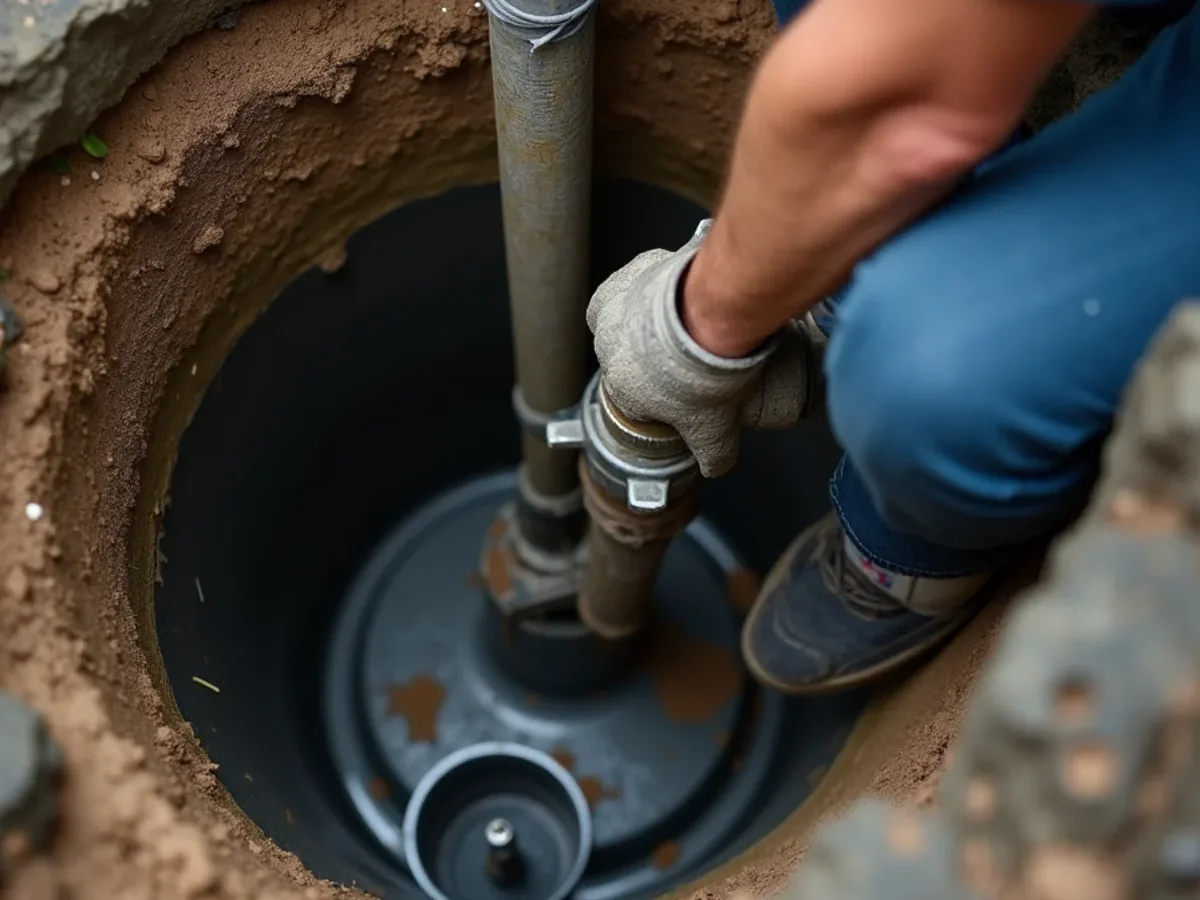
If the tank has risers to grade, the technician lifts a lid and works. If it does not, someone has to find the tank and dig down to the lid — and on a property where nobody knows where the tank is, locating it is its own job.
This is why risers pay for themselves. Fitted once, they remove the digging from every future pump-out and every future inspection.
Access for the truck
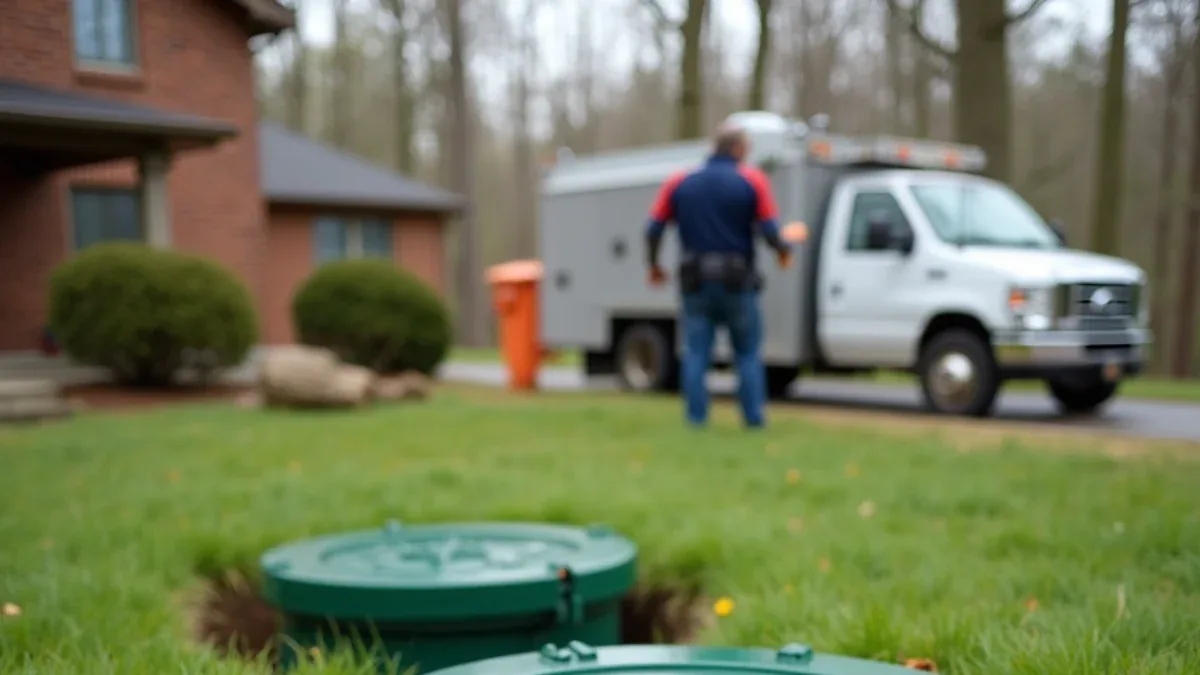
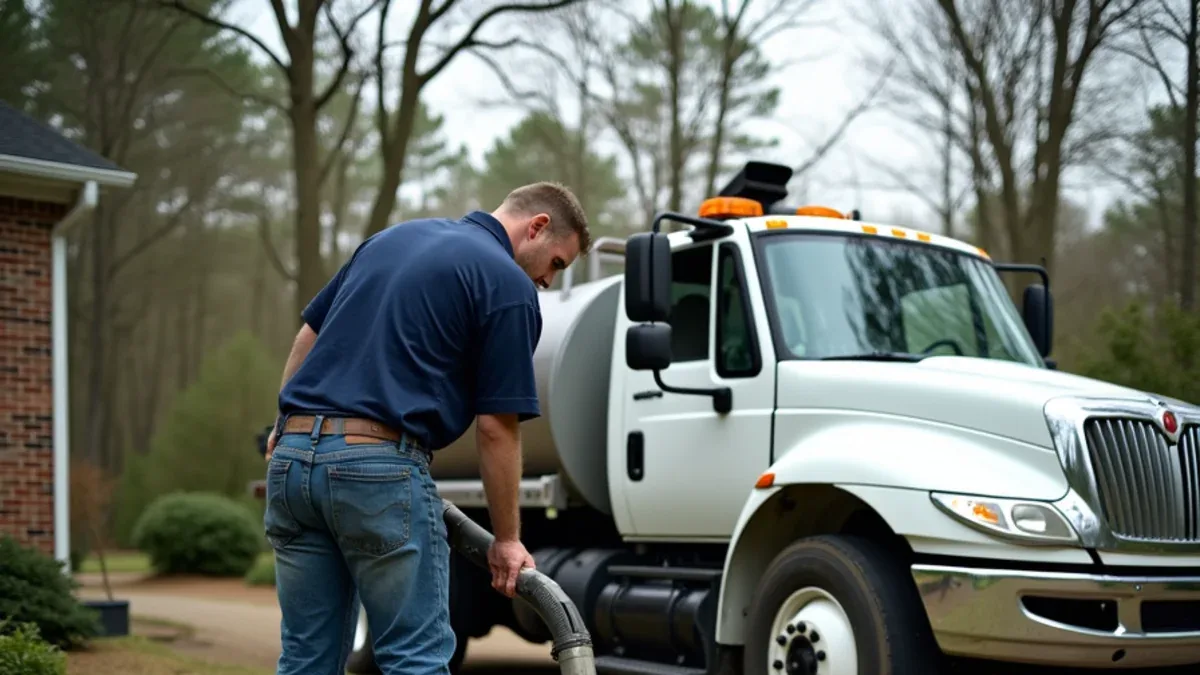
A pump truck carries a finite length of hose. If the truck can park within that distance of the tank, the job is straightforward. If it cannot, the crew runs additional hose, and on some properties the only viable route crosses ground that should not be driven on.
- Long driveways and tanks set well back from any hard surface.
- Gates, fences and narrow side access.
- Soft ground after rain, where driving a loaded truck would do real damage.
- Tanks on the far side of the drain field, which must not be crossed.
Rural lots around Birchwood, Georgetown and Harrison hit this regularly. It is normal, it is workable, and it is worth mentioning when you book so the right truck turns up.
What is actually in the tank
Ordinary domestic waste pumps as expected. Some tanks do not contain ordinary domestic waste.
- Heavy grease, usually where kitchen fats have gone down the sink for years.
- Non-degradable material — wipes marketed as flushable, sanitary products, cat litter.
- Laundry lint, which mats and does not break down.
- Roots that have found their way in through a failed seal.
Any of these turn a routine pump-out into a longer one, and some require the tank to be worked in stages.
What a pump-out should include
Pumping the tank is the minimum. What makes the visit actually worth the money is what gets looked at while the tank is empty and visible:
- 1Both baffles checked — present, intact, and the right way up.
- 2The effluent filter cleaned or replaced if one is fitted.
- 3The walls and floor looked at for cracking while they can be seen.
- 4The water level checked against the outlet before pumping.
- 5The lid and seal checked and properly reseated.
- 6A note of sludge depth, so the next interval can be based on evidence.
Why pumping is cheap insurance
When a tank is overfull, solids carry over into the drain field. Once they reach the soil interface they seal it, and that is the failure that cannot be reversed. No amount of later pumping brings a sealed field back.
The arithmetic is not close. A pump-out every few years for decades still costs a fraction of a single drain field replacement. That is the entire argument for maintenance, and it is why we would rather see you on a schedule than in an emergency.
If keeping track is the problem rather than the cost, a maintenance plan exists to make the interval happen without anyone having to remember it.
Frequently asked
Every three to five years is the usual starting point, but the real interval depends on tank size, household size and what goes down the drains. The way to know is to have sludge depth measured at each visit — once there are two measurements, the rate of accumulation for that specific tank is known and the interval stops being a guess.
Yes, because disposal is charged by volume at the treatment facility. A larger tank genuinely costs more to empty. It also usually needs pumping less often for the same household, so the cost per year is often similar or better.
Most often one of three things: your tank is larger, it has been longer since it was last done, or the access is harder. Compacted sludge in a tank left fifteen years takes considerably more work than a tank on a five-year cycle, even though both jobs are called the same thing.
No. Additives do not remove the inorganic material that accumulates as sludge, and some can do harm by pushing solids into the drain field. There is more detail in our article on whether septic additives work. Pumping is the only thing that empties a tank.
You can, and some companies do only that. We would rather check the baffles and the filter while the tank is open, because a missing outlet baffle is sending solids to your field right now and a pump-out alone will not tell you that is happening.
Need someone to actually look at it?
We are a licensed plumber and septic technician based in Ooltewah, serving Hamilton, Bradley and the surrounding counties. Free estimates on every job, and an honest answer about whether you need the work at all.